
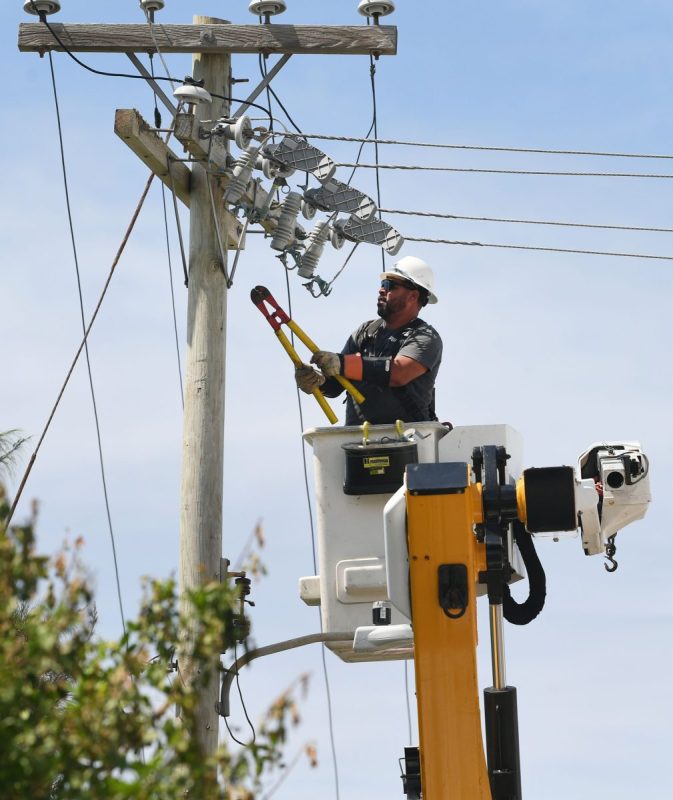
Long before a storm is named, Belco is already preparing for the possibility of severe weather.
The company describes hurricane preparedness as a year-round effort involving training, planning and maintaining critical supplies and equipment.
“Throughout the year, the operations team monitors and maintains supply levels, ensuring that essential materials such as poles, transformers, fuses, and conductor wire are stocked and ready to deploy,” explained Shelly Leman, the utility company’s managing director.
“Line crews undergo regular training to ensure they are prepared to respond safely and efficiently when a storm hits.”
Belco’s Crisis Management Team formally reviews emergency procedures, confirms staffing assignments and ensures that restoration plans are up to date ahead of the start of hurricane season each June.
The review involves departments across the organisation, each of which is assigned specific responsibilities in the event of a major storm.
According to Ms Leman, preparation extends beyond planning documents. Supplies such as poles, transformers, conductor wire and fuses are checked and positioned in strategic locations around the island to support restoration efforts if required. Additional equipment, including protective gear and hand tools, is also prepared in advance.
Time to step up
When a tropical storm or hurricane is named and poses a potential threat to Bermuda, additional response measures are activated — the crisis management team liaises with emergency services, while crews and equipment are positioned across the island in anticipation of possible damage.
“Crews are put on alert in order to begin restoration procedures as soon as storm conditions subside,” Ms Leman said.
She added that the vehicle fleet is fully charged, fuelled and stocked with the necessary tools and equipment required for restoring power.
The company encourages all residents, even members of its team, to remain indoors during severe weather. Crews are sent out to begin repairs only once the worst of the storm has passed and conditions are considered safe.
“Safety is the overriding factor in this decision, and crews will not be deployed until conditions allow them to work without undue risk,” Ms Leman said.
“The operations team makes this call based on current weather conditions and guidance from the Emergency Measures Organisation.”
Keeping us informed
Communication with the public during and after a storm is key. Outage and restoration updates are provided through Belco’s website and social media channels. The company also uses local media to keep residents informed.
“In any storm the loss of power is possible. Belco advises all medical device-dependent customers to discuss emergency plans with their physician or health representative beforehand and make appropriate arrangements,” Ms Leman said.
“Belco can never guarantee restoration time to a home or business.”
The first step once a storm has passed is a full assessment of the network. More than 90 per cent of customers have an AMI smart meter installed which relays outages to Belco in real time.
Crews are deployed across the island to survey damage to the electricity infrastructure and identify priorities for restoration. Retirees can be called in to help if there has been severe damage.
Through its Carilec membership, Belco received assistance from other Caribbean utilities with repairs following Hurricanes Fay and Gonzalo in 2014; Belco crews have also travelled to assist restoration efforts in places such as Jamaica and the British Virgin Islands after severe weather events.
“The order of restoration is as follows: main circuits, branch lines and then individual customers. Repairs must be completed in this order because main lines feed all other lines,” Ms Leman said.
“An individual customer in the middle or at the end of a branch line cannot receive electricity until all of the repairs between their property and the main power supply have been made.”
Safety first
Belco prioritises repairs that are expected to restore service to the largest number of customers. As restoration efforts can sometimes involve long hours, rest periods are incorporated.
“During a major storm restoration, Belco crews work from 8am to midnight, a 16-hour window that reflects the scale and urgency of the work required,” Ms Leman said. “Rest periods are built into the schedule and are not optional. Fatigue is a serious safety risk when working with live electricity infrastructure, and Belco is committed to ensuring that every crew member is alert and fit to work before they are deployed.”
Public co-operation plays an important role both in reducing storm-related outages and supporting safe restoration efforts once severe weather has passed.
Belco asks residents to inspect their properties for signs of electrical damage and to exercise caution at all times, avoiding downed wires or debris that could conceal live electrical equipment.
Keeping trees and bushes well clear of power lines is one of the most important steps property owners can take to help reduce the risk of losing electricity.
“If customers wish to reduce their chances of a power outage during a storm it is critically important to trim their trees at least 10 feet from any power lines,” Ms Leman said.
That will help prevent branches from causing power lines to touch together, causing them to short out or by pulling down power lines, which poses a serious safety risk to the public.
Improperly connected generators present a serious risk.
“A significant danger to Belco crews is when customer generators are improperly connected to a home or business,” Ms Leman said.
“If a generator is improperly connected to the electrical system, it can feed power back down a line that Belco staff may be working on, who believe the wires are not live. This can pose a dangerous electrocution hazard.”
