
Over many generations of weathering hurricanes, we’ve trained ourselves to look after our people and our property first and foremost.
But while we hunker down in our houses and wait for the storm to pass, some of the natural life around our island isn’t so lucky.
Our ecosystem – the animals and plants that call Bermuda home, and the environment surrounding them – gets a battering every time a hurricane strikes the island.
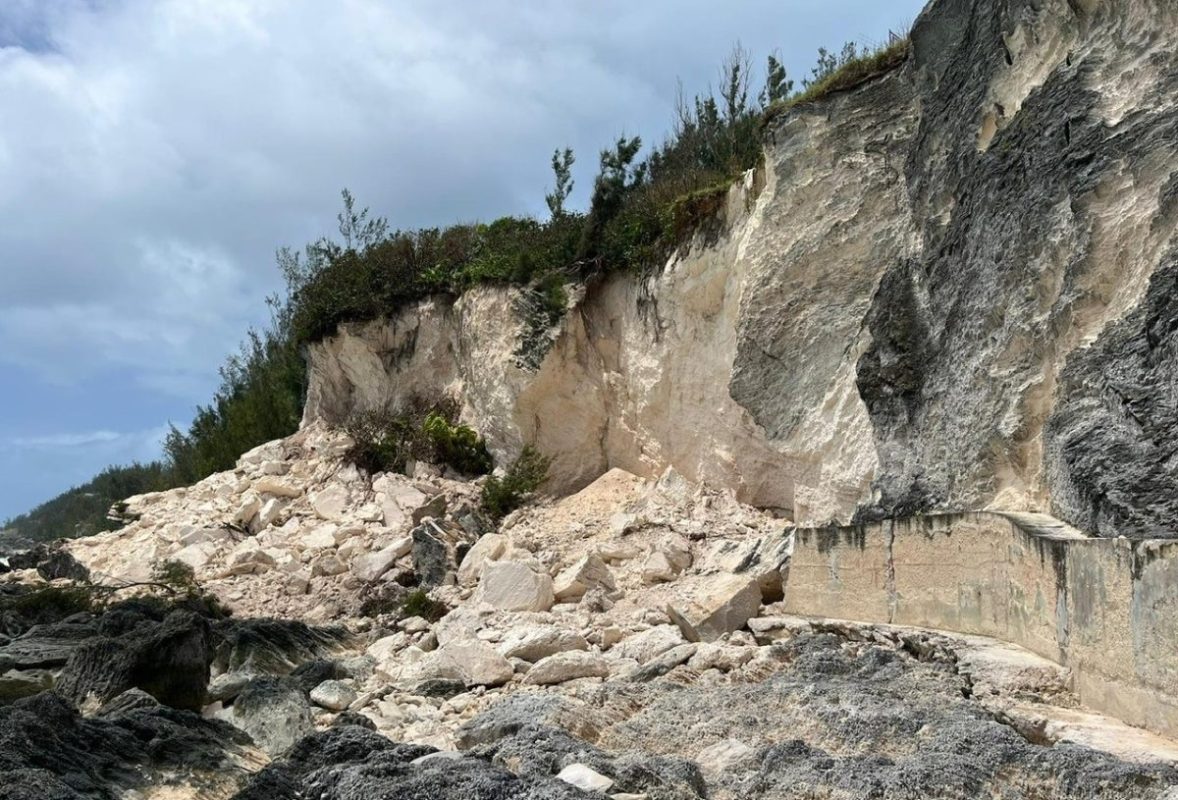
Sand disappears from beaches, cliffs collapse, and trees, habitats and marshes get destroyed, with devastating consequences for the creatures that live there.
Often, the environment heals, but experts fear that as fierce storms become more frequent, the risk of long-term damage increases.
Myles Darrell, the head of natural heritage at the Bermuda National Trust, said: “As storms become more intense, and as sea level continues to rise, Bermuda risks losing more than individual trees or beaches. We risk the gradual weakening of whole natural systems.
“Over the next few decades, we may see narrower beaches, increased coastal erosion, more frequent flooding of low-lying areas, greater stress on mangroves and marshes, and more damage to reefs and seagrass beds.
“Over the longer term, some habitats may be prevented from migrating inland, away from the coast, blocked by roads, walls and buildings.
“The greatest concern is cumulative impact. One storm may damage a habitat, but the unremitting action of repeated storms can prevent recovery. Over time, this can lead to permanent ecological loss.”
Damage we can see
Our coastline and open spaces are severely exposed to hurricanes.
Mr Darrell said: “Storm surge and intense wave action can accelerate coastal erosion and redistribute large volumes of sand through longshore drift, particularly along exposed South Shore beaches.
“While some of this sand may eventually return naturally, repeated storms can leave beaches narrower, lower and increasingly vulnerable to future erosion.”
Coastal cliffs and rocky shorelines can also be damaged.
“Wave action, heavy rainfall and undercutting can contribute to cliff falls, slumping and erosion, particularly where natural vegetation has been removed or where development has weakened the coastal edge,” he said.
Wetlands, mangroves and marshes are also under pressure from longer-term effects of storms, sea level rise and erosion. Mangroves at Hungry Bay and Blue Hole Hill Park, for example, have been left with uprooted and damaged trees, altered water flow and loss of sediment.
Other visible impacts include salt spray damage to coastal woodland, loss of soil in exposed fields, damage to dunes and coastal vegetation, fallen mature trees and the spread of invasive species into disturbed areas.
Damage we can’t see
“Some of the most serious, impactful damage occurs below the sea surface,” Mr Darrell warned.
“Hurricanes can break or overturn corals, shift sand over reef habitats, stir up sediment and reduce water quality. This can stress corals, seagrasses and the many fish and invertebrates that depend on them.”
Bermuda’s reefs help protect our community by acting as natural breakwaters, reducing wave energy before it reaches the shore.
Mr Darrell said: “If reefs are weakened by repeated storms, warming seas, pollution or physical damage, the island becomes more exposed and vulnerable.”
Storms can also affect submerged cultural heritage, such as shipwrecks.
“Strong waves and currents can shift wreck material, expose or bury archaeological features, and damage fragile structures that have become part of the marine ecosystem,” he said.
Animals under threat
Mr Darrell said that, aside from birds, the species most at risk are those tied to specific habitats, including:
- marine turtles that need healthy seagrass beds;
- fish and marine invertebrates that depend on coral reefs and mangroves;
- terrestrial invertebrates, such as land snails, insects, spiders and land crabs, that require stable woodland, coastal and wetland habitats.
Species living in ponds, marshes and caves are particularly vulnerable when storms cause significant changes in salinity, flooding or sedimentation.
He noted that many invertebrates are vulnerable, including numerous endemic and native species that occur nowhere else on Earth, such as the endemic Bermuda land snail, a variety of cave-dwelling invertebrate, native pollinators, and several endemic insects and spiders.
“Many of these species occupy small areas or depend on very specific habitats, making them especially vulnerable to hurricanes,” he said.
“The loss of woodland canopy, flooding of cave systems, erosion of coastal habitats, saltwater intrusion into wetlands, or changes in pond and marsh conditions can have significant impacts on invertebrate populations.
Invertebrates, he noted, form the foundation of many ecological processes, including pollination, decomposition, soil formation and nutrient cycling.
Mr Darrell is particularly concerned about endemic and rare species.
“Repeated storms may even prevent populations from fully recovering,” he said.
“While larger and more visible species may attract attention following hurricanes, some of Bermuda’s greatest conservation concerns involve the smaller, less conspicuous species that play such critical roles in keeping our ecosystems healthy and functioning.”
Why it matters
When we lose nature, we lose many of the benefits that make our island a safe, healthy and enjoyable place to live.
Mr Darrell said: “Bermuda’s natural environment protects all of us. Reefs, beaches, dunes, wetlands, mangroves and coastal vegetation help reduce flooding, absorb wave energy and protect
homes, roads and communities from storm damage.
“They support the fisheries we rely on, the beaches we enjoy, and the tourism industry that provides jobs for many Bermudians.
“Wildlife helps pollinate plants, control pests and keep ecosystems functioning.”
When these systems are damaged, he said, we lose natural protection and become more dependent on costly engineered solutions.
He added: “We also risk losing the beauty, biodiversity and cultural landscapes that make Bermuda distinctive.
“This is not only an environmental concern. It is also a public safety, economic and community wellbeing issue.”
What can we do?
Mr Darrell said: “As a community, we should value natural infrastructure as seriously as built infrastructure. Healthy reefs, wetlands and woodlands are part of Bermuda’s storm protection system.”
He said we can all help by:
- protecting coastal vegetation;
- avoiding damage to dunes and mangroves;
- reducing pollution entering our waterways and the ocean;
- supporting native and endemic planting;
- removing invasive species where appropriate;
- taking part in community restoration days.
Property owners should:
- avoid clearing vegetation close to the coast;
- maintain natural buffers;
- manage stormwater responsibly and seek advice before undertaking shoreline works.
