
Bermuda was founded on building. We built agile wooden boats that became world-renowned; we’ve built houses that have stood against the most ferocious storms the Mid-Atlantic has ever seen; we’ve built sails, monuments and industries based on real ‘shoulder-to-the-wheel’ hard work.
Bermuda, it’s fair to say, was quite literally built by the hands of tradesmen.
Yet somewhere along the way, a perception took hold that working in construction was somehow less prestigious than working in the ‘white-collar’ world.
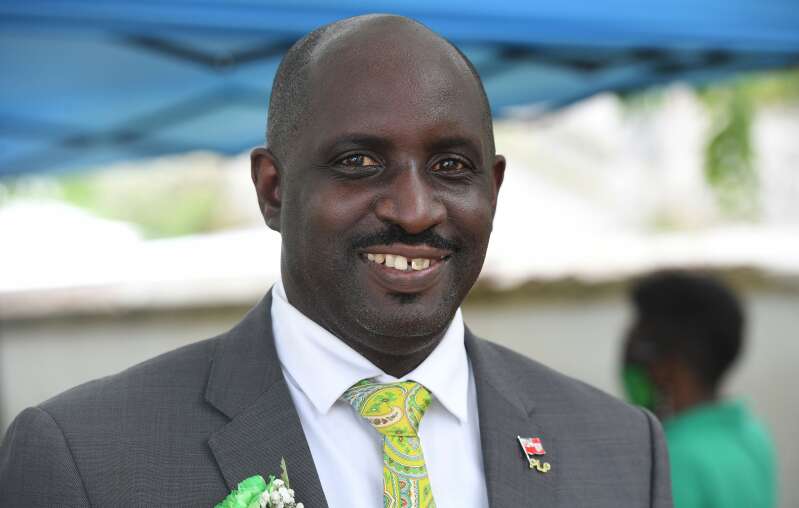
For Bermuda Housing Corporation chairman Christopher Famous, the idea that working in the trades is something to be looked down upon is truly distasteful.
“Working in the trades involves way more than simply working with your hands,” he pronounced.
“It is a combination of a lot of calculations, knowledge of materials, safe working practices, current planning codes, customer service, interpersonal skills and determination.”
In other words, construction is as much about brains as it is about brawn.
Whether it’s calculating load-bearing requirements, interpreting building codes, wiring a house safely, or troubleshooting a complex plumbing issue, tradespeople rely on technical knowledge and critical thinking every day. And when the job is done, the reward is tangible.
“When a tradesman can build something from scratch, or rectify an issue such as plumbing, it gives one an immense sense of pride,” Mr Famous said.
That pride is rooted not only in craftsmanship, but in contribution. Tradespeople leave a visible legacy in their communities. They build the homes families grow up in, the schools children learn in, and the infrastructure that keeps the island running.
Cultural shift
So why, in an island with such a rich building tradition, have so many young Bermudians steered away from the trades?
Mr Famous pointed to a cultural shift that began in the 1980s.
“About 40 years ago we were fed the dream – or lie – that all Bermudians could magically work in international business, or other white-collar jobs,” he said.
“Subsequently there was a societal shift that most young persons were no longer interested in learning trades.”
The result? A generation gap. Many skilled Bermudian tradespeople are now in their 50s and 60s and beginning to retire, creating a severe shortage of local talent across construction fields.
Compounding the problem is a lingering misconception: that tradespeople are not smart and do not earn good money.
“Both of which are untrue,” Mr Famous asserted.
In reality, skilled trades can be highly lucrative. “Electricians charge near $100 per hour,” he noted. Beyond income, learning a trade also empowers individuals to handle their own property maintenance, saving money over a lifetime.
If there was ever a moment for Bermudians to consider construction as a career path, it’s now.
“There is never a bad time to learn lifelong technical skills,” Mr Famous said. “One can earn a very good living.”
He also highlighted a strong and growing demand: many homeowners are seniors who are no longer able to carry out repairs themselves, while younger property owners may lack the practical knowledge to tackle maintenance work.
The result is what he describes as an “overabundance of work” in property maintenance and construction.
In economic terms, it’s a simple equation: high demand plus limited local supply equals opportunity.
For young Bermudians – particularly those unsure about a traditional academic route – the trades offer a viable, respected, and profitable alternative.
Mr Famous pointed out that pride in one’s work is also tied to self-sufficiency.
“When you can solve a problem, repair a home, or improve someone’s property, that’s more than a job – it’s a contribution to your family and community,” he said.
Hands-on training
One organisation working to rebuild the pipeline of local talent is Urban Construction Services.
Allanette Hayward, Director of UCS, echoed some of the challenges – with a focus on structural concerns around training and certification in construction.
“There are limited opportunities that offer career guidance, training and certification in the local construction field,” she explained.
Factors include a lack of vocational and community training, limited funding, non-Bermudians filling positions, and the passing of elders who once handed down trade knowledge.
Some opportunities do exist – including private tradespeople offering DIY classes, Bermuda College, and industry safety organisations. In addition, UCS has stepped in to provide hands-on, structured training.
“At UCS we provide hands-on training and certification. Programs are available with specific scheduling,” Ms Hayward said.
Importantly, the courses can be transferred for college credits and are recognised locally and internationally. That means students aren’t just learning how to lay bricks; they’re gaining credentials that travel with them.
Ms Hayward is especially keen to dispel the notion that construction is a narrow or limiting path.
“All trades are specific. Each trade requires skill. As technology evolves, the demands will require tradesmen to adapt with the changes,” she said.
Construction today increasingly intersects with technology, sustainability and advanced materials. Electricians work with smart-home systems. Carpenters use digital design tools. Builders implement energy-efficient solutions. The modern tradesperson must be adaptable and continuously learning.
“It is so many avenues,” Ms Hayward said. “Construction is a journey with many twists and turns. An individual must find a pathway, remain focused and committed.”
The benefits are far reaching – training in the trades makes individuals employable, builds confidence and develops lifelong skills. It can also open doors to related careers such as facility and property management, insurance assessment, teaching or international work. Transferable skills – problem-solving, project management, teamwork – are highly valued across industries.
Ms Hayward also noted that Bermuda has reached a point where “the vast majority of those with skills are guest workers,” while many young, unskilled Bermudians are not reaching their full potential.
To address this imbalance, she called for more support and funding for training avenues, as well as expanded apprenticeship and internship programmes that provide on-the-job experience.
For Mr Famous, pride in building Bermuda is inherent.
“I am a proud tradesperson who has been able to have steady income, build homes, and provide for my family from my skillset,” he shared.
That pride – a pride that is intertwined in the very fabric of what it means to be Bermudian – is something we MUST reclaim.
