
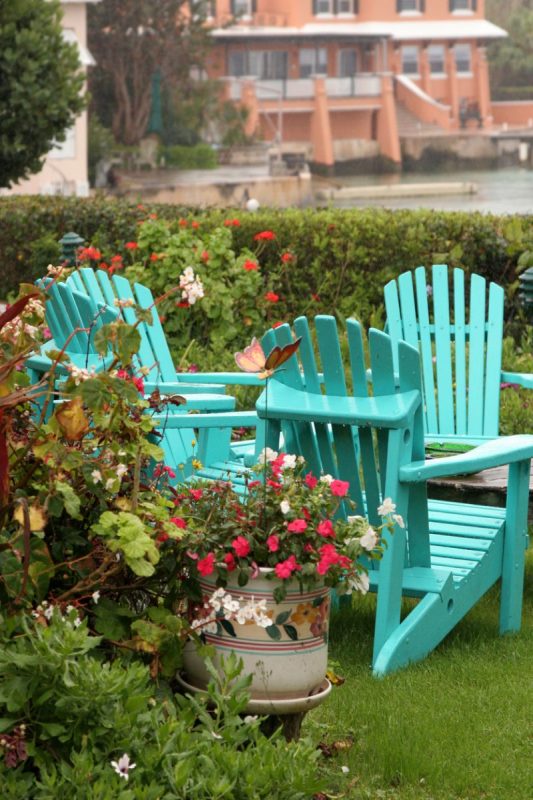
There needs to be a shift in how we think about Bermuda’s gardens.
Less trimming. Fewer perfectly edged hedges. A little more space left to grow, to flower, to exist without constant intervention.
It may not be the norm yet. But it is a direction worth moving towards.
Back to the 80s, when you would run through the grass and pick dandelions, Bermudianas and the wild lilies that would sprout after the rain, when you could pick stinging nettles for your mother to boil for tea.
Somewhere along the way, that changed.
Lawns became tighter. Edges sharper. Spaces are more controlled. The use of pesticides on sidewalks became commonplace, with no regard for runoff into the ocean. And in that shift, much of what once supported Bermuda’s natural life quietly disappeared.
Although much has been lost, and some things may never fully return, there is space for recovery.
Reversing that shift starts with how we choose to care for the spaces around us.
According to Heather Bottelli of the Bermuda Audubon Society, restoring that balance does not require a complete overhaul. It starts with small, intentional changes at home, one person at a time, one home at a time.
“Biodiversity isn’t just a word,” she explained. “It’s something we can act on.”
She said Bermuda’s native and endemic plants developed over hundreds of thousands of years, carried by wind, ocean currents and migrating birds, and that these plants continue to support both resident and migratory species today by providing food sources such as berries, nectar and insects.
Ms Bottelli emphasised that Bermuda plays an important role as a mid-Atlantic refuge for migratory birds, particularly as global bird populations face increasing pressure due to habitat loss.
In practical terms, that means rethinking what a garden is meant to do. It is not only about how it looks. It is about what it supports.
The idea of a “well-manicured lawn” was not always the norm.
Lawns were born out of 17th century British aristocratic culture. Wealthy landowners kept large areas of land just for grass to show they did not need to use it to grow food. It was wealth visibility without sustainability.
In Bermuda, in years gone by, communities lived close to the water, relying on fishing and the land for sustenance. Yet they were abruptly moved to make way for hotels and golf courses that supported the exponential growth of the tourism industry. Well-manicured landscapes and golf courses replaced working land.
Planting native and endemic species is one of the most effective ways to begin restoring function to the spaces around us, while confronting issues of access and equity in how land is owned and used.
Planting native, endemic and compatible species is one of the most effective ways to attract wildlife, particularly butterflies, bees and birds.
“Milkweed and lantana provide nectar for butterflies,” Ms Bottelli said, “while Darrell’s Fleabane, an endemic plant, supports bees.” She added that hummingbirds are drawn to red, tubular flowers such as salvia and honeysuckle during their migration.
Even plants that are often pulled out or cut back too quickly have value. “Thistles, dandelions, and goldenrod provide important food sources for birds,” Ms Bottelli noted.
She said birdbaths can make a difference, as long has they’re kept clean and positioned away from predators. Small ponds can further support wildlife by creating habitats for insects, which in turn become food for birds.
Ms Bottelli added: “Lizards and tree frogs help control insect populations, feeding on ants and mosquitoes. Ladybugs reduce aphids and thrips, although their numbers appear to be declining, likely due to pesticide use. Wasps serve as both pollinators and natural pest control. Even spiders play a role by managing unwanted insects.
“Each species contributes to balance and removing one element can have wider effects.”
