
In the past few decades, invasive trees and vines have quietly rewritten parts of Bermuda’s landscape, spilling over fence lines, swallowing light, and crowding out what belongs here.
If you want a Bermuda garden that feels like Bermuda, going endemic is not a trend, it is a decision.
It decides whether your Sunday afternoon is spent battling plants that thrive on takeover or building a garden around species that evolved for this limestone, this salt air, this wind, and the wildlife that depends on them.
For gardeners, the first hurdle is misunderstanding.
Myles Darrell, head of national heritage at Bermuda National Trust, said: “One of the most common misconceptions is that Bermuda’s native and endemic plants grow slowly or struggle to establish.
“In reality, many of them grow very quickly when planted in the right conditions.”
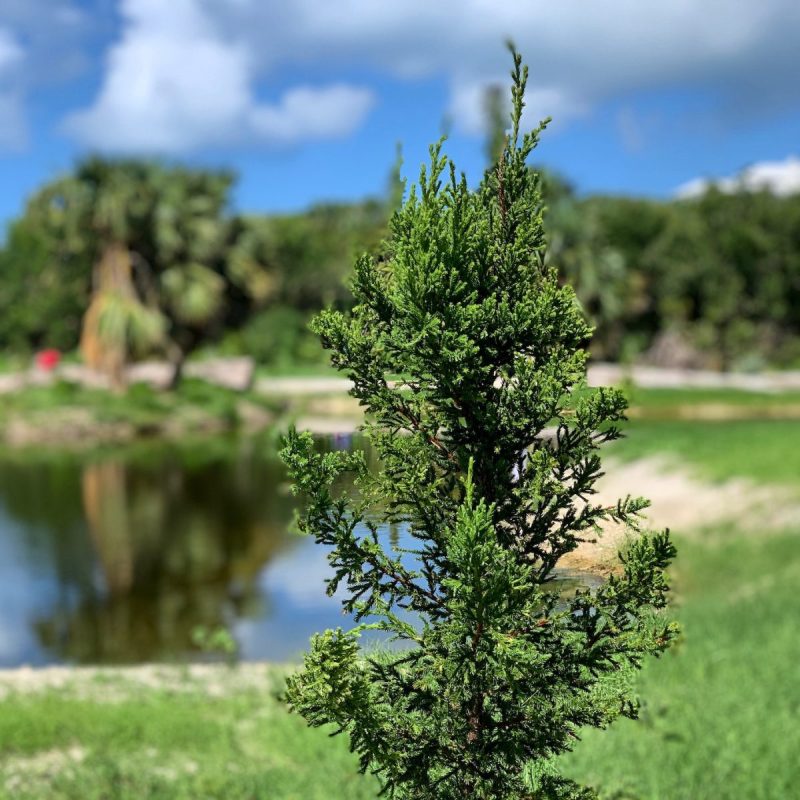
He points to the Bermuda cedar as proof.
Another misconception is that native plants are less attractive than imported ornamentals. “That simply isn’t the case.”
Mr Darrell loves the coastal sophora for its bright yellow flowers and its ability to thrive in windy coastal conditions where many imported plants fail.
The practical argument is straightforward: landscapes built around native and endemic plants can be established quickly, require less maintenance, and stay resilient in Bermuda’s climate.
If you have ever wondered what restoration looks like beyond a before-and-after photo, Mr Darrell describes it as a living shift you can feel.
When a site begins to recover, it is the small signals that matter. Native plants returning. Birds and insects are using the space again. Sunlight reaches the forest floor, where invasive vines once smothered everything.
“Walking through a restored landscape genuinely makes me a little giddy,” Mr Darrell said. He imagines what the space could look like 10 or 20 years from now, “if the work continues.” It is a hope with dirt under its nails.
The Rebecca Middleton Nature Reserve in Paget shows what “continue” looks like in real time.
When restoration began, the reserve was heavily dominated by invasives, particularly balloon vine. Anyone who has fought balloon vine knows it does not politely share. It races, climbs and chokes. With consistent work and community support, Mr Darrell says the transformation has been remarkable.
Today, more than 60 per cent of the reserve is dominated by native and endemic species. Trails are accessible again. Biodiversity has increased. Just as important, the community uses the space.
“When people begin to take pride in a restored landscape, that’s when conservation truly succeeds.”
This is why invasives are not just a gardening nuisance. Mr Darrell calls them “one of the most serious environmental threats Bermuda faces”.
They displace ecosystems that evolved here naturally, turning diverse habitats into dense monocultures that support far less wildlife. They change the land’s look and function. They even affect our coastlines. Casuarina, he notes, often falls during storms and can take sections of coastline with it. When invasive plants replace healthy native ecosystems, our natural resilience weakens, at the exact moment climate impacts are growing.
If you want the perfect Bermuda garden specifically for your home space and you are not sure where to start, visit a nature reserve with a notebook, pay attention to what thrives without constant intervention, and build from there.
And if you want to go beyond your fence line, reach out to organisations doing this work, including the Bermuda National Trust, and join in on restoration efforts or education programmes already underway.
