
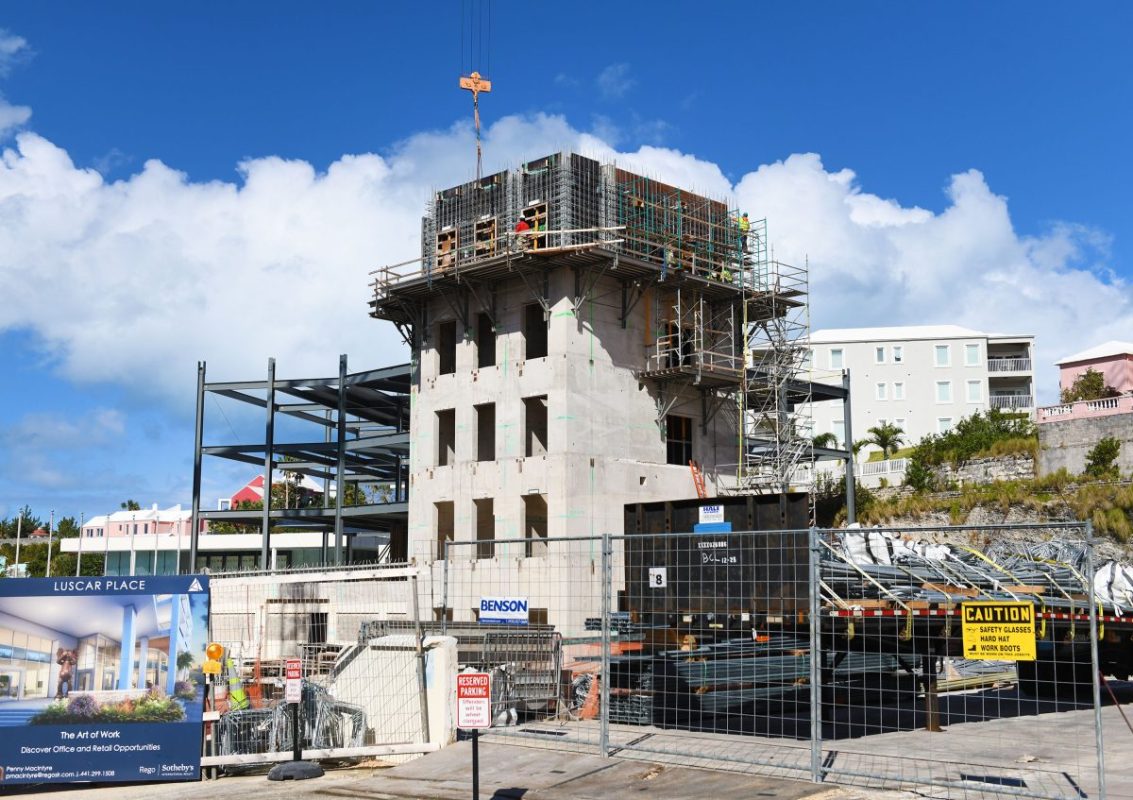
There is no shortage of large projects under way for Bermuda’s construction industry and with more in the pipeline, the indications are that contractors will remain busy for some time.
Hundreds of millions of dollars are being invested in large-scale hotel overhauls, new office buildings, newbuild homes and renovations.
While there is a broad variety of project types producing work for contractors, construction is not in “boom” territory relative to recent history, according to Alex DeCouto, managing director of Greymane Construction.
“I don’t think you can single any category out – there is a healthy amount of investment in property happening, but certainly nothing approaching 2008 levels of employment and projects,” he said. “This is the level of investment that the industry needs on an ongoing basis.”
Indeed, government employment statistics show there were 2,163 full-time jobs in construction in 2025 — about 1,500 fewer than in the employment peak of 2008.
However, firms whose expertise can gain them a share of hospitality, commercial and residential work are thriving in today’s construction environment.
Commercial Glass & Aluminum Co, for example, is working on a range of residential upgrades and window replacements, while also working on the redevelopment of Grotto Bay Beach Resort. It will also install 581 showers as part of the Fairmont Southampton overhaul and is the provider and installer of glass for the new Luscar Place office building, going up in west Hamilton.
Steve Barber, managing director of Commercial Glass, who took over the business in 2015, said working on major projects helps to build a company’s reputation and leads to more opportunities.
“With every year, business has got a bit better,” he said. “You get too big, too quick and you get in trouble. I’m still being cautious, but I’m confident we’re moving in the right direction.”
Hospitality projects
The Fairmont Southampton is a massive construction project, a $550 million overhaul by owner Westend Properties, a subsidiary of Gencom. Reopening of the 593-room hotel is scheduled for August.
By early January this year, work was picking up pace. Westend said roofing was complete in the north wing and work had begun on the resort’s west wing and ballroom roofs, while a complete renovation of the guest rooms was under way. Work was also ongoing at the resort’s Ocean Club and Beach Club, where a new resort-style pool was being installed.
Last August, the company said more than 150 Bermudians, spouses of Bermudians and permanent resident’s certificate holders had been involved in the redevelopment project. And the work looks set to continue, given the 2023 government approved of a special development order to build up to 250 units on the property.
At the Grotto Bay Beach Resort, ongoing development includes the construction of two three-story buildings comprising an 53 additional guest rooms, and additionally a new sewage plant. This follows expansions to the Castle Harbour property’s dining rooms.
Looming ahead is a major redevelopment at Elbow Beach, where The Loren Group plans to demolish the main building of the Paget resort, place a 75-key building on the current site of tennis courts and erect a combination of 27 estate homes and cottage-style accommodations.
Stephen King, the co-owner of The Loren Group, hopes work will be completed in late 2028 so the hotel is ready for the 2029 season.
There are also plans for a new hotel in Hamilton, to be called Sankofa House. Ay Ay Holdings Bermuda Ltd has received support, on appeal, from the Department of Planning for its proposal to redevelop the vacant Victoria Hall, in Hamilton, into a nine-storey, 94-room property.
And in Warwick, plans to convert the former Riddell’s Bay Golf Club clubhouse into a brewery and restaurant were approved by the Development Applications Board in April last year.
Commercial property
Perhaps the most visible construction site in Bermuda is Brookfield Place, at 91 Front Street, a nine-storey office and retail development, scheduled to be completed this year.
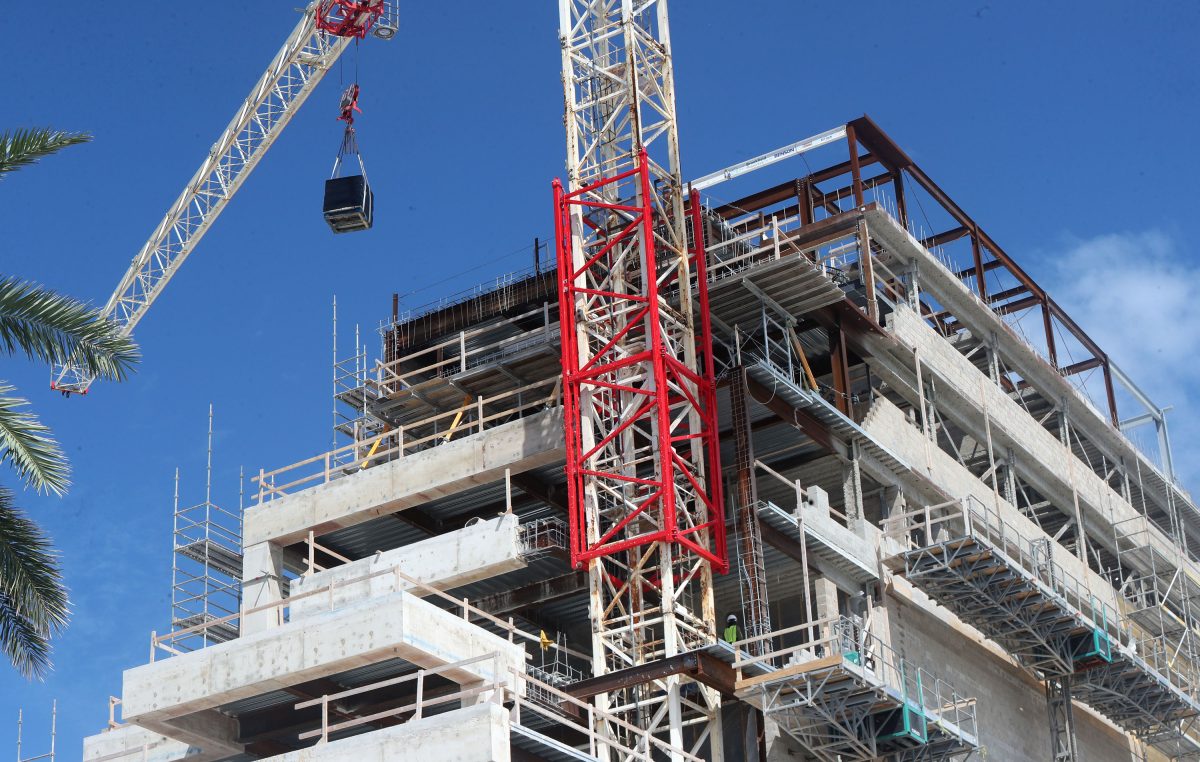
A short walk away, at 69 Pitts Bay Road, just east of the Bacardi Building, is Luscar Place, a seven-storey building that will provide 130,000 sq ft of prime office space.
The Green family, who have already left their mark on west Hamilton with their transformations of the Hamilton Princess and Beach Club, Waterloo House and Point House, are the investors behind Luscar Place.
The new complex, which will be solar-powered and will also comprise two ground-floor retail units, is scheduled for completion in July 2027.
A more unusual commercial building project for Bermuda is the Google transatlantic cable landing station on a 5.9-acre site at Burrows Hill, St David’s.
The plan comprises a 35,000 sq ft single-storey building, along with a small guardhouse and parking for 14 cars and 12 motorcycles, as well as a mechanical yard housing six generators. Google also plans an 8ft security fence.
A planning report filed with the Development Applications Board said the work would involve “significant and extensive cutting and filling” to create a level area on the property, with rock cuts as high as 30ft.
Residential
Government capital spending has the potential to play a significant role in the pipeline of future construction work.
As Mr DeCouto observed: “We will be watching closely what Government does in the housing space and with Corporate Income Tax funds specifically, as housing minister Zane DeSilva has been making lots of noise about projects in the pipeline.
“I’m hoping he can pull some things off, because most of our middle- and lower-income citizens need help with housing.”
Mr DeSilva has spelled out his hopes to roll out up to 1,500 affordable units over the next decade. High on his list of potential development sites are Victoria Row and Albert Row in Sandys; a vacant lot near Dr Cann Park in Southampton; Tommy Fox Road in St David’s; 13 Ewing Street in Hamilton; and Harbour View Village, in St David’s. All these sites are managed by the Bermuda Housing Corporation and the Bermuda Land Management Company.
The ministry is looking at prefabricated and modular construction techniques to deliver homes as quickly and cost-effectively as possible. With more than 350 households on the BHC waitlist as of the end of 2025, social need may be a strong driver of residential construction investment.
