
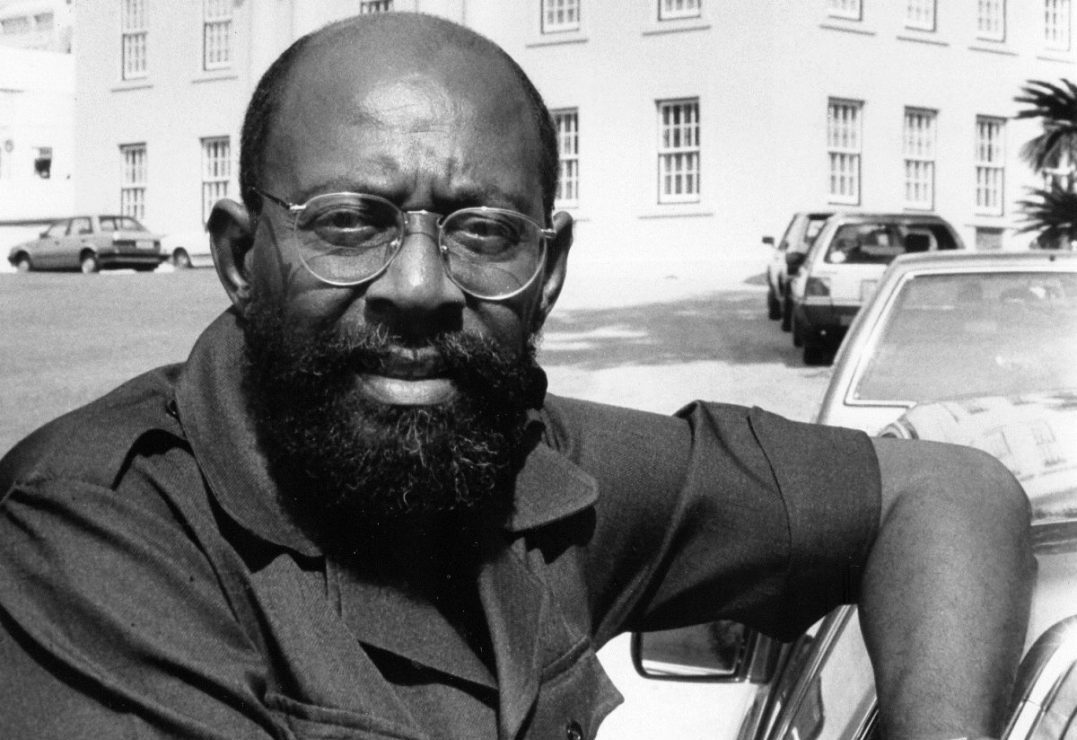
Freddie Wade’s influence on Bermuda’s political landscape was felt long before his name appeared above the island’s main gateway.
His life and career reflect a period of political change still felt three decades on.
Born on June 28, 1939, in Pembroke, Leonard Frederick Wade was known simply as “Freddie”, both to those closest to him and to the island at large. The son of Sergeant Major James Eugene and Helen Wade, he grew up in mid-20th-century Bermuda, at a time when opportunity and power were sharply divided.
Mr Wade trained as a teacher in Canada before returning home to Bermuda, where he saw first-hand the inequities in the local education system. Determined to be part of change rather than merely critique it, he joined the Progressive Labour Party soon after its founding in 1963. At a time when issues of race, inequality and economic opportunity shaped daily life on the island, Mr Wade quickly emerged as one of the party’s most committed members.
In the historic 1968 election, the first under universal adult suffrage, he won a seat in the House of Assembly representing Devonshire North.
That election marked a turning point for Bermuda and for the PLP, as the party began its long struggle for political relevance against the long-governing United Bermuda Party. Mr Wade, however, could not keep his teaching position once elected, due to a law barring MPs from holding teaching posts — a sacrifice he accepted in pursuit of broader change.
Steady but sure
Over the next two decades, Mr Wade built his political career steadily. He served in a range of shadow ministerial roles, including finance, home affairs and education, and established himself as a respected strategist and parliamentarian. After decades of involvement, he became deputy leader in 1976 and was elected party leader in November 1985.
The political landscape he inherited was deeply fractured. The PLP had been reduced to just seven seats in the House of Assembly after a damaging election defeat that year, leaving supporters disillusioned and internal divisions threatening the party’s future.
Mr Wade’s leadership was not merely about steering policy — it was about rebuilding trust, healing rifts and restoring faith.
His approach was notable not for combative rhetoric but for strategic recalibration. He worked to tone down the PLP’s more radical image from the 1960s and reached out to broader segments of Bermudian society, including the business community traditionally aligned with the UBP.
His political acumen helped the PLP regain seats and momentum in the 1989 and 1993 elections, bringing the party closer than ever to victory even as it remained in opposition.
One defining moment came in 1995, when Mr Wade successfully called on PLP supporters to boycott a referendum on independence. The move effectively dealt a blow to the independence campaign — leading to Sir John Swan’s resignation as Premier — but it also demonstrated Mr Wade’s willingness to take bold, controversial stances if he believed they were in the island’s best interest.
Observers at the time saw Mr Wade as a steady and effective leader. When he took over, many critics doubted the PLP’s future; by 1993 the party was within a whisker of winning government, gaining 18 seats to the UBP’s 22 — the closest it had come in a general election to that point.
Skilled and influential
Mr Wade’s life outside politics was also full. Married three times and father to six children, he balanced the demands of public life with family responsibilities. He was known as a man of wide interests, including a love of jazz. Those closest to him emphasised his humility and commitment to public service.
Tragically, his life was cut short on August 13, 1996, when he collapsed on his way to catch a flight to a Commonwealth Parliamentary Association conference in Malaysia. He was 57. His sudden death shocked the island and left a void in the party he had spent decades rebuilding.
Tributes poured in from across the political spectrum. One colleague described him as a “master conductor” whose organisational skill and leadership under pressure were as integral to the PLP’s revival as his political vision. Even critics acknowledged that Mr Wade’s influence on Bermudian politics was profound and enduring.
His legacy was formally recognised in 2007, when the Bermuda International Airport was renamed L.F. Wade International Airport in his honour — a symbol of national acknowledgment for a man whose career helped transform the island’s political landscape.
Although Mr Wade didn’t see the PLP form government in 1998, leaders and supporters since have credited him with laying the essential groundwork.
Three decades after his death, his life is remembered not simply for the office he held but for the vision he championed: a Bermuda shaped by dialogue, gradual change and broader participation. Many older Bermudians still recall his strategic mind, his debates in the House of Assembly, and his belief that the PLP could one day form government. Others credit him with laying foundations that later leaders built on.
Mr Wade’s legacy extends beyond Bermuda’s political history. It is a reminder of work that often goes unnoticed at the time, but shapes what is to come.
- Sources for this article include Bermuda Biographies and The Royal Gazette archives
