
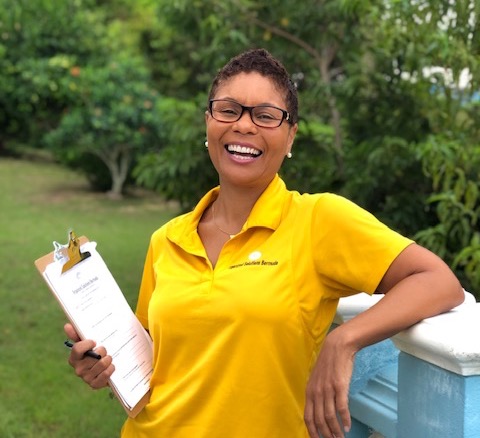
For years, Jodi Virgil has been helping people turn messy spaces into calm, organised ones through her business, Organized Solutions Bermuda.
But back in 2005, life was radically different. She was in the process of moving back to Bermuda after spending a long time in Canada, Ecuador and the United States. With that, she had to downsize from a three-bedroom condo to a studio apartment, switch careers, navigate the end of a marriage and settle back home permanently.
“The thought of selling my items was distressing as they were precious and reflected my memories and experiences,” she explained.
It wasn’t easy, but advice from her Aunt Cheryl helped her shift her mindset: “I learned from her that letting it go isn’t a bad reflection of you.”
This experience led Ms Virgil to the National Association of Productivity and Organizing Conference, where she discovered the professional organising industry.
It was a perfect match. She realised the skills she had developed in her careers in teaching and HR weren’t just about managing tasks – they were tools she could use to help people create calm and order in their lives through organisation.
Get to the root cause
Just like she did many moons ago, Ms Virgil understands how many of her clients can feel “tired of their space and overwhelmed by it”.
She understands that clutter often has emotional roots—whether it’s tied to nostalgia, the fear of waste, or the need to accumulate things as a symbol of success after past struggles.
There are also practical challenges that can contribute significantly to the clutter. Items often don’t have designated spots, leading to disarray, and sometimes storage solutions are more about style than function, resulting in pretty but impractical setups that are too large, oddly shaped or simply don’t fit the space.
To tackle these challenges, Ms Virgil developed her three-step “OSB Method,” which is inspired by organising expert Julie Morgenstern’s approach:
- Observe: Understand the root cause of clutter.
- Set the scene (Declutter): Group like items, then decide whether to keep, donate or dispose of them, ensuring each kept item has a designated space.
- Breakthrough: Establish a maintenance routine that complements individual lifestyles for lasting organisation.
“The method works well because it’s non-judgmental,” Ms Virgil explained. “It’s built on the foundation of self-awareness and autonomy, allowing us to co-create customised solutions that tackle not just the clutter, but also the personal challenges our clients face.”
Start small
If you’re struggling to get started, Ms Virgil suggested focusing on items with less emotional attachment to build confidence.
“Start in a small space – one drawer or one countertop – give yourself a 15-minute window, and maybe put your favorite music on,” she said.
Less sentimental items can include things like expired foods and medications, broken furniture or glass, outdated electronics, mismatched cutlery or mugs, old decorations, unused appliances, uncomfortable shoes, clothing that doesn’t bring joy, and pens or markers that no longer work.
Ms Virgil emphasised two crucial points for those feeling isolated by their clutter.
Firstly, it’s common to feel alone in this struggle, but many people experience it and can empower themselves to make changes or gain the support they need. A professional organiser can be like a personal trainer. They aim to teach strategies, and then individuals can continue to maintain their spaces independently.
Secondly, it’s essential to consider that decluttering can have significant benefits for protecting seniors by preventing falls and helping to reduce mould in homes. This can also be incredibly useful for care providers who may need to access these living spaces.
Ms Virgil reminds anyone tackling a big decluttering project that the process is “a marathon, not a sprint”. She believes that the ultimate aim of decluttering isn’t just transforming spaces, but supporting people in becoming who they most aspire to be.
