
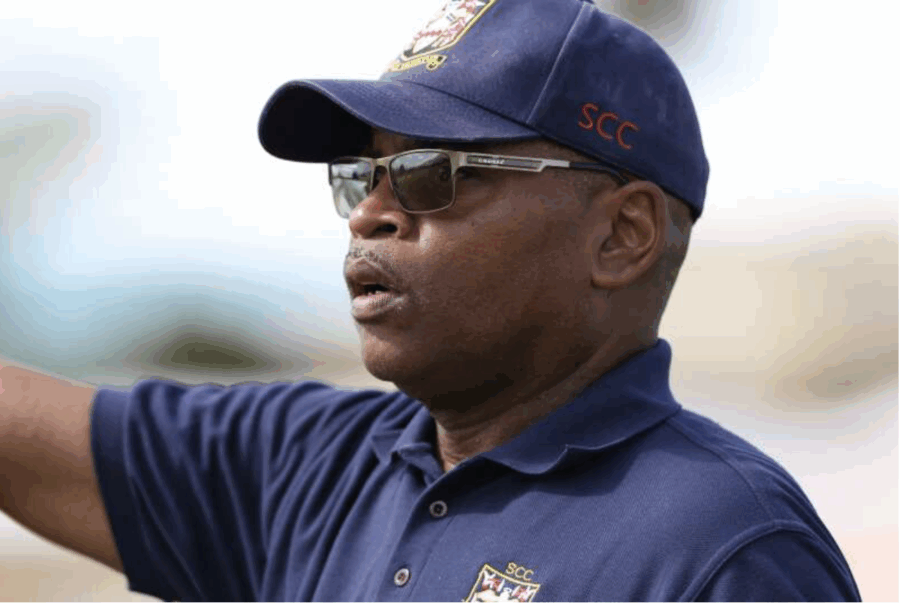
Dennis Brown is living proof that you’re never too old to keep doing what you love.
While many people over 50 opt for quieter pursuits, Mr Brown laces up his boots each week to play and coach walking football.
For this lifelong football lover, the game is far more than just a pastime — it’s a passion, a community and a way of life that keeps him active, engaged and sharp.
From his early days on the pitch to his current embrace of walking football — a slower-paced, low-impact version of the game for older players — Mr Brown, 62, has witnessed first-hand the evolution of football.
Yet, despite all the changes, his connection to the sport remains unwavering. Mr Brown spoke to Prime Time 50+ about how he has adapted his playing style with age, the satisfaction and joy he still derives from football, and his hopes for the future of walking football.
Lifelong love affair
During his younger days, Mr Brown was captain of Somerset Trojans when they won three consecutive Premier Division titles in the 1980s and later achieved success as a coach with Devonshire Cougars and Wolves.
But what drives a man to keep playing football later in life? “My motivation comes from a deep love for the game and the sense of community it fosters,” Mr Brown told us.
“Walking football allows me to stay active, connected and mentally sharp. Coaching football gives me the opportunity to give back, to help others rediscover their passion for the sport and to watch players grow in confidence and ability.”
Through coaching, Mr Brown has been able to take on the role of mentor, inspiring others to push their limits, rediscover their abilities and embrace the joys of football. And while some things have changed, he doesn’t see this as a loss. Instead, it’s part of the sport’s ongoing evolution.
“Over the years, football has evolved tremendously — from faster, more tactical gameplay at the elite level, to inclusive formats like walking football that extend the game to more potential players.
“Technology, fitness science and awareness of player well-being have all played a role in shaping how the game is played and enjoyed.”
From sprinting to strolling
For someone who spent decades playing the fast-paced version of football, transitioning to walking football was no small feat. The game, which was brought to the island thanks to the vision of founder Leroy “Coach Curly” Wilson, still demands skill, precision and strategy, but it’s slower and prioritises safety. For Mr Brown, making that adjustment was both a challenge and an opportunity for growth.
“Yes, it was definitely an adjustment,” he admitted. The hardest part was slowing down — mentally and physically. Old habits from the faster-paced version of the game don’t go away overnight.”
The secret to mastering walking football, according to Mr Brown, lies in focusing less on speed and intensity, and more on technique and teamwork.
“I learned to focus more on positioning, communication, and anticipation rather than speed or physicality,” he said. “I also embraced the rules and rhythm of walking football, which prioritises control and safety.
“Over time, I realised it wasn’t about doing less — it was about doing things differently, more smart and with more intention.”
For Mr Brown, this mindset shift has been transformative. It’s allowed him to continue enjoying the game he loves, even as his physical pace has naturally slowed with age.
A passion rekindled
Walking football has created countless memorable experiences for Mr Brown.
“I’m incredibly satisfied — it’s brought a sense of purpose and joy back into my weekly routine,” he said.
“I’ve had many memorable experiences since starting walking football. It’s great to see the quality of the players get better and better over time.
“It has also become far more competitive, with players still having that desire to win, even in a sport that has no tackling.”
These shared moments on the pitch remind him of the larger role football plays in life.
“To me, football is more than just a game — it’s about resilience, camaraderie and shared moments. That’s why I keep playing.”
Walking football’s bright future
Mr Brown is confident that walking football is here to stay and grow, especially with aging populations worldwide looking for ways to stay fit and active.
“Walking football has a bright future. As populations age and people look for ways to stay fit and socially active, it fills a growing need,” Mr Brown explained.
He envisions walking football expanding into more communities, complete with leagues, tournaments and even national competitions.
His passion for the game has taken him to new places, with an upcoming trip to England to play three matches and explore football landmarks such as Anfield and potentially Old Trafford. To ensure the long-term success of the sport, Mr Brown believes local and international sports organisations have a key role to play.
“To support this growth, sports organisations can provide funding for accessible facilities, offer introductory programmes, and promote the health and social benefits of the game,” he suggested.
He also emphasised the importance of recognising older athletes not just as participants but as active contributors to the sport’s culture and community.
“Recognising and celebrating older athletes will go a long way in encouraging broader engagement,” he said.
Mr Brown is adamant that football — or any sport, for that matter — doesn’t belong to one group of people, one age bracket or one competitive level. It’s a universal language that adapts, evolves and endures with time. While he may have traded sprints for more measured steps, his love for the game hasn’t died.
“I’ve realised that football teaches us so much more than how to play a game,” he added.
“It reminds us to stay resilient, find joy in teamwork and embrace change. That’s what keeps me coming back to the pitch every week.”
