
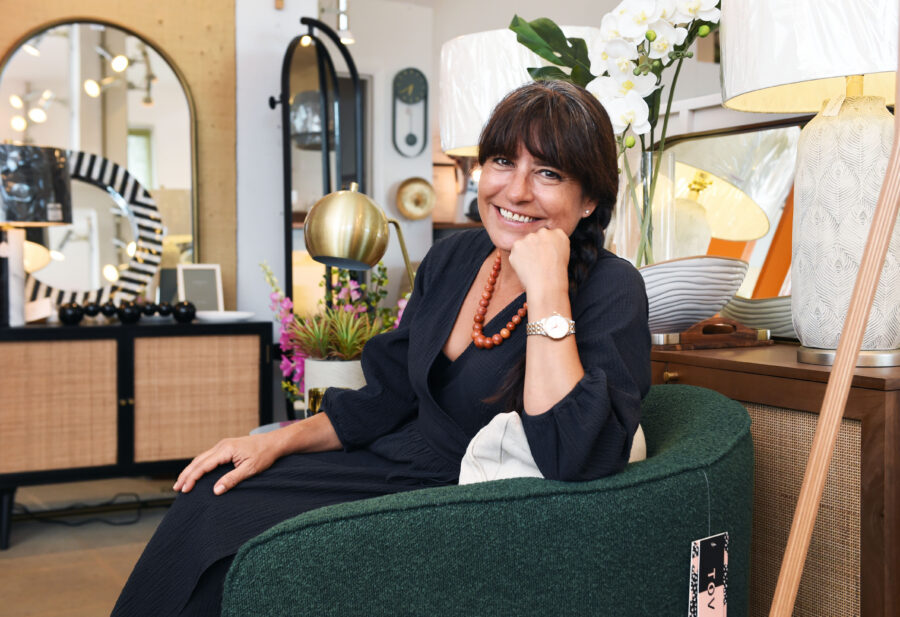
It contains the sofa you collapse onto at the end of the day, the side tables your guests put their drinks on when you are hosting, perhaps a coffee table for magazines or books, and spaces for artwork, photographs and ornaments.
A difficult area to master, the living room needs to be both comfortable and formal, relaxing and stylish, and functional but clutter-free, as well as durable and able to withstand the test of time.
For advice on how to create the ideal living room, we spoke to Jennifer Dearing, interior designer at Hamma Galleries, who shared the latest trends, along with her experience working with different colours, lighting, fabrics and layouts.
Layout
Whatever its intended use, to make a living room work, it needs a good layout. While this will vary depending on the size and shape of the room, Ms Dearing recommended creating “conversational groupings, where sofas or chairs face each other without too much distance so that we can comfortably hear each other without having to move furniture around”.
For a small room, she advised “double duty” furniture such as sleeper sofas, storage ottomans which can be used as coffee tables or foot rests, and small tables that can be easily moved for different purposes.
A smaller space also requires smaller furniture so it provides “the same function but takes up less of a footprint”. Accent chairs, which are partly upholstered but have a small metal or wood frame, are a good alternative to the traditional large armchair and should complement, but not match, the main seating.
“Nobody’s doing matching suites anymore, where you get the love seat, the sofa, the chair and the ottoman,” she pointed out.
At the other end of the scale, for a large living room, she recommended “various conversational groupings or the addition of reading areas combined with larger conversational areas”.
These areas can be anchored and defined by using rugs, side tables, ottomans and specific lighting.
Regardless of room size, another practical piece of furniture is swivel chairs. These can be part of a grouping and then turned towards another area of the room, such as the television. These are not unattractive office-style swivel chairs, however; they are upholstered and either have a “skirt” to hide the swivel mechanism or are “very low profile”.
Lighting
Living room lighting should be “layered and flexible”, Ms Dearing advised. This includes overhead recessed lighting for activities such as sewing or games, side table and standing lights “for ambience when relaxing or entertaining” and reading lamps for curling up with a book.
Sconces are also an option and Ms Dearing recently incorporated these into a house that was more than 300 years old and had multiple exposed wooden beams, meaning recessed lighting wouldn’t have worked.
Incorporating a television
“There’s nothing charming about a big TV in a room, but today’s lifestyle requires they be integrated into the space regardless,” she said. If budget permits, she recommended wall-mounted with the cabling hidden within the walls, building them into millwork surrounds, or buying a model with a slim or decorative frame, which allows for photographs or artwork as a screensaver when not in use.
A less expensive approach is a purpose built media stand which can accommodate cables, cable boxes and routers.
“Make sure to purchase one that has the size of the television in mind,” she warned. “A TV the same width of a media stand or bigger looks top heavy and silly.”
She advised at least six inches of media stand on either side of the TV to make it look balanced and, given the height of modern flat screen TVs, one that is only 18 to 24 inches in height off the floor to avoid heaviness and neck pain.
Colours and fabrics
Whether a client prefers a traditional, modern, mid-century or transitional style for their home, Ms Dearing has certain preferences. These include natural materials such as hardwood or natural stone flooring softened with area rugs; neutral, light and bright wall colours for longevity; performance fabrics for durability; and a combination of both blinds and curtains, if budget allows.
“Blinds can offer needed light control and privacy, as well as textures if made of a woven material, while drapes add softness and added light control if blinds are light filtering. Roman blinds made of fabrics can offer the best of both worlds and take up less space than a stock of drapes in a smaller space or one with accessibility issues,” she said.
For wall colours, she advised: “I like to keep it really neutral. It allows flexibility with the rest of the colour in the room.”
Whites and soft, warm greys are her go to, and she will often ask the paint store to lighten a colour by 25 to 50 per cent “so that it still keeps the space bright while offering a little interest and contrast to mouldings”.
For furniture and rug materials, Ms Dearing recommended performance fabrics, which, she said, are “usually made up of 100 per cent solution dyed acrylic, similar to outdoor fabrics, but with a softer hand”, making it more comfortable.
Polypropylene rugs are now available, which mimic natural fibres, such as sisal rugs, but without the high maintenance.
A popular brand for sofas is Anna Elizabeth, which is 100 per cent polyester.
“What it does is it helps resist the stain so if you spill wine on it, you still should dab it off right away. Whatever’s left, you can take dish soap and water and clean it off and you won’t get a water mark.” They are also washable and won’t shrink.
“I have a sofa that’s performance fabric. I have a dog. He can jump up on there and if he’s got dirty feet, I can get it off no problem,” she shared, adding: “You can be carefree and not scream at the kids.”
Finally, the personal touches.
“Throw pillows, decorative objects and art tie everything together and give a finished look.”
