
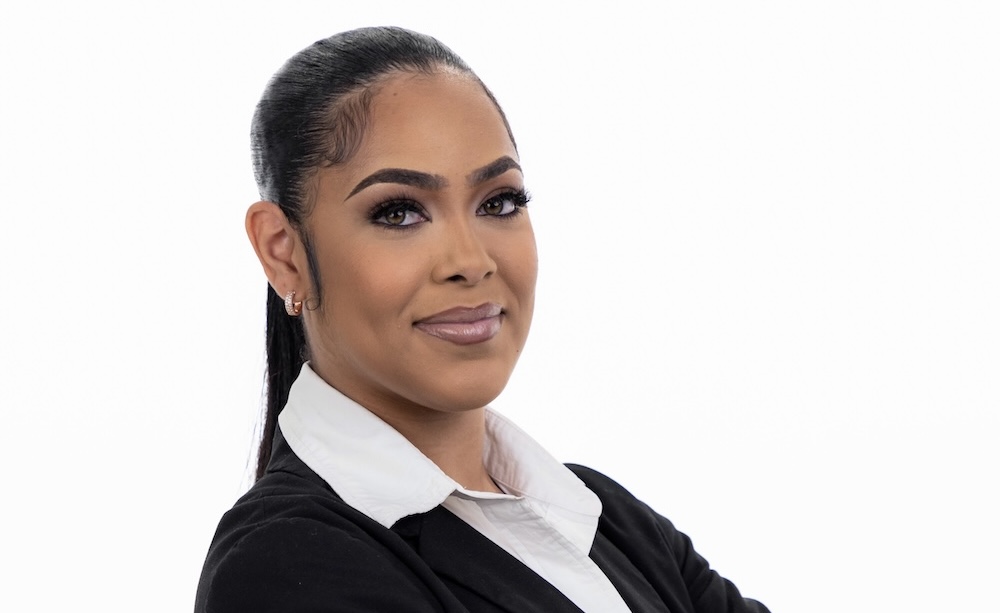
Keiazia Burchall-Busby knows only too well why it’s vital that every patient gets the very best medical care for their individualised needs.
As a child, Ms Burchall-Busby’s rare bleeding disorder was misdiagnosed – meaning her condition was not properly treated, which left her feeling helpless and invalidated.
After her haemophilia was correctly identified and her health improved, she grew into a star student with a passion for medical science, determined to make life better for future patients than it was for her.
Mr Burchall-Busby, now 24, is a recipient of scholarship awards from Bermuda Hospitals Board, the University of West Indies and Aegon. She is studying medicine at the University of Medicine in Grenada.
“From an early age, medicine has been at the forefront of my aspirations, shaped by my experiences as a patient,” she said.
“Throughout my younger years, as a haemophiliac female, I faced the challenges of misdiagnosis firsthand. This opened my eyes to the disparities in healthcare and the importance of staying current with medical advancements.”
Ms Burchall-Busby said women with blood disorders are often overlooked or diagnosed later due to “misconceptions and gaps in awareness”.
She explained: “My initial prognosis was determined due to the overlapping symptoms and longstanding assumptions that haemophilia primarily affects males.”
This resulted in physical challenges such as ineffective treatment and unmanaged bleeding symptoms.
It also led to “feelings of invalidation and helplessness” that are often underrecognised in patient care.
She said: “These experiences motivate me to provide holistic, patient-centred care, to advocate and ensure that every patient’s needs are met with both compassion and expertise.”
Catalyst for care
Navigating the healthcare system during her childhood exposed Ms Burchall-Busby to the consequences of diagnostic gaps and disparities in care, particularly for patients whose conditions fall outside what is typically expected.
Rather than discouraging her, this experience became the catalyst that inspired her to serve others.
She explained: “Those experiences showed me the profound impact that compassionate, patient-centred care can have on patients and their families, inspiring me to emulate my physicians and provide the same care to others facing similar challenges.”
She wants to improve care in our community by incorporating precision medicine to provide care tailored to each patient’s unique needs.
It’s been a long journey already. At Bermuda High School, she focused on science-intensive courses, which led her to specialise in genetics at Western University, with a minor in microbiology and immunology.
As a genetics specialist, she was captivated by the intricacies of genetic research and its role in the advancement of medicine.
Pursuing a career in medicine comes with significant financial challenges, however, and opportunities for scholarships in the medical field are limited.
But Ms Burchall-Busby said: “The combined support of the BHB Scholarship, Aegon Scholarship and the UWI Scholarship played a pivotal role in supporting my studies this year by providing both financial assistance and resources for a financially demanding path.
“Beyond finances, these awards represent a reminder that I am not on this journey alone. The internal recognition that came from receiving these scholarships were deeply validating, not only in my abilities and potential, but also the acknowledgement of the effort I have dedicated to my goals and the committees’ decision to invest in me.”
After graduating, she has her eyes on a career in haematology, and she has a strong passion for working with children.
“I hope to return to Bermuda to give back to my community and build a career focused on compassionate, patient-centred care while integrating advances in precision medicine,” she said.
“My aspiration is to be a physician who not only treats disease but also contributes to a more equitable and responsive healthcare system for future generations.”
Embracing challenges
She already has some impressive experience under her belt.
During the pandemic, she worked on the frontline as a laboratory technician through the Department of Workforce Development’s Summer Employment Programme, processing Covid-19 tests and providing results to the community.
“This role allowed me to contribute directly to public health efforts while developing my laboratory skills under high-pressure conditions,” she said.
After that, she dived deeper into the study of genetics with the new Caribbean-based genomics company, CariGenetics, started by Dr Carika Weldon.
She began as an intern under the Department of Workforce Scholarship and later transitioned into the Graduate Trainee Programme, before being offered a full-time position and then promoted to senior laboratory technician.
She played an active role in genetic research addressing the underrepresentation of Caribbean ancestry and biodiversity in the scientific community, with a focus on breast and prostate cancer, and genetic studies of the Bermuda cedar and the Bermuda petrel.
The development of medical science, of course, can have wonderful benefits for us all.
“After spending time pursuing research, I believe that as the medical field continues to evolve, the way we care for patients must evolve alongside it,” Ms Burchall-Busby said.
“Medicine is increasingly moving toward personalised and precision-based approaches, driven by a growing understanding of how genetics, environment and individual variability influence disease and treatment.
“By embracing this shift, I hope to contribute to care that is more thoughtful and tailored to each patient, ultimately improving outcomes and strengthening trust within our community.”
One challenge for this high achiever might be keeping her feet on the ground – yet she’s got that covered through her love of dancing.
She represented Bermuda at Carifesta 2017, and it still plays a key part in who she is today.
“Staying connected to dance in this way allows me to remain grounded, maintain balance and reconnect with a passion that has shaped my discipline, creativity and work ethic,” she said.
“This also reinforces my love for mentorship and working with youth. Even without dancing regularly, the lifelong lessons I gained through dance continue to influence how I manage stress, stay motivated and approach my studies with resilience.”
