
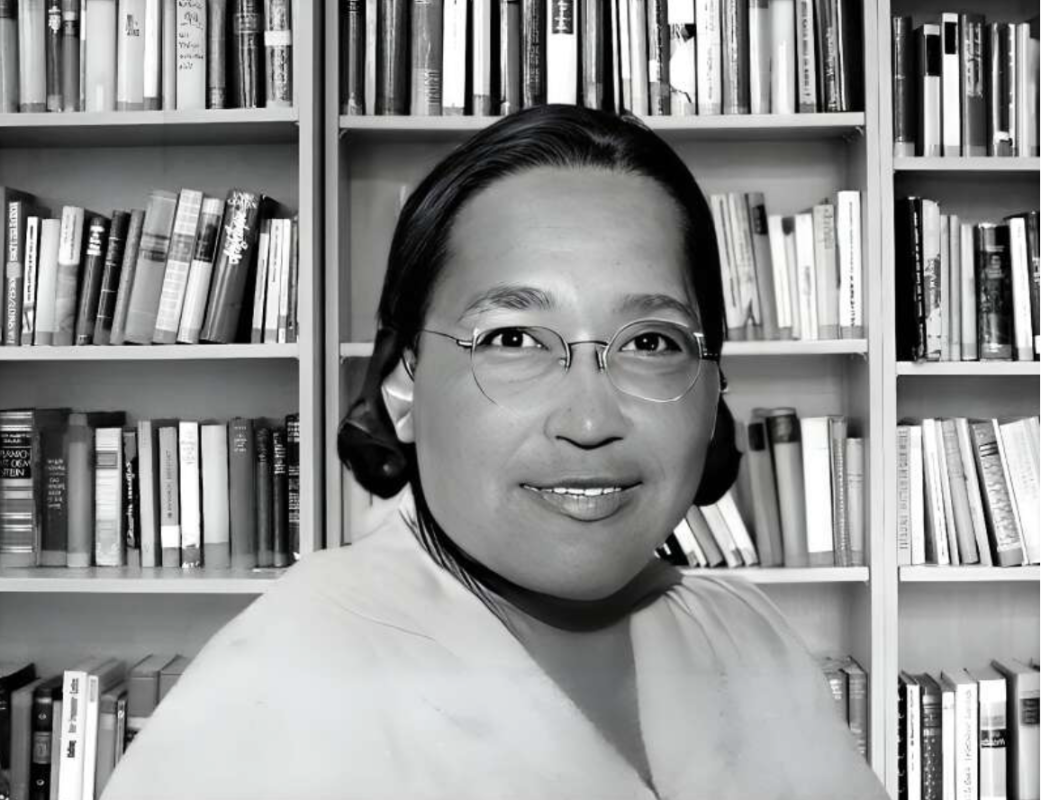
Groundbreaking nurse, pioneering educator, one of Bermuda’s few Black suffragettes and trailblazing politician, Alice Scott dedicated her life to creating a fairer community.
Born in 1887, Ms Scott’s grandparents were former slaves, and she grew up in a world blighted by racism and prejudice.
Her list of achievements is extraordinary. To name just a few:
- In 1921, she established the Shady Rest Nursing Home in Somerset, which she managed for four decades.
- In 1927, she cofounded Sandys Secondary School, which she spearheaded during its early years.
- In 1944, she was a member of the Bermuda Woman Suffrage Society which won women the right to vote.
- In 1948, she was one of Bermuda’s first four women to run for Parliament.
One of ten children, Ms Scott grew up in a large family with a heart for social justice.
Her father, John Scott, was a Dockyard worker and an active member of the Victoria and Albert United Order of Oddfellows lodge, an organisation that gave Black Bermudians economic and social support throughout the 1800s and 1900s.
Groundbreaking nurse
Mr Scott also worked at the Royal Naval Hospital, which might have inspired his daughter’s early ambition to be a nurse.
There were no training facilities for Black nurses in Bermuda at that time, but her father discovered opportunities were available at Lincoln Hospital in New York, which had recently formed a connection with the island.
In 1912, Ms Scott became the second Bermudian to graduate from Lincoln as a registered nurse, a year after Mabel Crawford had become the first.
Qualification was one thing – getting a job back home, however, was another.
Racial barriers meant employment was impossible at the Cottage Hospital or King Edward VII Memorial Hospital but, undeterred, Ms Scott spent several years working as a midwife and private duty nurse.
At one stage, she was reported to have been responsible for delivering “almost every baby in Somerset”.
In her mid-30s, she founded Shady Rest Nursing Home at her family home in the West End, where she worked until she retired in 1966.
The facility served as a home away from home for six elderly patients, and included a small clinic, where Ms Scott would administer first aid and provide care for sick or injured community members.
Pioneering educator
Like her father, Ms Scott was an active member of the United Order of Oddfellows, who aimed to enlighten the Black community through education.
Several attempts had been made to form high schools in Somerset during the early 1900s, but none had survived in the long term. Known for her strong and dynamic personality, Ms Scott made it her next ambition to turn that around.
Costs were prohibitive, and many people argued they would have been better off supporting Berkeley Institute instead; but Ms Scott and some like-minded individuals persisted and, in October 1927, their dream became a reality.
Sandys Secondary School was formed in the living room of the Foley family, with 176 girls and one boy enrolled as pupils.
The early years saw numerous challenges, as the school faced bounced from location to location and faced continual cash constraints.
Ms Scott was front and centre of the battle to keep it alive, as secretary and treasurer – and, after mortgaging her own home, financial provider.
The school finally found a permanent home on Scott’s Hill Road, where it was adopted by the Bermuda Government as a fully funded public school in 1963.
Suffragette
During the first half of the 20th Century, Bermuda’s suffragette movement had been gathering momentum at a frustratingly slow pace.
Many believe the Bermuda Women Suffrage Society’s progress was held back by a perception that it was White and upper class.
Ms Scott – a staunch supporter of women’s rights – was one of its few Black members, serving on its executive committee, and understood to be a good friend of the leader, Gladys Morrell.
The tide finally began to change in 1942, after Ms Morrell made a rousing speech at a forum at the Pembroke Hamilton Club, encouraging Black people to join. This swelled the organisation’s numbers and prompted lawmakers to take notice.
A bill to enfranchise women was passed in April 1944, becoming law a month later.
Trailblazing politician
Now that women could vote, the next step was getting into Parliament.
Ms Scott became a prominent member of the newly formed Bermuda Women’s Civic and Political Association, which aimed to deliver the island’s first female MPs.
Ever the frontrunner, Ms Scott was one of four women candidates at the 1948 General Election. Although she was not elected, she could claim to being part of a winning team as two of her colleagues, Hilda Aitken and Edna Watson, were successful.
Anyone for tennis?
Ms Scott’s accomplishments were not restricted to the professional, educational and political spheres.
A keen tennis player at the lodge, she also built her own tennis court, founded the Shady Rest Lawn Tennis Club, was a founder member of the Somers Isle Tennis Club, and took part in overseas tennis tournaments.
She encouraged other women to play tennis to help keep them fit, and it’s likely that her love of the sport fostered her friendship with fellow tennis fan, Ms Morrell.
Legacy
Ms Scott was awarded the British Empire Medal for her contribution to Bermuda in 1954, and one of the houses at Sandys Secondary School is named after her.
Yet for people who remember Alice Scott, she was a woman of the people who did remarkable things for the community she loved.
Former public works minister, Lieutenant-Colonel David Burch, named Ms Scott as his hero in a 2015 article in The Royal Gazette.
“She was a nurse and midwife who travelled around Somerset on a pedal bike,” he recalled.
“She was a short lady whose feet couldn’t touch the ground when she sat on it, so she would often ask people for a boost to get going.
“She would ask you to hold your hands like a step so she could get on the bike. She was an amazing woman.”
- Sources for this article include The Royal Gazette archives and Bermuda Biographies.
