
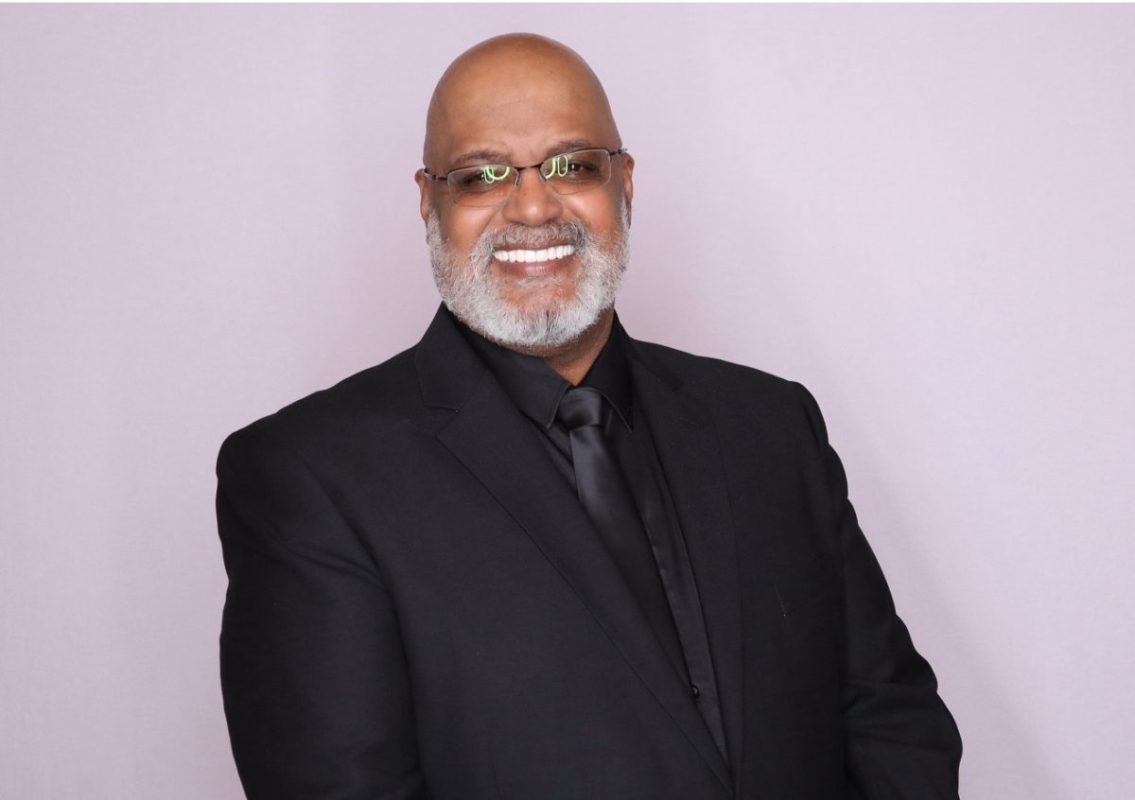
One of our greatest mistakes in Bermuda today, according to Puisne Judge Juan Wolffe, is that we don’t know our history well enough.
Mr Justice Wolffe witnesses the outcome of this every time someone appears in his courtroom and pays the price for a transgression that – with a bit more pride in who they are and where they come from – they might not have made.
“The young men, women and children who come before the courts are there for a plethora of reasons,” he told Bermudian History.
“But there is a sense that they are rudderless. I do think that, as Bob Marley said, if you know where you came from, then it breeds in you a level of pride and inspiration.
“Maybe it even manifests itself into dreams and aspirations.”
He’s referring to Marley’s Buffalo Soldier, which celebrates the bravery, struggles and resilience of African American troops who served in the United States Army after the Civil War.
“If you know your history,
“Then you would know where you’re coming from,
“Then you wouldn’t have to ask me,
“Who the heck do I think I am?”
We have our own heroes in Bermuda. The problem, for Mr Justice Wolffe, is that we don’t celebrate them enough.
“Every culture, every race, every community, needs to celebrate its rich history,” he said, “to know where you come from, where you are and where you could be.
“And I just don’t think we do enough of that in Bermuda.”
Growing up in the Court Street area in the 1970s and 80s, he watched historic events unfold on his doorstep. He was so inspired by iconic campaigners like Dame Lois Browne-Evans, Ottiwell Simmons and Julian Hall that he tried to do his own bit by becoming first a police officer, then a lawyer and now a judge.
“I had the front row seat to a lot of the civil unrest that was going on in Bermuda,” he recalled.
“The 1977 riots. The turmoil that resulted from the Larry Tacklyn and Buck Burrows hanging. I literally was there, watching the riots go on.
“The 1981 riots. A lot of the uprise took place in the Court Street, back of town area. Every Labour Day, I would see Ottiwell Simmons and the stalwarts of the labour movement walk across my door.
“So, I took an interest in all this, and maybe this is why I’m a lawyer, I don’t know.”
Yet, at school, he learnt more about American history than his community’s history.
“Yes, we had civics class, and yes, we learned what happened in 1609, and The Deliverance. But it’s very surface stuff.”
Trailblazers
In Mr Justice Wolffe’s lifetime, many individuals have broken barriers, changed the world around them and demonstrated how Bermuda could punch above its weight. For example:
- Dame Lois Browne-Evans, who smashed the glass ceiling as Bermuda’s first female lawyer and the first female Opposition leader in the Commonwealth and dedicated her life to fighting racial discrimination.
- Julian Hall, an iconic and charismatic lawyer and politician who became a role model to Black professionals through his highly successful legal career.
- Ottiwell Simmons, who led the Bermuda Industrial Union through tumultuous events which helped change the island’s sociopolitical landscape.
- Sir John Swan, the long-serving Premier who helped establish Bermuda as a major international finance centre by negotiating the US Tax Treaty in 1986.
“Bermuda has punched above its weight for a very long time,” Mr Justice Wolffe said.
“We’ve got our National Heroes, and that’s great. In the legal context, do we know enough about Lois Browne-Evans? A lot of older persons know about her, but I wonder whether the millennials, the Gen Zs and all, do they know what our past was?
“As a Black woman, coming through the legal system at the time, and how she was able to navigate through that. I think that knowing what she did would give some inspiration to other young Black women who want to get into law.”
He also cited events from our history that don’t receive the attention they deserve, such as the Enterprise slave ship’s unintentional arrival in 1835, which prompted the release of 72 slaves; or the staging of the world’s first women’s tennis tournament in 1876 [Turn to page XX for the full story].
On the shoulders of heroes
But he believes events in living memory, which shape the way we live today, could have the most significant impact on our young people.
“When I was like 11, 12, 13, I remember seeing those things with my own eyes, but nobody was talking about it,” he said.
“If you’re talking about racial history, economic history, that whole period of about 1975 to about 1985 was a hotbed of activity.”
He added: “I firmly believe that if many of the young men who are engaged in antisocial behaviour, and in some cases, criminal behaviour, knew that they had emerged from people who had made a difference, not just in Bermuda but in the world, that maybe would change the whole paradigm of how they view their lives.
“They are descendants of kings and queens from Africa, right?”
Mr Justice Wolffe is speaking from personal experience; his career had the chance to happen because of what other people did.
“If you look at things like the Theatre Boycott, there were a handful of extremely courageous people who were just as courageous as Rosa Parks, who said that we need to do something about this,” he said.
“Thanks to the sacrifice they made, to their own detriment, we are able to enjoy things that those people were not able to enjoy. And they should be celebrated. Absolutely.
“I am sitting in this seat here because of the blood, sweat and tears expended by people who came before me.
“I am standing on the shoulders of a Lois Browne-Evans. I’m standing on the shoulders of a Julian Hall. I’m standing on the shoulders of many other persons who came before me who had to sacrifice. And I don’t take that for granted.”
So, what does that mean for our young people?
“Any child who is five years old, and is being told, listen, you come from a line of inventors, musicians, politicians, who not just made a difference in Bermuda, but across the globe, I think it would instil in us a deep sense of pride, which could let us know that we can do anything.
“And I know that may sound airy-fairy. But you can put it in the context of what I do every day. I see a lot of lost people, and I know that’s a much more complex issue, but I do think that a part of their growth may be, ‘You are somebody. You come from a line of people who have done some great things. And that you should be proud of who you are.’
“There’s a song called Proud to be Bermudian. Do we actually feel that? I think some of us do. But I think some of us don’t understand what it is to be Bermudian.”
That’s something for us all to consider, as John Woolridge put it in that timeless classic:
“With our youth as the future, we must pass them the mantle.”
