
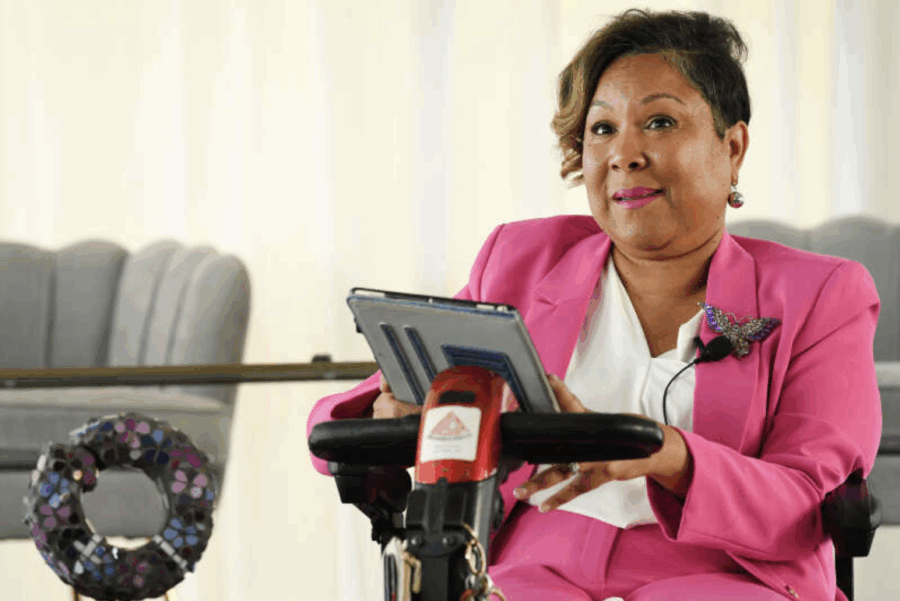
(In photo: Lisa Reed)
It’s not just about ramps, elevators and cracks in the pavement.
For people with disabilities in Bermuda, the broader and more poignant issue is all about dignity, independence and inclusion.
The Human Rights Commission has been calling for urgent systemic change after its 2024 Disability Inclusion Report highlighted widespread discrimination and harassment, while people with disabilities gave accessibility in Bermuda an average mark of 3.8 out of 10.
Poor access to public transport, inaccessible buildings and public areas, and the abuse of disabled car parking spaces are just some of the issues crying out for reform.
Yet according to many people with disabilities, part of the solution lies within us all.
Ryan Gibbons, 40, has a prosthetic leg because part of his right leg was amputated after a motorcycle crash. He works as a bartender in Hamilton.
“If I couldn’t climb a flight of stairs, I wouldn’t be working right now,” Mr Gibbons said. “That would mean limited income, limited autonomy, limited life.
“That’s not a reflection of my capabilities. That’s a systemic failure.
“Governments, business, individuals: we can all make different choices. We can build better. We can care harder. That’s power worth using.”
And remember – one day, it could be you.
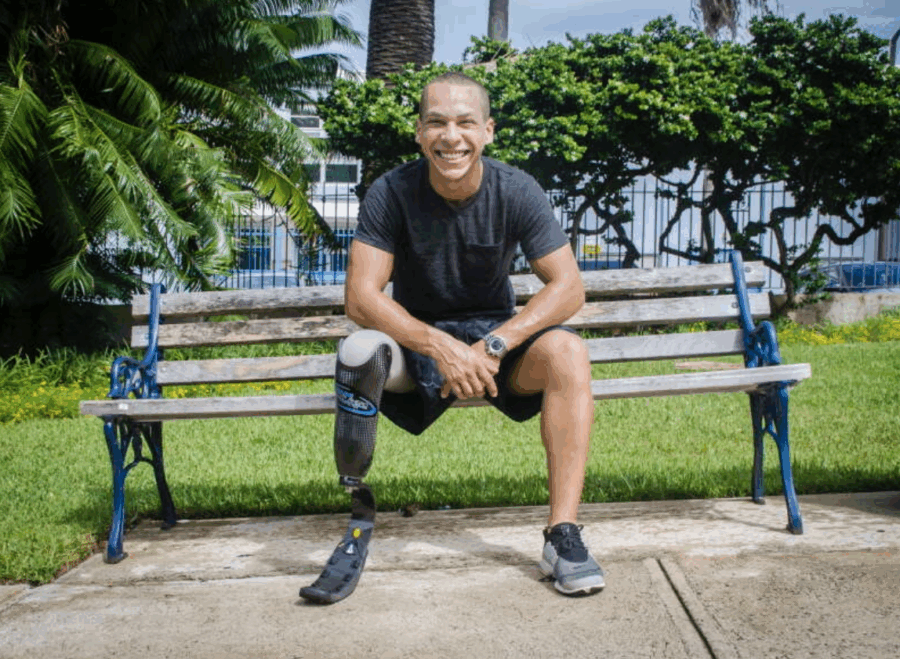
“Nobody thinks they’ll need a wheelchair – until they do. Stroke. Accident. Illness. It takes one second to join this club,” Mr Gibbons said.
“We need public empathy, not pity. Look in the mirror. Compassion starts there. Not all disabilities are visible. Not every struggle is obvious. Just because you don’t need a ramp today, doesn’t mean you won’t need one tomorrow.
“Kindness is the most accessible tool we’ve got.”
Mr Gibbons shared some of his experiences with key problem areas:
Public transport
“Bus drivers have apologised when the lowering mechanism didn’t work, leaving me to struggle. I manage, but what about those who can’t?” he said.
“In Spanish Point, our bus route ends at 6 to 6.30pm. That cuts off seniors, working folks and even visitors from accessing groceries or iconic spots like Admiralty House.
“While I don’t have all the answers, there are models in similar jurisdictions we can learn from: shuttle services, on-demand transport, even volunteer networks.”
After the issue was highlighted in the HRC report, the Bermuda Government has been discussing the issue internally and pledged action to “improve the services of transportation on this island, especially when it comes to those with disabilities”.
Disabled parking bays
Mr Gibbons said hotspots include Par-la-Ville car park and Bermudiana Road.
“Why does it happen? Mostly carelessness. People think, ‘I’ll just be a minute.’ That minute could mean the difference between accessibility and exclusion for someone else.”
Asked how he responds in these situations, Mr Gibbons replied: “Sometimes I don’t have to say a word. People have exited their cars, seen me, and either made excuses or moved their vehicles. Their own conscience knew better.”
The City of Hamilton toughened up enforcement in May, but a spokeswoman said: “Unfortunately, despite ongoing education and signage, the City’s parking enforcement officers continue to observe widespread misuse of disabled parking bays across Hamilton.
“We’re seeing both drivers without valid permits parking in these designated spaces as well as individuals misusing temporary or borrowed disabled parking badges.
“This kind of behaviour deprives people with genuine mobility challenges of the access these bays are intended to ensure.”
Motorists caught parking in disabled bays without a valid Disabled Parking Permit or using someone else’s permit while the holder is not present are fined $75.
Build with care
Lisa Reed, the executive officer of the HRC, is a wheelchair user and advocates for people with disabilities.
Ms Reed said public buildings should maintain working elevators, offer step-free routes and use clear, high-contrast signage so everyone can navigate confidently. But too often this doesn’t happen.
A Government spokeswoman said: “The Department of Planning is committed to ensuring that all new development and, where feasible, existing buildings undergoing renovation, comply with the accessibility and universal design requirements set out in Bermuda’s planning framework.”
This includes the Bermuda Building Code, the Bermuda Residential Building Code, the Bermuda Plan 2018, and local plans such as the City of Hamilton Plan 2025.
The spokeswoman continued: “The Department continues to monitor and address instances where developments may not fully meet these standards.
“Where non-compliance is identified, appropriate action is taken in accordance with established enforcement procedures.
“Ongoing collaboration with architects, developers and building owners remains a central part of the Department’s efforts to ensure that Bermuda’s built environment is safe, inclusive and accessible to people of all abilities.”
Community action
Ms Reed said: “Instead of saying, ‘We’ve always done it this way’, ask first, ‘How can we make this work for you?’
“Ask before helping, listen before doing, take the time to understand the individual’s needs without making assumptions and treat individuals and accessibility with respect and shared responsibility.”
Many respondents to the HRC survey described feeling short-changed when they had to fight for basic accommodations, explain their needs repeatedly or accept partial participation instead of full inclusion.
Ms Reed said: “The common narrative is that inclusion remains conditional and is too dependent on the particular officer, employer, bus driver, building manager or restaurant staff that someone happened to encounter that day.”
Government action
Ms Reed said Bermuda needs a National Disability Strategy that is publicly tracked and time-bound, with clear owners across government ministries.
“People should be able to see, in plain language, our annual progress on accessible transport, standards for the built environment, employment outcomes and access to public services,” she said.
“Compliance must not be optional. The Human Rights Act and our accessibility codes must be applied consistently with government services, procurement and licensing.”
Her other suggestions include disability-competency training in healthcare, accessible information and booking systems, accessible doctor’s offices and disability trained medical professionals.
The Government can also set an example, she said, by expanding internships, apprenticeships and recruitment pathways, funding workplace accommodations, training managers and reporting publicly on employment outcomes.
The Ministry of Youth, Social Development and Seniors said it is assessing two legislative pathways to strengthen Bermuda’s disability rights framework.
Option 1: Amend our existing laws
This would involve modernising definitions, clarifying duties around reasonable accommodation, and improving enforcement procedures. This option could be implemented comparatively quickly, but a spokeswoman warned that disability-specific accountability and visibility would “remain constrained by the broader human rights architecture”.
Option 2: Introduce a Disability Rights Act
This would provide a dedicated legal foundation for advancing disability rights, reinforcing Bermuda’s alignment with the UN Convention on the Rights of Persons with Disabilities. It would also establish the statutory basis for a Disability Unit and the Disability Register.
The spokeswoman said this would ensure “sustained leadership, coordination and monitoring”, while adjudication over discrimination complaints would be enhanced by governance mechanisms tailored to disability inclusion.
“Both pathways aim to deepen protection, accessibility and participation for persons with disabilities,” she said.
“A phased approach could leverage the strengths of each: immediate improvements through amendments, paired with the longer-term institutional benefits of a standalone Act.”
The spokeswoman said both options reflect the findings of a comprehensive review of existing laws, Bermuda’s obligations under the UNCRPD, and research on models in similar jurisdictions.
Whichever pathway is adopted, the HRC will remain the primary enforcement body for anti-discrimination protections.
