

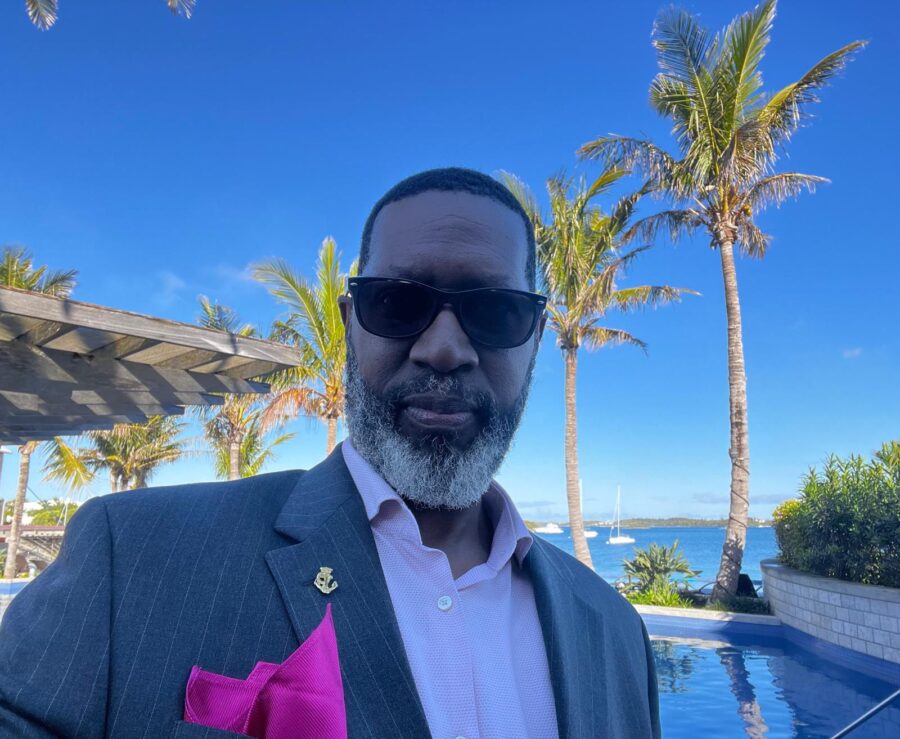
Troy Glasgow has always loved life. Quick to laugh and possessing an ever-ready smile, there’s not much that can knock him off his positive path.
So, when a routine checkup in 2022 revealed something unusual during his annual physical, Troy, 60, didn’t panic. He simply saw it as another problem to tackle.
“My doctor said, ‘Go to a urologist, just in an abundance of caution.’ No urgency in what she said, but I go to the urologist. He does an exam; they do a biopsy; come to find out I had prostate cancer.
“When he told me I was like, ‘OK.’ So, he says, ‘Did you hear me?’”
For many men, those words can sound like a death knell – they conjure fear, doubt, and endless questions. For Troy, they prompted something different. “I’ve always been about problem-solving,” he said. “Once I knew the problem, I wasn’t going to focus on fear. I wanted to know: what’s next?”
At first, there was just some active surveillance: a period where doctors monitored his condition while he adjusted to the idea of having cancer.
But later, a more precise biopsy painted a clearer – and more urgent – picture. The cancer was aggressive. Despite relatively low PSA numbers, the recommendation was clear. It was time to act.
“I didn’t even ask what type of cancer it was,” Troy said with a shrug. “The doctor said it was aggressive, and that was enough for me. I’m not one to get caught up in the labels. I just wanted to know the plan.”
 Choosing a path
The plan, as it turned out, wasn’t simple. Troy had to choose between two very different options: surgery or radiation. Each came with its own risks, side effects and recovery processes.
He chose radiation therapy – a longer but less invasive path.
“Even though it meant almost two years of treatment, it was better for me,” he explained. “I didn’t want to go through the surgery, the catheters, the recovery. Radiation gave me a way forward that felt right.”
The treatment took him to the Bermuda Cancer and Health Centre, where he underwent daily radiation sessions. What could have felt like an ordeal, Troy approached with his usual resolve – and even a touch of humour.
“Yeah, the hot flashes were real,” he laughed. “And the energy drop? You don’t realise how much your testosterone affects everything – your mood, your strength, even your appetite. Suddenly I had sugar cravings I never used to have. It’s like your body gets rewired.”
That ‘rewiring’ came from the second part of his treatment: hormone therapy that suppressed his testosterone for 18 months. It was, as Troy described it, “a kind of medical castration”. The purpose was to starve the cancer of the hormones it depended on. The side effects were draining, but he endured.
The long road
Troy’s journey lasted nearly two years, from the first scan to the final treatment in March 2025.
During that time, support was paramount. For Troy, it came in the form of his girlfriend, who stood by him from the beginning.
“I told her what was coming, and she said, ‘I’m in for the long haul.’ That support made a world of difference. Even my doctor said, ‘You need someone who’s there for the psychological side of this.’ Because it’s not just physical – you start doubting yourself, questioning your future. You need someone to help steady you.”
His gratitude extends to the BCHC team.
“The radiation team at BCHC made the experience bearable,” he said. “I was able to have one comprehensive treatment instead of multiple procedures overseas.”
Reflections and lessons
By the time his PSA numbers dropped to 0.07, and his treatment concluded, Troy had not only survived, but gained perspective. Slowly, he began regaining his energy, easing back into daily routines and rediscovering a sense of normalcy.
“You start to appreciate normal in ways you never did before,” he said. “Waking up without fatigue, feeling your energy return – that feels like a victory.”
His reflections stretch beyond his own journey. Troy has become vocal about the importance of early detection, particularly for Black men, who statistically face higher risks of prostate cancer.
“I was healthy. No family history. And still – I got cancer,” he emphasised.
“That’s why I tell other men: don’t wait. Don’t assume it won’t happen to you. Get checked, get your PSA numbers, do the biopsy if the doctor recommends it. Early detection is everything!”
Troy also pointed out that for many men, prostate cancer goes undetected until late in life.
“Plenty of men are diagnosed in their eighties,” he said. “At that point, doctors sometimes say it won’t make much difference to treat it aggressively. But if you’re younger, if you catch it early, treatment can mean decades of extra life. That’s why I’m open about my story.”
Moving forward
Now that his treatment is behind him, Troy is focused on living – not just surviving.
He’s regaining his strength, reconnecting with his athletic side and embracing life with renewed purpose.
“It’s not just about surviving cancer,” he says. “It’s about living fully after it.”
And while his path has been marked by difficult choices and side effects, Troy remains grateful – for the doctors who guided him, for the technology that allowed him to be treated close to home, and for the partner who stood by his side.
“I’m not just a survivor,” he said. “I’m proof that early detection, thoughtful treatment and a strong support system can make all the difference. And yes, it’s OK to laugh and find joy along the way – even when you’re fighting cancer.”
Troy Glasgow’s story is more than a medical journey. It’s a testament to resilience, preparation and perspective. With his steady problem-solving approach and a heart open to love and support, he turned a life-altering diagnosis into a roadmap for survival – reminding us all that courage isn’t always loud. Sometimes, it’s just a quiet determination to keep moving forward, one step at a time.
Top of Form
