
Getting sick and not being able to afford treatment is an incredibly harsh reality for many people in Bermuda today.
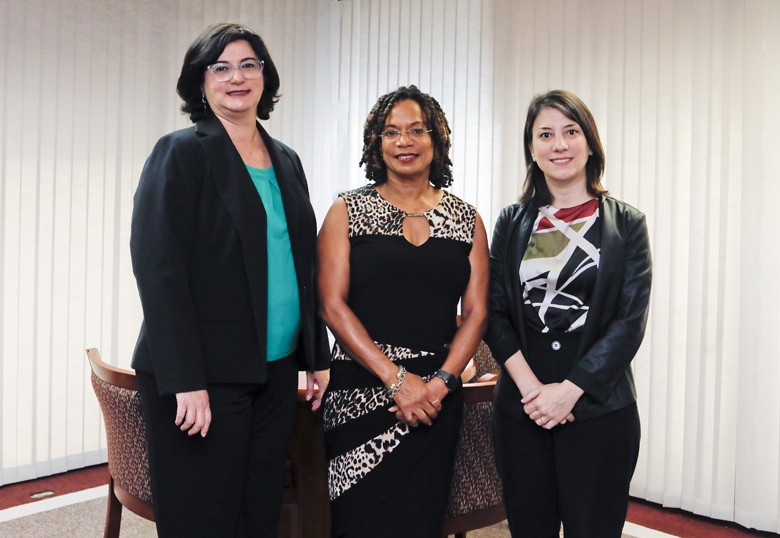
From the homeless person who never sees the doctor to the retiree whose change in insurance means they can’t get their medicine anymore – Gina Spence-Virgil has seen it all.
“The inequalities are great between certain sections of our community,” the activist told RG Health & Wellness.
“The level of care is based on your insurance coverage, from something as simple as a doctor’s visit to something as serious as an operation.
“If you’ve got top-notch healthcare, and you’re paying those big dollars, you can go to Johns Hopkins, you can go to the best doctors. But if you don’t, you can’t get the treatment at all.
“For some people, it’s just a horrible reality.”
The Bermuda Government is committed to introducing a single-payer system which will give everyone access to basic health coverage.
Minister of Health Kim Wilson said 35 per cent of residents are either uninsured or underinsured, which significantly limits their access to quality care.
“This disparity is a major concern, particularly as the population ages and chronic illnesses rise,” she told us.
“Improving the system is a long-term goal, with the aim of providing Universal Health Coverage for essential services.
“As the Minister of Health, I am committed to ensuring that every Bermuda resident has access to core health services.”
She said the plan includes:
- A single-payer system to consolidate public insurance pools.
- A national digital health platform to reduce efficiencies.
- Core benefits package focused on primary and preventative care.
“Funding remains a key challenge,” Ms Wilson said, “but the Government is committed to transparency and stakeholder engagement throughout the process.”
Desperate need
Ms Spence-Virgil warned even people who are well covered cannot be certain that will always be the case.
“What about the senior who went from having a full plan with an insurance company while they working to a much lesser insurance plan now that they’re retired and on a fixed income?” she said.
“They still have the same condition as when they were insured and need the same medicine, but now they’re not covered by the same insurance.”
Ms Wilson said HIP and FutureCare are subsidised options for vulnerable people, while access is expanding through community health fairs and outreach programmes.
Individuals are also often helped by their families, but Ms Spence-Virgil said many are still left choosing between food, rent and medicine – and some have even fewer options.
She said: “I’ve seen when a person is homeless for years, sleeping in bushes or on a bench, and they’re taken into hospital – it turns out they’ve been sick for so long that they can’t get well again.”
Ms Spence-Virgil said others might have insurance but cannot afford to take time off work to see their doctor.
She knew one woman who got sick and recovered but took six months to pay off her medical bills. When she got sick again, she refused to go back to the doctor as she did not want to rack up more bills.
“I was angry about that,” she said. “I understood how she felt, but by the time she had accepted she needed to go back to the doctor again, she was too far gone.”
Extra barriers in mental health
Access to mental health treatment – even for people with insurance – is another major concern among health professionals.
Kelly Madeiros, the managing director of Solstice, said: “In Bermuda, there is a clear disparity in how insurance policies treat mental health compared to physical health.”
Insurance plans generally provide lower coverage limits, fewer approved sessions or tighter annual caps, she said.
“This means that people accessing therapy or psychiatric care may quickly exhaust their benefits and be left covering costs out-of-pocket.
“Mental health conditions, like chronic physical illnesses, often require long-term treatment – not just short-term interventions. But our current insurance model is not designed to support that continuity.”
Ms Wilson acknowledged the disparity and said: “Mental health services should be treated on par with physical health services. We must eliminate stigma and integrate mental health into primary care.
“Mental health will be included in the UHC core benefits package, signalling a long-term commitment to parity.”
Bridging the gap
More than $2 million has been invested in mental health programmes – and Ms Madeiros noted strides have been made in access to mental health services.
“Most private insurers now recognise the importance of mental health and cover a wider range of providers, including counsellors, neuro testing and therapists — not just psychologists,” she said.
More local employers are investing in Employee Assistance Programmes and most private insurers continue to support the growing use of telehealth. But there is still a long way to go.
Ms Madeiros explained: “At Solstice, we’ve seen a consistent trend – people who need support but cannot afford care, even with insurance coverage.”
In 2024, 47 clients formally requested low-cost options, and Solstice approved 253 subsidised
appointments. There were also some who asked for discounts or flexible payment plans or chose to delay care due to cost; meanwhile young people have been supported through Solstice’s Growing Minds Centre for little or no cost.
Ms Madeiros said: “This pattern has become so common that we’ve built community-based, lower-cost care models to try to bridge the gap — but systemic change is still needed.
“In private practice, where there are few grants or opportunities to apply for funding, the ability to pay staff and bills fall solely on generating revenue through direct care.
“We have heard the community share that cost is a barrier and we try to work with every inquiry to find a fit that is affordable, taking into consideration their insurance benefits or not having insurance.
“When people are choosing between groceries, rent and therapy, mental health can end up at the bottom of the list. Add to that the persistent stigma around seeking help — particularly in smaller communities — and many people never make it to their first appointment.”
The upshot of all this can be worsening symptoms, as well as chronic stress, relationship breakdowns, difficulties at work, school or in parenting, and can eventually impact physical health.
Working together
Community collaboration is key to addressing the issue.
“Some of the more recent successes we have seen for mental health in Bermuda have been when so many parts of our community come together — Government, the Bermuda Hospitals Board, schools, arts organisations, Solstice, EAP providers,” Ms Madeiros said.
She said potential solutions include:
- Policy reform so that insurance companies provide parity between mental and physical health coverage.
- Government support allowing low-income families access to publicly funded mental health services.
- Employers fostering cultures of mental wellness at work.
- Service providers creating low-cost options through sliding-scale or subsidised care programmes.
The Gina Spence Programme, which helps people affected by bereavement, has adopted the latter principle by providing cost-free services for those who can’t afford them.
“That’s how we all have to look at caring for those people who need it the most,” Ms Spence-Virgil said.
“It’s usually those people that get left on the wayside. Some of these families include children and seniors. It’s people that have real names. They’re our brothers and sisters and co-workers.
“You might never know it until you have someone you care about who is going to be airlifted away and isn’t going to be able to work for weeks and months – and then you’ll feel it.”
