
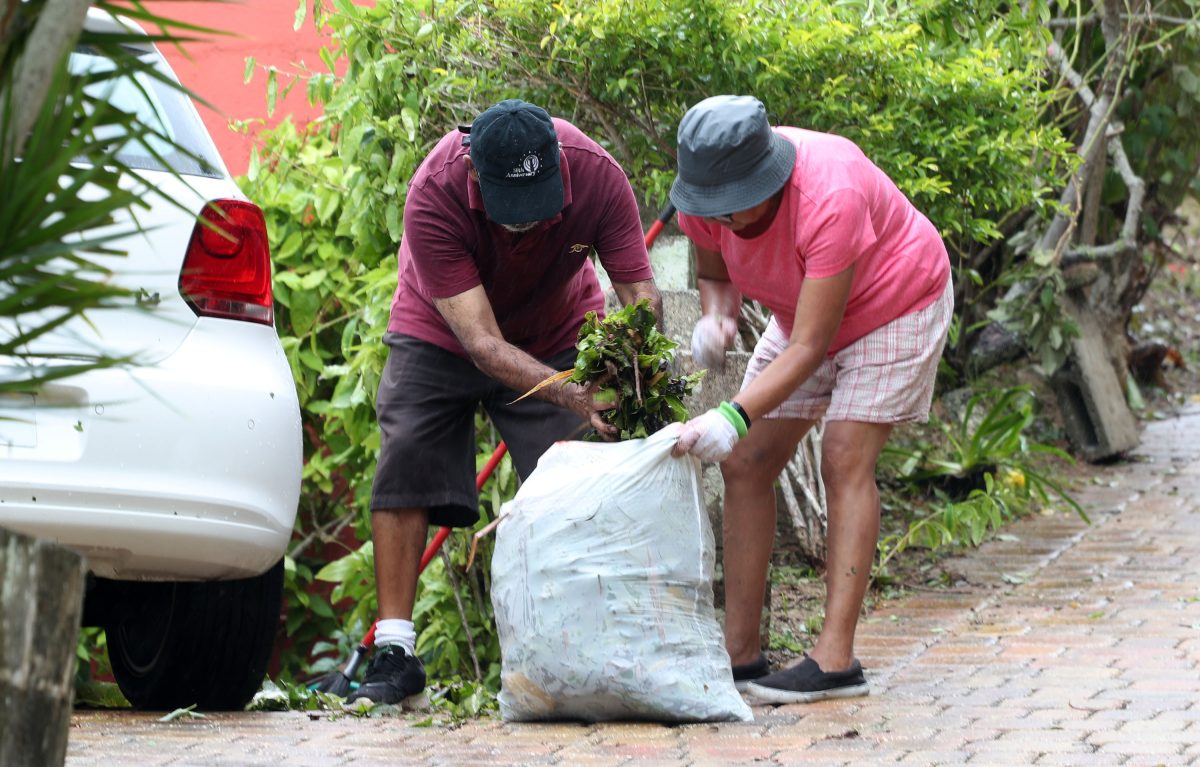
The wind has finally stopped. The shutters are coming down. The rain has eased and the first signs of blue sky are beginning to appear.
Then comes the moment many Bermudians know all too well: stepping outside and seeing the hurricane aftermath.
Scattered tree branches, loose roofing materials, broken fences, debris piled along roadsides and gutters overflowing with leaves are all common sights after the storm subsides.
Suddenly, after hours of storm preparation and constant weather updates, the next phase begins — clean-up.
For many people, stress or adrenaline kicks in and the instinct is to get everything back to normal as quickly as possible.
But according to Alandra Swan, Keep Bermuda Beautiful’s education and community engagement coordinator, that rush can often create more problems than it solves.
“One of the biggest mistakes is people trying to move too quickly,” Ms Swan explained. “After a storm, everyone wants Bermuda to ‘look normal’ again immediately, but rushing often leads to injuries, improper disposal or environmental harm.”
In other words, before grabbing a rake and heading outside, it pays to slow down.
Safety first
Once the storm passes, the danger does not necessarily disappear. Storms can leave behind hidden hazards that are not immediately obvious. Fallen power lines, unstable trees, loose roofing pieces, exposed nails, standing water and structural damage can all create serious risks.
“Safety must always come first,” Ms Swan said. “Before beginning any clean-up, residents should carefully inspect their property for hazards.”
That first inspection matters. Something that looks like a harmless fallen branch may be under tension and capable of snapping unexpectedly.
A tree leaning at an odd angle may not be stable. Damaged fencing or loose metal may have sharp edges hidden beneath leaves and debris.
If there is uncertainty around structural or electrical damage, Ms Swan says homeowners should contact professionals or the appropriate authorities before entering dangerous areas.
Protective gear matters too. Gloves, sturdy closed-toe shoes, eye protection, hats and long sleeves can help prevent injuries during clean-up. Storm debris may not look dangerous at first glance, but cuts, punctures and strains are among the most common post-storm injuries. And in Bermuda’s heat and humidity, there is another factor people often forget: hydration.
Don’t try to be a hero
After a storm, there can be pressure to tackle everything at once: clearing the yard, moving the branches, cleaning the road, fixing the fence.
Ms Swan says clean-up is physically demanding work, and trying to do too much single-handedly can lead to injury.
“KBB recommends avoiding lifting extremely heavy debris alone,” she said. “Residents should work in teams whenever possible, lift carefully and take breaks.”
Bermuda’s post-storm heat can make recovery work harder than you expect. Add heavy lifting and long hours, and exhaustion can quickly set in. Sometimes the smartest approach is not working harder.
It is working smarter.
Start small
One common mistake people make is creating one giant pile of rubbish, where branches are mixed with household rubbish, construction debris is thrown together with recyclables, and damaged household items are piled on top of vegetation.
While this may feel easier in the moment, it ultimately creates problems later on.
“Proper sorting helps waste collection teams operate more efficiently,” Ms Swan said.
KBB recommends starting with the basics. Clear safe pathways first. Remove obstacles around entrances and access points. Then gradually begin sorting debris into categories.
Branches and leaves should be separated from household rubbish. Recyclable items such as aluminium, glass and tin should be sorted where possible. Hazardous materials — including batteries, fuel, paint, chemicals and damaged electronics — should be handled separately according to Government disposal guidelines.
And one thing residents should avoid entirely? Burning debris.
Ms Swan said: “Burning can release harmful toxins into the air, especially when plastics, treated wood or synthetic materials are involved.”
Think beyond your own backyard
Storm clean-up does not just affect individual homes. Where debris ends up matters for the wider community too.
Branches or rubbish placed across drains, pavements and roadways can create additional problems, increasing flooding risks and limiting access for emergency crews or neighbours. Illegal dumping creates another challenge.
Residents are encouraged not to dump storm waste in vacant lots, trails, beaches or roadside areas. What begins as a temporary pile can quickly become a long-term environmental issue. Storm debris left unmanaged can eventually wash into drains, mangroves, caves and Bermuda’s ocean ecosystems. That impact can last long after the skies clear.
Community effort
If there is one thing Bermuda consistently proves after storms, it is the power of community. Time and again, neighbours check on one another, families share tools and resources, friends help elderly residents clear their yards, and entire communities come together to support those in need. “Community cooperation is one of Bermuda’s greatest strengths after a storm,” Ms Swan said. “The clean-up process becomes much faster and safer when neighbours check on one another and work together.”
KBB encourages neighbourhoods to organise small clean-up groups where possible. One team may help vulnerable residents. Another may focus on clearing drains or roadways. Others may help sort recyclables and remove debris safely.
But according to Ms Swan, storm recovery is about more than simply moving branches and clearing roads.
“It is also about rebuilding morale and restoring a sense of pride and normalcy within the community,” she said.
After all, storms test more than homes and buildings — they test our resolve as people too. That’s why during any post-hurricane clean-up, it’s important to remember that Bermuda’s greatest resource has always been its people.
Long after the winds die down and the skies clear, it is the strength, kindness and willingness of the community to come together that helps the island recover and move forward.
