
For generations, Bermudians have surrounded themselves with objects that reflect the island’s unique history and culture.
Cedar carvings, Hogge money coins, antique bottles, stamps, vintage Bermuda books, banana leaf dolls, maritime relics and Gombey memorabilia are all part of what collectors affectionately call Bermudiana.
But today, Bermudiana is no longer confined to antiques. Contemporary artists and craftspeople are increasingly embracing the tradition, creating works that capture the island’s essence by incorporating locally sourced materials and translating them into pieces infused with botanical, cultural and marine references.
Reimagining Bermudiana
Collecting pottery and sculpture might not be the first thing that comes to mind when we think of ‘objets d’art’ that embody the island’s heritage – but perhaps it should be.
Along the island’s coastlines, shards of historic pottery remain visible, representing some of Bermuda’s oldest surviving artifacts.
While Bermuda’s comprehensive environmental protection laws prohibit the removal of these items from their resting places, contemporary artisans offer an accessible way to bring that same sense of history, texture and place into the home through thoughtfully crafted pieces that reflect both Bermuda’s past and its present.
Potter Jon Faulkner and sculptors Stratton and Claire Hatfield create distinctive works that translate Bermuda’s colours, textures and natural forms into both functional and decorative pieces, offering effortless ways to introduce Bermudian elements into any living space.
Here, they share where they find inspiration and how they infuse the island’s raw elements into their designs.
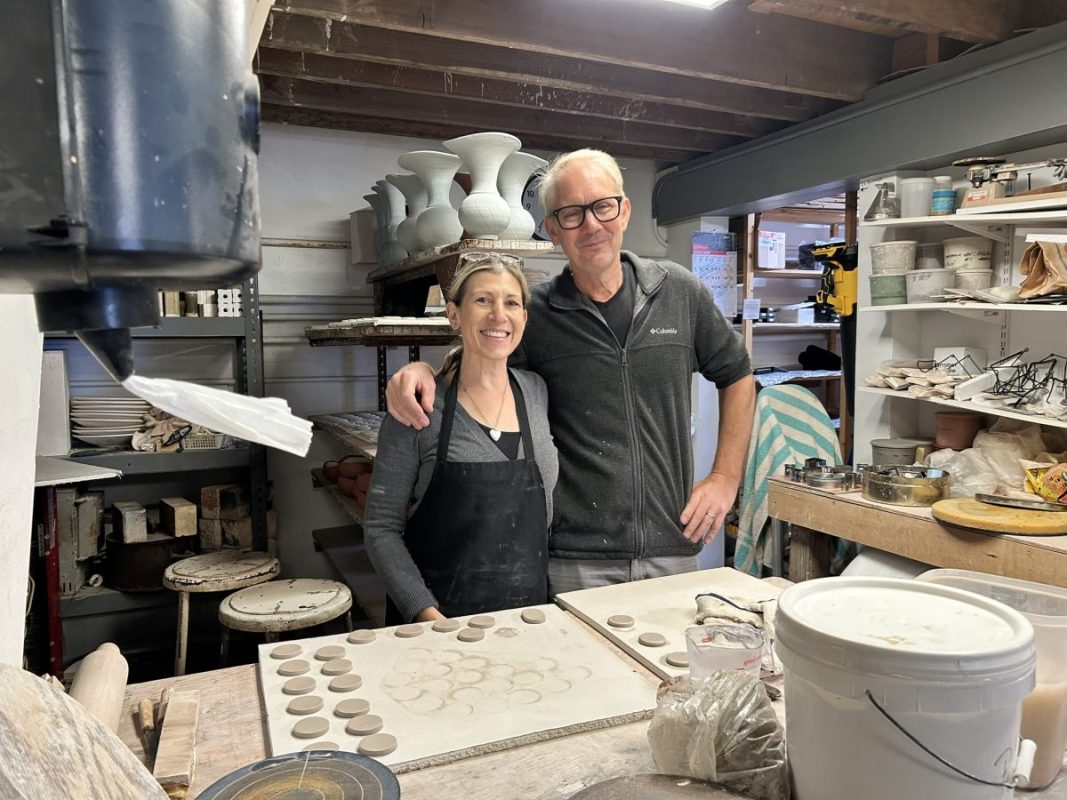
Jon Faulkner Pottery: Bermuda in a bowl
“All of my pieces are thrown by hand on a wheel and fired in a kiln that I built myself,” Mr Faulkner said.
“I start each of my firings by burning casuarina wood, which covers all the work in the kiln with fly ash and starts the glazing process. I also like to experiment with mixing Bermuda cedar and casuarina wood ash into the glaze itself.”
This hands-on approach allows each piece to carry a direct imprint of Bermuda’s natural environment and underpins a journey of endless experimentation.
“I get a lot of unconventional inspiration from an old landfill located next to the sea-glass beach near the Dockyard,” he said.
“I’m fascinated by the flow, colour and texture of the rust on the objects I find there and have developed my own technique for infusing some of my work with a similar effect.”
His locally inspired products include Bermuda rockpool bowls with turquoise and deep blue glaze and a rough gritty exterior inspired by the coastline and coral reef system.
“Through trial and error, I have managed to develop a glaze that closely resembled the ocean. These pieces are literally Bermuda in a bowl.
“I also create historical reproductions of a Bellarmine jug composed of salt glazed stoneware that was excavated from the Sea Venture.”
Yart: preserving nature in all its forms
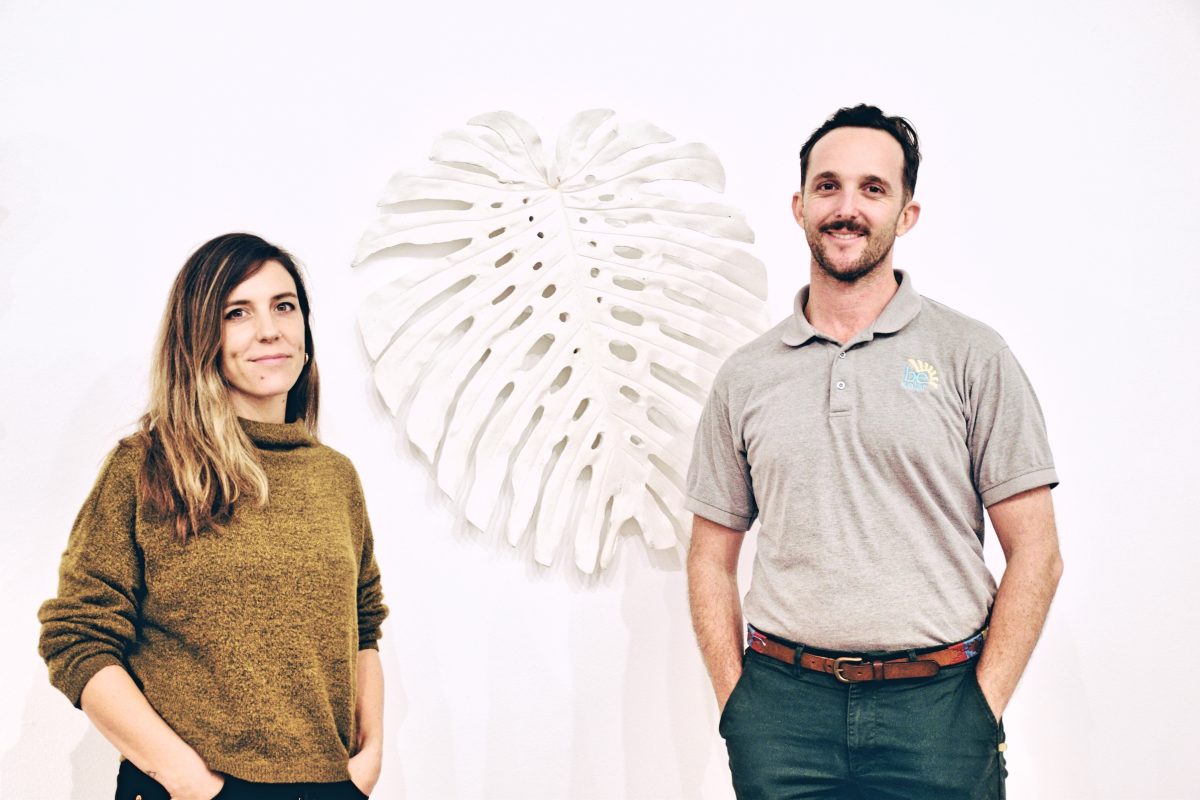
“I’ve always been interested in botanical plants,” said sculptor Stratton Hatfield.
His wife, Claire Peverelli, explained: “Our work is a blending of my interest in art psychotherapy and how we connect with nature and Stratton’s interest in 3D interpretive sculpture.”
Together they are developing a unique method of imprinting, or fossilising, local floral into handmade sculptural pieces for interior and exterior spaces. Their decorative and functional pieces are crafted using free form moulds that they fashion from soil and beach sand and then fill with white Portland concrete in stages.
They also consider the interrelationship between endemic, naturalised and invasive species in Bermuda, leading them to include anything from palmetto to banana, bay grape, elephant ear, Chinese fan palm or loquat leaves in the same piece.
“Initially many of the pieces were small wall sconces, bowls or table centrepieces,” Ms Peverelli said.
“We now do public installations that we refer to as collages in that they are composed of several individually cast pieces that are displayed in a harmonious combination.”
Mr Hatfield said: “Our work continues to evolve and involves a lot of trial and error.
“The challenge has been to figure out how to make increasingly large and complex pieces that are durable enough to be displayed outdoors and yet light weight enough to be mounted on a wall.”
An ever-evolving process
“Bermudian art is moving away from the pink cottage look that was popular in the 1980s,” Mr Hatfield said.
“Young artists are generally creating work that is more socially challenging but, on the whole, we belong to a different generation from those who have the funds to collect.
“What is considered ‘collectible’ in Bermuda is in the midst of transition.”
Mr Faulkner said art is a never-ending journey.
“The shapes of my pieces are quite consistent, but the end products can vary a lot depending on the techniques that I employ during the glazing process,” he said.
“Everything from the ingredients that I mix into the glaze, such as iron or cobalt and chrome oxide, to the position where an object is placed within the kiln when it is fired, can alter the resulting colour and texture of the finished object.
“I’m always surprised how things will turn out, and I find that very inspiring.”
As Bermudiana continues to evolve, today’s artisans and craftspeople are not only preserving the island’s heritage, they are also shaping what future generations will one day recognise as culturally significant and collectible.
For collectors, this shift offers an opportunity to acquire beautiful objects, and to participate in an ongoing collaboration – curating and shaping our heritage one piece at a time.
For more information on Jon Faulkner Pottery visit www.jonfaulknerpottery.com. For
