
The leap from high school to college or university can feel both exciting and scary.
Expectations from tutors and examiners suddenly rise, you’re living in a new place away from mom and dad, and you’ve got to navigate a whole new world called adulthood.
For many teenagers, independence is a hurdle that can trip you up if you’re not ready for it.
The Adult Education School, in Dundonald Street, Hamilton, helps its graduates bridge the gap between high school and beyond through its college preparation programme.
Learners are given guidance on processes like selecting a degree course, filling out applications and sitting entry exams.
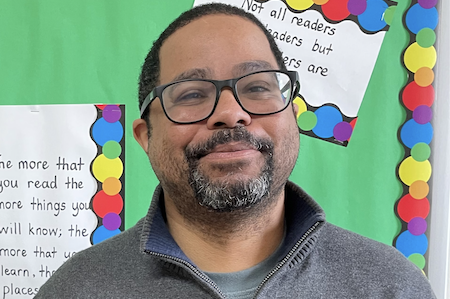
Yet according to programme director Thaao Dill, one of the most important parts of college preparation is learning how to think and act for yourself.
“The primary difference between secondary and post-secondary education is the level of independent agency that is required,” Mr Dill said.
“For the first time in a student’s life, they will be responsible for their relationship with their place of education.”
In school, if you fall behind on your work, a teacher will usually try to intervene, often by getting the parent involved.
“At that level, their primary goal is to get you to transition forward,” Mr Dill said. “So, they are very likely to offer you opportunities to make up the work, bring things together in a more generous way, just to make it as easy as possible for you to get from one year to the next.”
That won’t happen at college or university.
“They’re not calling you out or ringing your parents,” Mr Dill said. “They’re just not. All the correspondence is directly between the student and the school.
“For many young people, that’s hard. Not because they are flawed or damaged or something’s wrong with them – just because it’s new, it’s something that they very well never dealt with previously. And that can be really hard.”
It’s vital that you handle this correctly.
“If you don’t hit the deadline, maybe you can successfully negotiate an extension with your lecturer, but it’s not guaranteed,” Mr Dill said. “You can’t involve your parent to do that negotiation for you.”
And what if you fail class?
“You have to make up for that credit deficiency in one of several different ways. But to investigate those ways, you’ve got to seek out that support independently. Your parent can’t call your advisor or your counsellor.”
College preparation at AES
The Adult Education School currently has about 90 learners, about half of whom are aged 16 to 18.
The school encourages learners to act independently from day one, but this intensifies in the college preparation programme for its graduates. More than 20 AES graduates have passed through the college preparation programme so far.
“Our college preparation programme is designed to help each learner navigate the bureaucratic obligations around, applying, being accepted and registering for classes at Bermuda College or for any post-secondary study,” Mr Dill said.
“That means nailing down exactly what the requirements are for admission. How to be accepted, how to register for classes, how to choose your degree programme, your interests and needs, identifying transfer pathways for further studies.”
For learners heading to Bermuda College, that includes a site visit to experience the resources on campus.
Mr Dill said: “We basically function as their own personal guidance and prep students for transition to college.”
It’s not just about filling out forms and figuring out where the library is.
“It’s also just the general independence that people are encouraged to have while they’re here,” Mr Dill said.
“We need them to think of solutions on their own. That’s the whole point: to help the young people become more comfortable, to accept the premise that, ‘I am in charge of my life.’
“They can’t wait for some grownup to tell them what to do. They have to make choices on their own behalf, for their own reasons.
“It means supporting students in getting more accustomed to genuine independence early on in their educational journey.”
Parents, be bold
Encouraging independence can be challenging for parents.
“Our kids are the most valuable part of our lives and success for them is non-negotiable,” Mr Dill said.
“Success must happen, which means that we tend to step in to prevent them from making mistakes, particularly in school. This is helpful in the short term, but can be quite counterproductive over time, especially as they get older.”
One solution – which goes against the grain for many parents – is to allow their children to make mistakes.
Mr Dill explained: “Let them make mistakes when they’re young, because the consequences can be compensated for much easily than when they get older.
“If you miss your application deadline when you’re 17, you have to wait another four months for another chance. That’s annoying, but let’s say you’re 35 and applying for a job that you need to feed yourself and you miss that deadline. That’s much, much more consequential. So let the students make mistakes.”
For more information about the Adult Education School, email [email protected]
