
For many students, college can feel like a distant dream – something to think about ‘one day’.
Between homework, extracurricular activities, social commitments, community service and part-time jobs, the future often seems comfortably faraway.
Then, suddenly, S1 year turns into S2 year, and – before they know it – students are in S4, and conversations begin to shift. Instead of discussing next week’s test, they are talking about personal statements, financial aid packages and scholarship deadlines.
At CedarBridge Academy, members of the Class of 2026 are navigating this exciting but demanding season with focus and determination. For many of these students, higher education is no longer an abstract idea: it is a plan in motion.
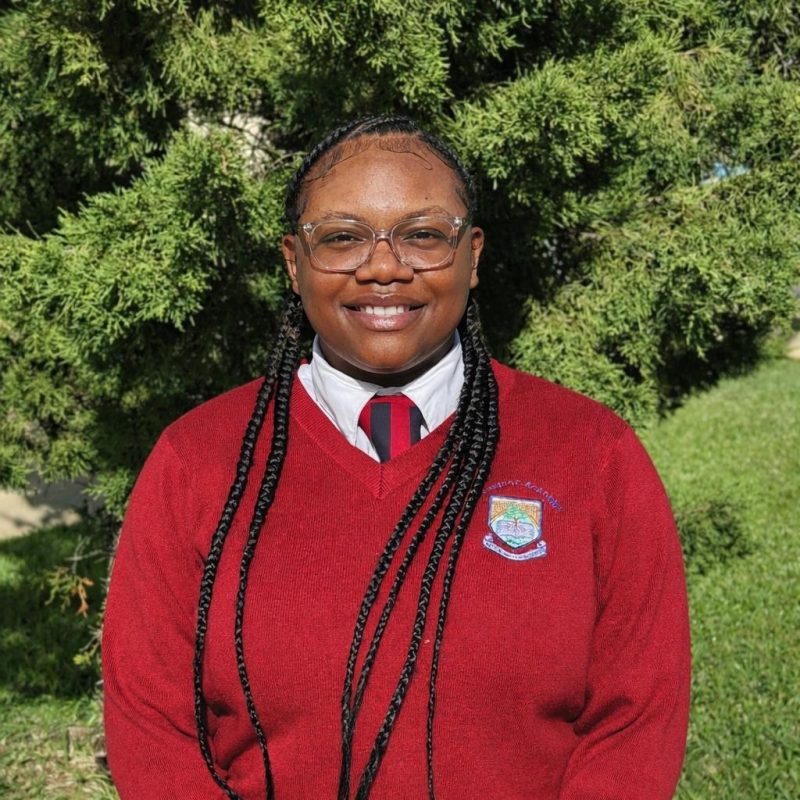
Among these young scholars is Sherne McQueen, 18, who has a clear vision for both her academic pathway and her long-term career goals.
Sherne has mapped out her next steps with intention and focus. After high school, she plans to attend Bermuda College for one year before transferring to St John’s University in New York. There, she intends to major in actuarial science – a field that combines mathematics, statistics and financial theory to measure and manage risk.
“I will be studying actuarial science with the goal of becoming an actuary,” Sherne stated matter-of-factly.
Actuaries play a critical role in industries such as insurance, finance and consulting, helping companies make informed decisions about risk and long-term financial planning. It is a profession that demands precision, discipline and analytical strength: qualities Sherne has been developing throughout her high school years.
Her decision to begin locally at Bermuda College before transferring overseas reflects thoughtful planning – both academically and financially. It also demonstrates a maturity that is often shaped during the scholarship application journey itself.
For many students, the bridge between high school and university is built with scholarships. These awards can make higher education more accessible but earning them requires significant time and commitment.
It’s worth the stress
Sherne described the scholarship application process as thorough and, at times, intense.
“The scholarship application process is long and requires a lot of time and effort,” she says. “It involves gathering documents, writing personal statements, meeting deadlines, getting information from your parents, and staying organised.”
Each application can have different requirements. Some ask for multiple essays, others require detailed financial disclosures, letters of recommendation or proof of community involvement. Managing these varying components while maintaining strong academic performance can test even the most assiduous student.
“Although it can be stressful,” Sherne added, “it is definitely worth it in the end.”
That perspective is shared by many graduating seniors. Scholarships not only provide financial relief but also validate years of hard work. They recognise academic excellence, leadership, service and perseverance – qualities that most candidates have cultivated over time.
Sherne credited her experiences at CedarBridge Academy with preparing her well for this stage of her life. Academic lessons are only part of the equation. Equally important are the guidance systems and mentorship opportunities available within the school community.
“My time in high school has prepared me well for the scholarship process,” she explained. “The Student Services Department and the Peer Forward programme have been especially helpful by guiding me through the steps and keeping me on track.”
Support programmes like these provide structure during what can otherwise feel like a chaotic period. They help students create timelines, refine essays and ensure no deadlines are missed. More importantly, they encourage students to reflect on who they are: their values, accomplishments and future goals.
Sherne believes her efforts throughout high school have positioned her as a strong candidate.
“I’m confident that I qualify for the scholarships I’m applying for because I have worked hard academically and stayed involved in school programmes.”
That combination – academic commitment and active participation – is often what scholarship committees seek. Leadership roles, volunteer service and consistent engagement demonstrate not just ability, but character.
Stay organised
Having experienced the scholarship application process firsthand, Sherne offers practical advice for younger students who will soon begin the same journey.
“One tip I would share is to start early,” she said. “Don’t wait until the last minute to gather information or complete applications.”
Procrastination can add unnecessary pressure to an already demanding period. Beginning early allows students to carefully craft their essays, thoughtfully select references and thoroughly review their applications – and have someone proofread them too!
“Starting early gives you time to review your work, avoid mistakes and submit everything on time,” she added.
Beyond early preparation, Sherne emphasised the importance of personal responsibility. Keeping digital and physical copies of documents, maintaining a calendar of deadlines and breaking large tasks into smaller steps can make the process far more manageable.
Applying for scholarships during senior year is more than an administrative task; it is a lesson in adulthood. Students must learn to communicate professionally, request recommendation letters respectfully, and meet firm deadlines without constant reminders.
“One important part of applying for scholarships during my graduation year has been learning how to manage my time and stay organised,” Sherne explained. “Keeping track of deadlines and requirements is essential.”
She also discovered that independence does not mean doing everything alone.
“I learned that asking for help from teachers, counsellors, and school programs can make the process much easier and less overwhelming.”
That balance – independence paired with the initiative to seek support – is often what defines a successful transition from high school to tertiary education.
Sherne McQueen’s story reflects a larger narrative unfolding at high schools across Bermuda. The Class of 2026 is stepping into a future they have long imagined but are now actively shaping. Dreams that once felt abstract – careers in science, business, healthcare, education, the arts – are becoming concrete plans supported by applications, interviews and document submissions.
For Sherne, the journey begins at Bermuda College, continues at St John’s University and ultimately leads toward a career as an actuary. For others, the paths will differ, but the underlying themes remain the same: preparation, perseverance and belief in the possibilities.
While college may once have seemed like a world away; now, for Sherne and her classmates, it’s not just a dream – it’s the inevitable next chapter.
