

It is a hot Sally Bassett Day in Bermuda in July when I drive into the parking lot at Harmony Hall.
A thin tent has been set up, hardly enough to veil anyone from the burning sun, already piercing through the white pavement in the early part of the afternoon. The microphones are in place. The press has already arrived and is getting into position before the programme begins. Today, several new affordable homes are being opened at Harmony Hall.
I take one extra look to ensure that I have all my equipment, careful not to rush, as I already feel beads of sweat forming on my forehead. I pause for a moment, steady myself, and look up.
The first face that I see, standing in front of the newly completed homes, is Dimitrius Richardson.
He is young, focused and clearly in his element. Not there to run the event, but there because the work being announced is tied to the work that he is part of. He stands nearby, attentive in a way that tells you he understands what this moment means beyond the cameras. This is not just a photo opportunity. It is work completed. A programme moving from plans on paper to real homes, now standing, and people in dire circumstances are now one step closer to having a comfortable roof over their heads.
Mr Richardson looks at me with quiet confidence, comfortable in his work and calm in the middle of the bustle. Watching him, I find myself curious. Not only about his place within the Government’s affordable housing work, but about the path that brought him here so early.
Building a skillset
This curiosity later led me to speak with Mr Richardson, who currently serves as a project manager intern at the Bermudian Housing Corporation while studying for a Bachelor of Arts with honours in architecture at Kingston University, London.
“My academic training and professional responsibilities work hand in hand,” he says, “allowing me to apply architectural theory to real-world housing and infrastructure projects in Bermuda.”
His entry into this work began with the summer seasons, which turned into something steadier. He traces it back to the Ministry of Public Works summer programme, where he was introduced to Bermuda’s construction industry by working alongside the Engineering and Estates Departments. He did not stay in one corner of the Department, however.
“I intentionally immersed myself across multiple disciplines to gain professional direction and consistent exposure to how Bermuda’s infrastructure operates,” he explains.
“Each summer built on the last, allowing me to apply new techniques, strengthen my understanding of the construction processes, and form professional relationships across government ministries.”
That continuity, combined with the effort he put in each summer, led to his current role at the Bermudian Housing Corporation.
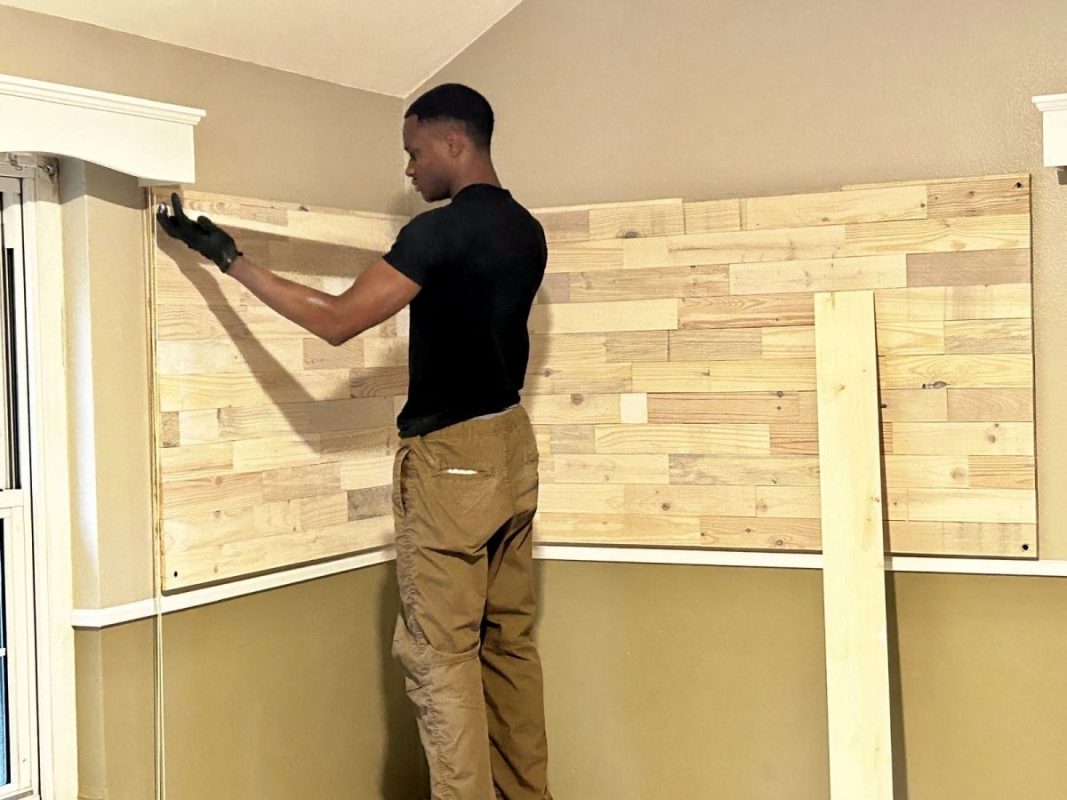
“On a day-to-day basis, my role includes scheduled site visits, developing and reviewing design portfolios, managing design iterations and overseeing construction contracts and ongoing works,” Mr Richardson says.
“I also coordinate contractor activities, order materials, liaise with fellow project managers and provide weekly progress updates.”
It is a hands-on role, with little room for delay or missed details.
 Meeting needs
For Mr Richardson, the current affordable housing initiative matters because it responds to Bermuda’s housing crisis.
“The current Government’s affordable housing initiative represents a meaningful opportunity to respond to Bermuda’s housing challenges in a practical and forward-thinking way,” he says.
“It introduces construction approaches that allow for faster delivery while maintaining quality and dignity in housing design.”
He sees speed as part of meeting demand, without lowering standards.
“By utilising simple, robust fabrication methods, the initiative enables purpose-built homes to be delivered efficiently and, where necessary, relocated to suit community needs,” he adds, noting that it encourages new ways of thinking about how Bermuda builds.
The work has also shaped how he approaches design.
“Working on this initiative has reinforced a personal responsibility for designing for communities,” he says.
“It has encouraged me to approach my work with urgency, accountability and confidence in proposing solutions that genuinely address community needs.”
He believes Bermuda’s culture and standards should be visible in what is built.
“It has also challenged me to design in a way that reflects Bermuda’s culture, individuality, and standards, without limiting innovation,” he says. “What we create today sets the benchmark for tomorrow.”
When the conversation turns to young men in Bermuda and the lore of drugs and gang violence, Mr Richardson is clear that the concerns are real, but the stereotype is incomplete.
“Many young Bermudian men are excelling, breaking barriers and contributing positively both locally and globally,” he says.
He points to opportunity and choice.
“Opportunities for mentorship and growth exist in abundance,” he says. “However, young people must actively step into them and choose to rise above their environments and negative choices.”
He also reflects on his own learning curve.
“I addressed this by seeking guidance from Bermudian mentors, tutors and industry professionals,” he says. “They encouraged me to focus on process and execution.”
Moving to London, he adds, gave him “a fresh start” and helped him develop “structured workflows and practical design methods”.
He puts it plainly. “I learned that ideas only gain value through action.”
His message to young Bermudians is direct. “Bermuda belongs to you, and your opportunity is often closer than you think,” he says. “Use who you are, your background and perspective as an asset rather than a limitation.”
Thinking back to Harmony Hall, where the sun was beaming down upon my head that day, my focus was on the tent, the microphones, the speeches, and the cameras. But the day was so much more than that. It was about celebrating the newly constructed houses standing behind it all. Homes completed. Real space. Real relief.
And in the middle of it, a young Bermudian professional, supporting the process responsibly, working alongside his team and learning from others so that Bermudians in vulnerable circumstances could have a place to call home. The future is bright for Bermuda in construction and we as readers look towards
