
When women go through perimenopause and menopause, hormone levels fluctuate, causing a lot to happen within their bodies.
This can cause physical vulnerabilities such as muscle weakness, bone density loss, frozen shoulder and joint pain.
At this point in a woman’s life, exercise and nutrition become particularly important – however certain exercises are more beneficial than others. If you don’t love running, for example, now is not the time to suddenly start doing marathons. The exercise you do has to be right for your body at this time in its life.
Shara Crunden is a physiotherapist and owner of Intention Clinic, which offers services including Menopause Mastery courses.
She explained why women get certain physical symptoms and shared her advice for how to nurture and strengthen your body during this major life change.
“I like to think that we, as women, are superhuman until we start to hit perimenopause, menopause, and then we become just human,” she said.
“Being superhuman comes with responsibilities – looking after families, nurturing children, having a career. Then, we get to the point where we don’t have these super powers that come from the hormones and we lose that ability to push through pain.
“So, our pain regulation goes down. Inflammatory markers tend to get a little bit more sensitive, so that’s why you get the tendonitis, the muscle pains, the weird body pains that come about during perimenopause.”
Women can also be at a higher risk of developing osteoporosis, which is a disease of weakened bones. This, she continued, is caused by “the dysregulation of depositing bone into the bone system, so that’s why it becomes weaker and the bone is not as concentrated”.
Muscle weakness can be because the muscles need a higher concentration of protein in the blood stream to trigger growth and regeneration of muscle.
“We have to have higher doses of protein in the blood stream to create more muscle.”
Strength training
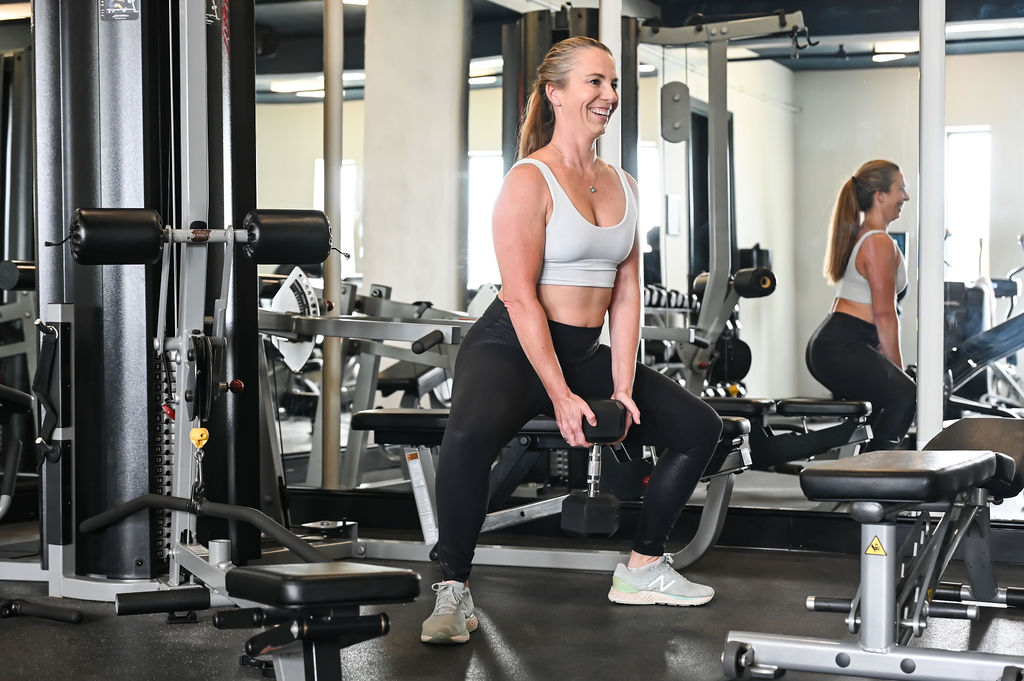
To create better quality muscle, and guard against osteoporosis, women need to embrace strength training, and by this she means weights and impact training.
In Ms Crunden’s experience women can become more fearful of weight training as they age, but they needn’t be, as long as they are doing it right.
“What we need to be doing is really pushing the strength training, so we’re really stimulating the muscles because we need more stimulation to trigger muscle regeneration and growth.
“The three important aspects are heavy strength training with good form biomechanics so you don’t injure yourself. The second one is HIIT (high-intensity interval training) to make sure that your cardiovascular system gets stretched and pushed occasionally, and then the third one is calm, cardiovascular and stretching.”
Calm cardiovascular could be a long walk, “ideally outside and with friends”.
Strength training can also help alleviate other symptoms that occur as women age.
“If you want good longevity, strength training is a must. There’s lots of reasons. The biggest thing is we know that it helps with mood. It helps with insulin resistance, which becomes a big problem as you get older. It helps the cardiovascular system, which becomes vulnerable as you get older. Essentially, it’s what keeps you young.”
If you are new to strength training it’s not advisable to start weight lifting on your own. If budget allows, Ms Crunden recommended working with a personal trainer or a physiotherapist to ensure your form is correct. Once you have mastered your form, you can start doing more.
“Start increasing the resistance to the point where you’re working at about eight out of 10, most of the time, whatever that looks like for you,” she advised. “That might be 10lbs for me, it might be 40lbs for you. As long as you’re working, you’re pushing the muscles so they are forced to have this regeneration and repair.”
If a personal trainer isn’t in your budget, there are online options and she also recommended the apparatus available at the National Stadium and in the Arboretum, but, she emphasised, partner up with someone and adapt the exercises to you.
“Just because somebody is picking up 30lb weights, it doesn’t mean you should be picking up 30lb weights to start with. Pair up with somebody else. Guide each other. Assist each other. Are you doing this right? Does it look like the video? Use a mirror.”
Ms Crunden has also teamed up with personal trainer, Anita Lightbourne of Renewal Fitness, to provide resistance training workshops specifically for women going through perimenopause, and they try to make them as affordable as possible.
“It’s to teach why we strength train, the parameters of the strength training, how to nourish around strength training and other exercises and then we go through a lot of compound exercises.”
Nourishment and hydration
To support your body, the right nourishment is essential. While Ms Crunden emphasised that not everybody is the same, on average, women should have a minimum of five grammes of calories if exercising first thing in the morning, and then around 30g to 35g of protein within 30 to 45 minutes after exercise.
The five calories before helps to bring the “stress hormone”, cortisol, down. Protein after a workout helps with muscle repair and recovery. Good proteins include chicken, eggs and protein shakes with minimal preservatives. Vegetable proteins such as lentils and nuts are also good, but you will need more.
Hydration is also essential. In addition to water, she recommended coconut water and electrolytes, which you can get with a pinch of salt or a slice of lime.
Community
Going through this stage in life is different for everyone, but, said Ms Crunden, “women thrive within a community of women.”
In addition to exercising with others, she advised women going through perimenopause to find “like-minded women whose company you enjoy and spend time with them.”
For more information about Intention Clinic’s Menopause Mastery courses, visit intentionclinic.com.
