
by Bermuda Economic Development Corporation
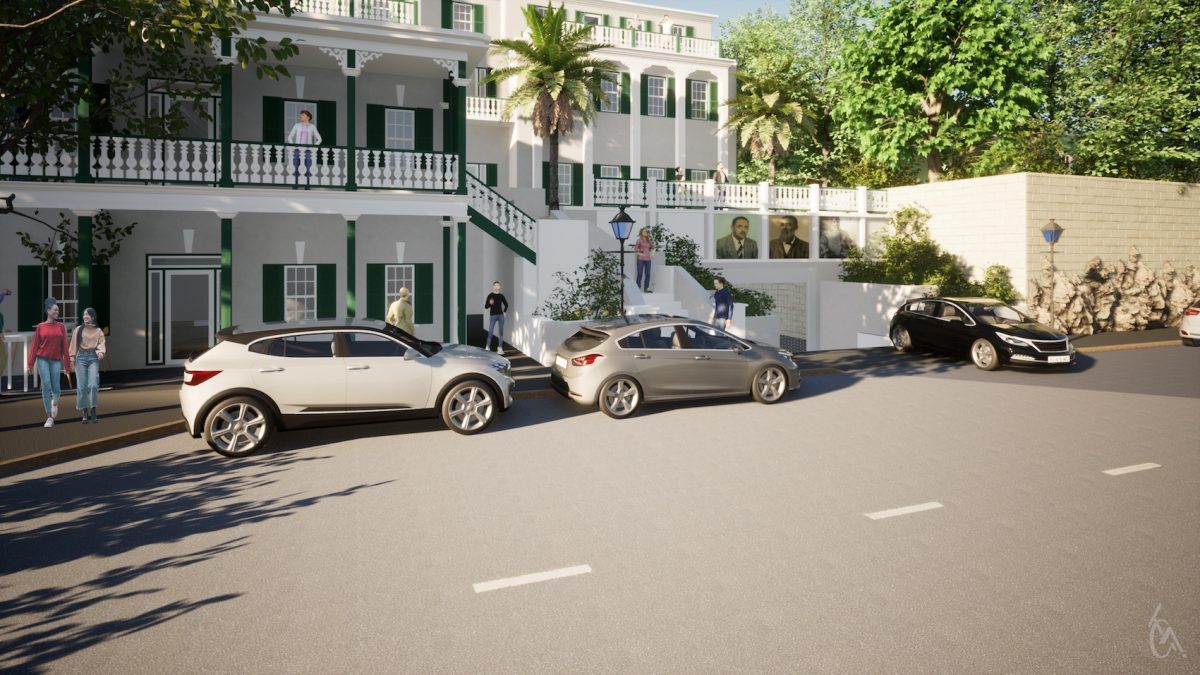
Image: supplied of Wantley, a planned Urban Development Authority project at Princess Street, Hamilton
Bermuda’s construction sector stands at a pivotal moment.
With the Government’s stated goal of increasing the working population by more than 8,000 people, the island faces an urgent need to expand its residential capacity.
Yet, while the demand is clear, rising development costs and borrowing constraints have slowed progress.
The Approved Residential Scheme framework — strengthened further by the new ARS Kickstart Programme — seeks to address exactly that challenge, offering a structured path to growth for both the construction industry and the wider economy.
Established in June 2022, the ARS initiative was designed to spur development within Bermuda’s four Economic Empowerment Zones: North East Hamilton, South East Hamilton, Somerset and St George’s.
These areas hold deep historical, cultural, and economic significance, but have long faced socio‑economic disparities, underinvestment and aging physical infrastructure.
The ARS framework provides a mechanism to reverse this trend by creating opportunities for high‑quality residential development that supports local businesses, enhances community life and broadens access to housing.
The recently introduced ARS Kickstart Programme adds a crucial missing piece: financial feasibility. By providing a $50 million sovereign guarantee to participating banks, the Government enables reduced borrowing rates for qualifying construction projects, effectively lowering one of the largest barriers to development.
The guarantee remains active for six years beyond construction completion, giving developers confidence and breathing room to deliver large‑scale residential or mixed‑use complexes within the EEZs.
In return, banks commit to discounted interest rates, while maintaining their underwriting independence and first claim on collateral.
This is more than a financing tool; it is a catalyst for transformation. With EEZs already identified as zones with cultural vibrancy but structural under‑resourcing, ARS developments can meaningfully uplift communities, provided they are planned with sensitivity. The guidelines emphasise affordability, stakeholder engagement, prevention of displacement and long‑term socioeconomic benefit.
These requirements reinforce a holistic approach to development, one that values not just buildings but the people and histories they anchor.
Urban Development Authority
As these initiatives take root, the Urban Development Authority is positioned to play a central role in shaping the built environment with intention and equity.
The UDA’s mission is to promote sustainable, community‑focused urban revitalisation through coordinated planning, strategic investment and inclusive development practices.
Its vision is to create vibrant, resilient and economically diverse urban districts where residents, businesses and investors can thrive together.
By aligning with the ARS framework, the UDA helps ensure that new residential projects contribute to coherent neighbourhood planning, quality design standards and equitable economic growth. Its commitment to community‑first development mirrors the ARS objective of strengthening local economies without triggering the displacement or gentrification pressures that too often accompany regeneration efforts.
Turning point for the industry
For Bermuda’s construction professionals —developers, architects, engineers, contractors — the ARS and the ARS Kickstart Programme represent both opportunity and responsibility.
Opportunity, because financing barriers are easing and demand for new residential units is growing. Responsibility, because the outcomes of this moment will shape community landscapes for generations.
If executed with foresight and collaboration, this initiative could spark a new era of construction activity, economic vitality and housing stability within Bermuda’s most historic and culturally rich neighbourhoods.
More importantly, it can help ensure that growth is shared, sustainable and rooted firmly in community empowerment.
