
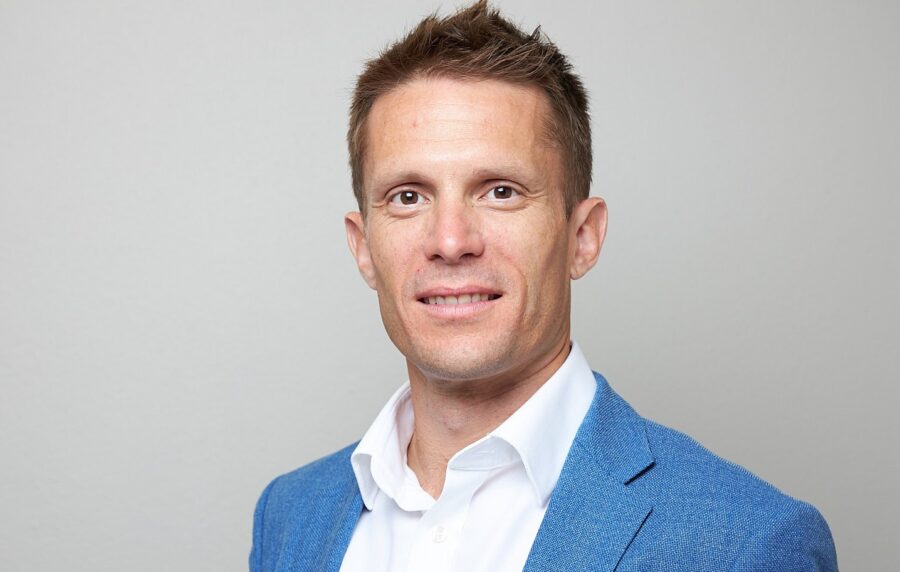
Bermuda has made great strides in cancer treatment in recent years, but Dr Chris Fosker believes we still need to step up another gear.
“We can be proud of the point we have reached,” said the oncologist, who took over as CEO of Bermuda Cancer and Health Centre, an independent, not for profit, this April.
“We have all the pillars of treatment here in Bermuda, excellent surgeons, strong diagnostics, effective chemotherapy, and advanced radiation. So, as an island, we have what is needed to treat cancer.
“But that’s different from treating the whole human being. What we really need to do now is expand and make sure we’re looking at mental health and recovery, so that we’re building people back up again we have treated cancer effectively. Getting people back to normal.”
This holistic approach is already commonplace in larger jurisdictions, but to make it happen in Bermuda, health professionals need to spend more quality time getting to know their patients.
“You really need to sit with people and understand, either as a doctor or a psychologist or a physio, what they need to get back to being normal again,” Dr Fosker said.
Since arriving from Britain at BCHC as medical director in 2016, the doctor has observed this personal aspect is particularly significant in Bermuda.
“You need trust in the personal relationship to be a good doctor, no matter where you are. But in Bermuda, it’s so personal, it’s so close,” he said.
“What is different is the people. You see the people everywhere you go. I pop down to Miles or Lindo’s and I won’t be able to make it round without saying hi to a patient.
“It really holds you accountable. You can’t have a bad day at work in Bermuda. You shouldn’t have a bad day anywhere, but in Bermuda, you are going to see that person somewhere else, and you are going to see their family.
“It adds massive pressure, but positive pressure, to not let up at any point, to not cut corners. We have that personal mission to want to make a massive difference, while at the same time knowing you’ve got responsibility to so many people in Bermuda. That responsibility also drives our commitment to equal access, ensuring no one is turned away because of cost. It’s what keeps it challenging, interesting and scary sometimes.”
Dual role
Dr Fosker praised his predecessor Lynne Woolridge for “laying a wonderful platform” before handing over the reins.
The difference now is that Dr Fosker retains his medical director role and keeps clinical practice while juggling CEO responsibilities, which reflects the BCHC model of combining medical leadership with organisational strategy.
It means he can make decisions with the benefit of his own frontline observations.
He explained: “Bermuda is unique, and this is a unique role that I think fits with Bermuda. It’s certainly what I think we need at the Centre to help us get our next growth opportunities right.
“We’re not trying to be the expert in everything – we’re trying to surround ourselves with brilliant people. And I’m surrounded by brilliant people here, from the leadership group to the professionals who are delivering the care.”
One challenge in Bermuda is the constantly fluctuating state of healthcare.
“Some of it is completely out of anyone’s control,” Dr Fosker said. “We are so small, and geographically isolated. This is a tough place to live, intensified by the coming and going of people and services.
“Cancer care is a hugely long pathway. There are so many touch points for patients, they need to see multiple professionals in a cancer diagnosis. If you’re missing one of these professionals it fractures the pathway, and that in turns fractures trust in the system, which fractures trust in the relationship between the patient and the doctor, and then the patient and the system.
“It’s very frustrating and upsetting when a certain pathway just vanishes even for a short time. However, we are fully aware of that challenge, that so much more could be done to plan ahead, to have good structures.
“My hope, by taking this role, is that I can be more influential in making decisions for long-term success and in turn ensure BCHC remains a constant presence in Bermuda’s cancer care, bridging gaps where possible through partnerships and long-term planning.”
Thinking differently
Another priority is getting the prevention message across.
“We need to find a different way of impacting people’s brains to help them make decisions that are good for them,” Dr Fosker said.
“Sometimes humans are wired to make bad decisions. It’s about trying to change that. That comes down to prevention and education.
“For whatever reason, people are hesitant of check-ups – men in particular. We do our bit at the Centre by taking away the financial barrier, but we’re still trying to find out why people still choose not to see their doctors.”
The existing process of telling people to eat well, exercise and get checked up is not helping enough, he said.
“Prevention, education and early detection are a massive area we want to focus on. Absolutely, you should do everything we said before: get your check-ups, see your GP, get your screenings, think about what you eat, support our events because they really make a difference to the equal access fund.
“But we also need to stop repeating the same approaches and instead think differently about how to help people stay healthy.”
The onus will be on everyone in our society to heed the messaging because cancer ultimately impacts us all.
Dr Fosker is no different.
“I remember saying I’ve been lucky as I haven’t really been touched by cancer that much in my family,” he said.
“But then I thought about it. My mom’s had cancer, my uncle’s had cancer. I had a good friend die of cancer in their 20s, and I’ve just had two of my best friends from med school diagnosed with cancer.
“As an oncologist, you suddenly realise you’ve got that association from your job to your life and, although you treat the two things differently, yes, it completely impacts you and it reinforces why BCHC’s mission matters so deeply.”
