
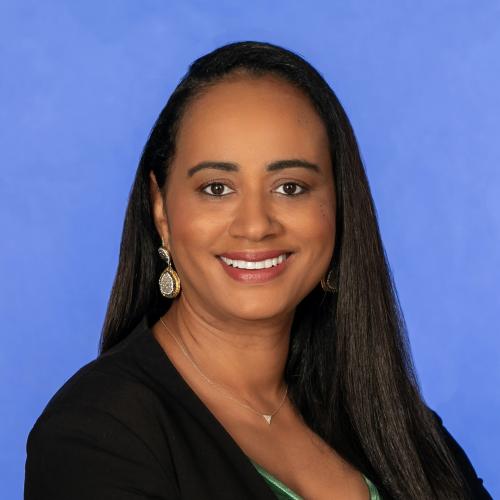
The prospect of developing dementia is frightening. As Bermuda’s population ages, it is an ever-increasing public health concern that Tinée Furbert, the Minister of Youth, Social Development and Seniors, is determined to tackle.
This is why, as part of the National Seniors Strategy, the Ministry will be launching a new integrated care pathway for dementia, covering access to initial assessments all the way through to end of life care.
“With our growing population of seniors, it’s a priority,” she said. “Dementia can be very progressive and if people don’t know about dementia and the affects that it can have on a person’s life, they will not be prepared.
“They will not be prepared for the progression of dementia, and living with dementia, and then it creates a higher burden on our community as a whole, our social systems, our financial systems. We want to be in a better place as far as preparation.”
Care framework
The integrated care pathway will set out a standard practice for dementia care in Bermuda so patients know where they can get assessed, what to do next and what services and support are available to them. It follows the successful dementia care services pilot programme, which was launched in October 2023.
“What we did hear from people in our community was that they didn’t know where to turn, they didn’t know who to talk to, who to turn to, to get more information about dementia,” Ms Furbert explained.
“A pathway will give direction and flow to assessment care for dementia in Bermuda.”
This pathway identifies seven domains of the disease and its progression through to the end of life. Each domain has an aim, objective and targeted actions, which will be implemented by working groups made up of healthcare professionals, dementia specialists and caregivers.
“It will create a clear framework for persons being able to understand management of dementia in different care settings,” Ms Furbert said.
“It will help to ensure there is alignment in the approach to care for dementia. Promote consistency and quality of care. Also, it will help us to address any barriers that persons are experiencing for required care.
“The goal of the integrated pathway is to improve the quality of care and the quality of life for persons with dementia and it creates a system framework for persons living with dementia and their families so that they have the appropriate information, appropriate services and supports.”
Prevention
There is also a focus on prevention.
“We also want to reduce the rate of dementia in Bermuda. Being able to outline what those risk factors are. We want to be able to reduce the prevalence of dementia overall in the long term.”
Risk factors for dementia include drug and alcohol consumption, smoking, poor diet, hearing deficits and social isolation.
“Socialisation is huge,” Ms Furbert said. “People get excited about retiring at the age of 65, and some people go home to an empty house. They’re not surrounding themselves with family and friends who will provide some socialisation for them.
“So, getting that information out to our communities so that they know, ‘I have to change my behaviours. I have to be very intentional about aging, and aging well.’”
Access to assessments
One of a number of positive outcomes from the dementia care pilot programme was that more people gained access to an assessment, regardless of their ability to pay. This is something the minister wants to build on with the integrated care pathway.
“Once there is a referral to the dementia care pilot programme and persons are assessed, without having this programme, persons won’t necessarily know where to go to get an assessment or get the information of where to go for an assessment.
“They also refer persons to other agencies or physicians to get further assessments to provide a formal diagnosis of dementia.”
For those who are uninsured, or underinsured, the pilot programme provides funding for assessment and related services.
Ms Furbert is determined to keep that funding in place, not just to support the patient, but also their caregivers.
“A huge part of this is caregiving, particularly for those persons who find themselves unsafe or neglecting their self-care needs. Caregiving comes into play and it is very helpful to family members in, number one, helping them to stay in their own homes and not having to go to a care facility. And, number two, it will ease some of the stress that is associated with caring for loved ones.”
Work in progress
The integrated care pathway has been a cross ministry collaboration between Ms Furbert’s ministry, along with the Ministry of Health and the Bermuda Health Council. It will also be, she said, a “work in progress”, building on successful initiatives already underway and will include further proposals where needed.
A priority proposal is funding for long-term care, as well as long-term care facilities. The government has also committed to provide a senior daycare facility with a dementia care focus.
Ms Furbert feels strongly about dementia care, not just because it is a growing concern for a large portion of Bermuda’s population, but also because she witnessed first-hand the devastating impact it had on her own grandfather.
Making things better however, requires increased awareness and understanding.
“We need our community on board. We need our physicians to understand that these are very real conditions that have an impact on lives.
“If someone is unable to take care of their daily living skills and they’re neglectful of their health, they’re neglectful of their ability to eat, to clean themselves.”
Ultimately, she said, the integrated care pathway will have been successful if there is “a level of understanding. A level of respect. That people will say in our community that they feel supported and that they knew where to go for help. Those would be the outcomes that I would like to see.”
