
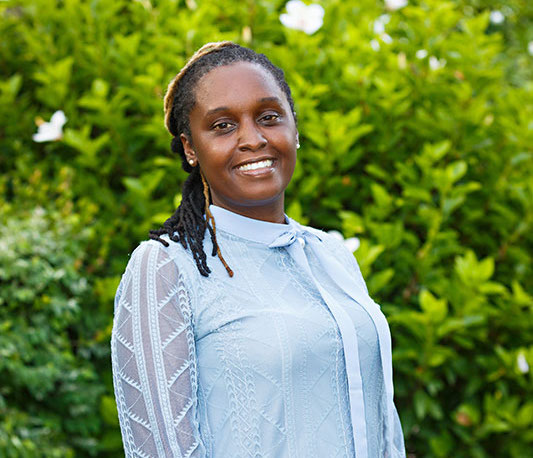
Jo-ann Cousins-Simpson opened Bermuda Alzheimer & Memory Services in 2018.
BEAMS Clinic is a general practice functional medicine clinic that caters to patients of all ages who are interested in holistic healthcare, functional medicine consultation, or dementia care.
Dr Cousins-Simpson said she is committed to helping her patients understand their medical concerns by going to the root cause and not merely treating the symptoms.
With a close family member facing the risk of Alzheimer’s disease, coupled with the need to provide more specialised care to both elderly patients and those suffering from dementia, she earned a post-graduate certificate in dementia care medicine from Stirling University in the United Kingdom.
Dr Cousins-Simpson is serving as vice president of the Bermuda Medical Doctors Association and is strongly involved in the community through free community talks and her work in the dementia community.
She shared her expertise and advice on the topic of dementia.
RG Best Health: What is dementia, and what is its relationship with Alzheimer’s?
Dr Cousins-Simpson: Dementia is the umbrella term used to describe a decline in executive functions, such as memory, judgment, attention and focus, that will affect one’s daily life. Alzheimer’s disease is one type of dementia.
RG: What are the different types of dementia?
Dr Cousins-Simpson: There are about ten different types of dementia. Alzheimer’s disease, vascular dementia, and Parkinson’s dementia are the most commonly seen types in Bermuda. Alzheimer’s disease results from protein plaques forming in the brain, whether due to past trauma, infection, or chronic inflammation.
Vascular dementia comes after a vascular insult such as a stroke, whether from a hemorrhagic stroke (a bleed in the brain from a ruptured blood vessel), or from an ischemic stroke, where a clot blocks off a blood vessel in the brain.
Parkinson’s dementia results from damage done to the brain from years of having Parkinson’s disease.
Other less common types of dementia are Lewy body dementia, alcohol-related dementia, frontotemporal dementia and normal hydrocephalus dementia.
RG: What is the impact of the disease on someone with dementia, and what is the impact on their loved ones?
Dr Cousins-Simpson: In the early stages of the disease, the impact on the individual is most jarring. At this stage, the person knows that they are beginning to lose their memory. This terrifies them because it implies loss of control and independence. They also worry about long-term care and who will take care of them. Will there be enough resources for them to live a quality life?
The impact on the family is also emotional, financial and physically draining. Studies show that the caregiver of a person with dementia is more likely to die before the person with dementia. This is because most family members go to their nine-to-five job and then come home to take care of their loved ones. This is akin to working 24 hours a day, especially when behavioural issues like wandering or aggressive behaviour are involved. The emotional impact of having a spouse or parent no longer remembering who you are is devastating to some family members.
RG: Are there warning signs that we might be developing dementia?
Dr Cousins-Simpson: Apart from the most common sign of forgetfulness, there are other early signs such as paranoia or depression, especially in persons who never suffered with these previously. Just a change in personality can be an early sign. Patients are usually very good at hiding or explaining away these behaviours.
RG: Your practice is dedicated to “helping prevent and/or reverse Alzheimer’s and dementia”. What steps can we take to make ourselves less likely to get Alzheimer’s and dementia?
Dr Cousins-Simpson: The World Health Organisation states that two-thirds of dementia can be prevented. Risk factors for dementia include diabetes, stroke and hypertension, which means the majority of dementia is a lifestyle disease. Prevention goes back to the basics: eating a balanced diet, decreasing processed foods, exercising, reducing stress and having a healthy social life.
RG: What can be done to reverse Alzheimer’s and dementia?
Dr Cousins-Simpson: Because Alzheimer’s is commonly used as a blanket term for all memory decline, if we look for other treatable causes, we can essentially reverse Alzheimer’s disease. Treatable causes that mimic Alzheimer’s include low vitamin B12, low cholesterol, low thyroid hormones, certain infections, brain tumours and depression. These are all illnesses I have treated in persons thought to have Alzheimer’s disease, and I have seen their Alzheimer’s “reversed”.
RG: Is there a link between dementia and shingles? If so, what is the value of the shingles vaccine in warding against the onset of dementia?
Dr Cousins-Simpson: There have been a few studies showing this link, which would tie into the premise that plaques form in the brain due to infections. Shingles vaccines do have benefits for the elderly by preventing and minimising the impact of shingles outbreaks in the elderly population. However, dementia is such a multifactorial disease that I am hesitant to put so much prevention benefit on a single agent.
RG: What medical research outcome would most help doctors, and their patients who have dementia?
Dr Cousins-Simpson: In my opinion, the numerous studies on the benefits of exercise in patients at all stages of dementia are most valuable. It has been shown that consistent mild to moderate exercise in patients with dementia improves their physical and functional abilities, their mental and behavioural functions, and decreases caregiver stress.
