
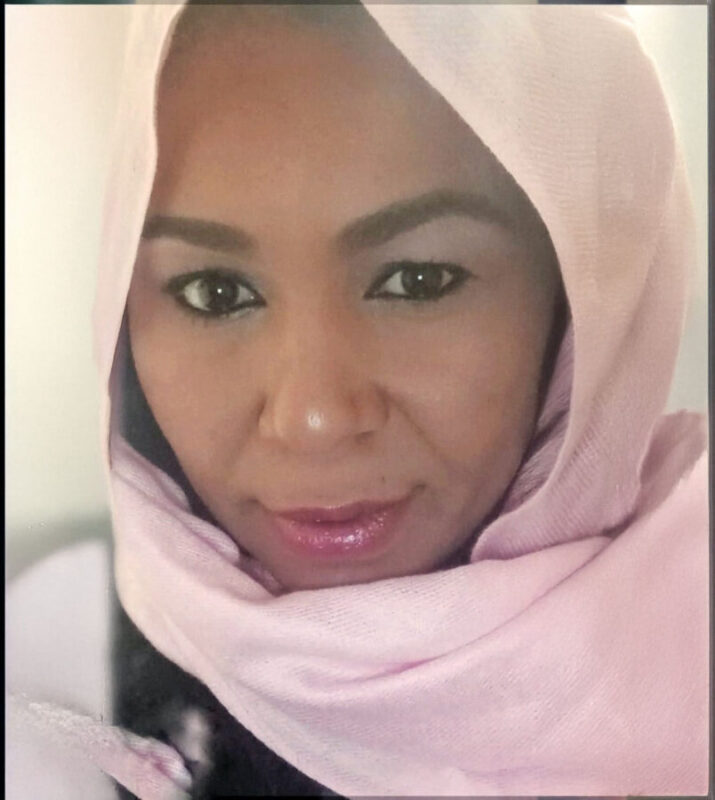
Maria Williams came to Bermuda more than two decades ago as a 20-year-old newlywed.
Now a naturalised Bermudian, Ms Williams has endured several medical ordeals in Bermuda – many without medical coverage.
She is still paying her hospital bill from a nine-day stay at the King Edward VII Memorial Hospital in 2008. She remembers the tribulation with authentic dread and refreshing wisdom.
“In 2008, I was working at a local restaurant, so I assumed I had medical insurance. I had only been in Bermuda for 2½ years, and I really didn’t know too much about the medical situation here, because I grew up with free healthcare in the Dominican Republic.
“I honestly didn’t realise that I would have to pay so much for healthcare at that time.
“Unfortunately, I had to leave that job, and – of course – a month later I fell very ill. I had a high fever and bad headaches. I remember that I was at Beach Fest and I was suddenly struck with piercing pain in my head, and I got extremely weak. I could barely walk up the hill from Horseshoe Bay to go home. It was very scary, and I made my way directly to the hospital.
“Again, I had no idea that healthcare at a public hospital would be so expensive, so, after they examined me a bit, I reluctantly accepted that I would have to stay there for a few days.”
Vital but costly treatment
At that time, Ms Williams had two young children – one of whom was born in Bermuda – and she was still coming to accept Bermuda as her new home. She was a single mother who did small hustles to provide for her children and maintain herself. Getting sick was NOT ideal.
“I have to say that the care I received at the hospital was excellent – I remember feeling like I would’ve been in the hospital for over a month in DR if I had gone to a hospital there with the symptoms I had! It was bad!
“They did all kinds of tests on me while I was there, because they couldn’t figure out what was causing the fever and headaches. Blood tests, MRIs, biopsies – you name it, and they did that test on me. For nine days they tested, probed and analysed results – and for nine days I suffered. I was comfortable, and the care was very good, but I was very sick.
“It wasn’t until the doctor who had delivered my son, Dr Dale, came to see me and take out the IUD I had put in that I began to feel better.”
Those high fevers and headaches, she believes, were caused by that IUD.
Physically, Ms Williams was back on her feet – but she would get an emotional gut-punch a few weeks later, when she received her medical bill from the hospital.
“I was better, and that made me grateful to the Bermuda medical system – but then I got a bill from the hospital. That piece of paper said that I owed the Bermuda Hospitals Board over $9,000 for my stay at the facility, and the care I received while I was there. I was devastated.”
Long road to financial recovery
At this point, Ms Williams was surviving in Bermuda by cleaning houses for a modest group of private clients, providing for her children, and still learning a new culture, so the unexpected bill came as the worst kind of culture shock.
She has been in court over the matter several times, which she said has seen the bill increase. Meanwhile, after giving birth to two more children, she must also cope with Bermuda’s high cost of living.
“I have paid what I can, but living in Bermuda is not cheap, so I do what I can,” she said.
Protecting the vulnerable
Ms Williams’s situation is far from a one-off. Indeed, the global health scare we all lived through not long ago has made many of us realise that healthcare for all citizens is something that benefits us all.
The Bermuda Government has acknowledged that about 35 per cent of residents are uninsured or underinsured in Bermuda, which significantly limits their access to quality healthcare.
Minister of Health Kim Wilson describes the disparity in access to healthcare as a “major concern”. She has pledged the Government’s commitment to a single-payer system which will give everyone access to basic health coverage, even though funding it will prove a key challenge.
Ms Williams said some kind of emergency fund would also help the less fortunate among us.
“People should have emergency coverage for up to six months if they are between jobs,” she said. “Especially when you consider things like rent piling up, the cost of living, and all the other things associated with living in the most expensive country in the world.”
She said such a grace period would help individuals who are trying to find employment.
“Not having an income pretty much means you don’t have health insurance, especially if you’re not married,” she said.
“It makes no sense giving a bill to a person who doesn’t have an income in the first place – at least give people grace while they are at a low point.”
Ms Williams’s story illustrates why health insurance is essential for life in Bermuda.
Even if you eat right, exercise and say your prayers everyday – all of which Ms Williams does – a sudden health scare can become an epic burden if you get sick in Bermuda.
