
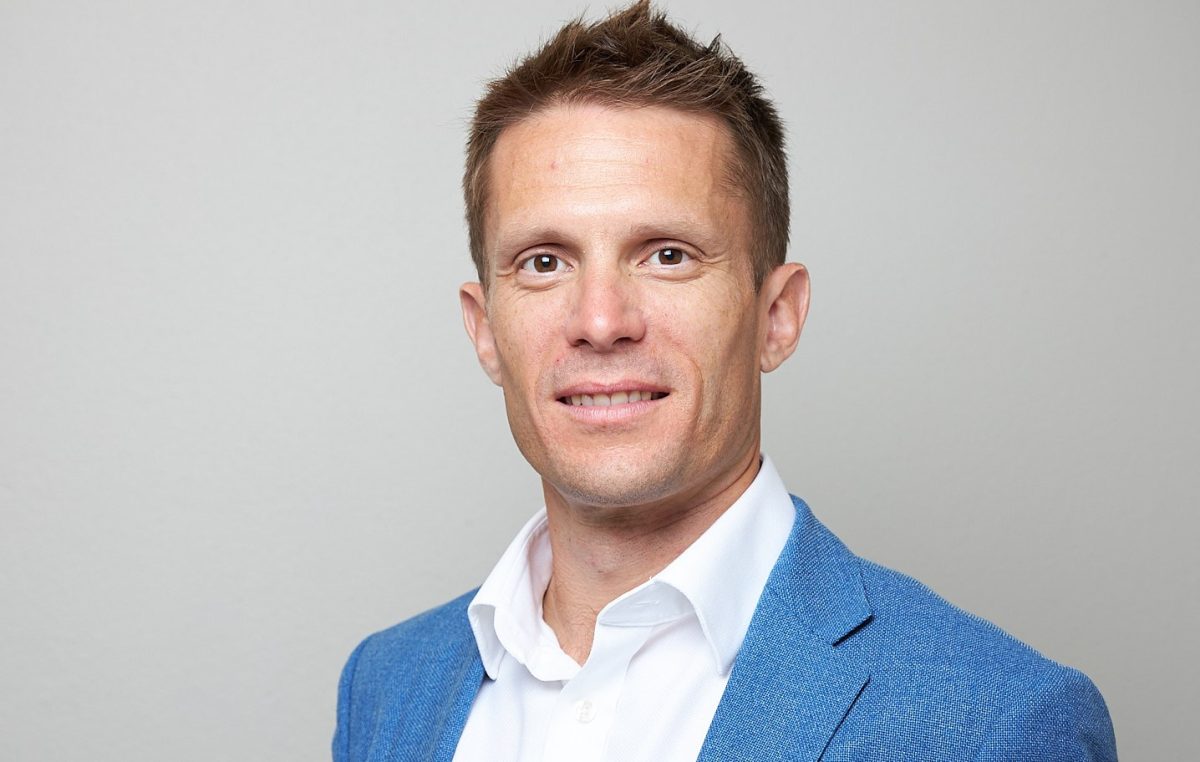
For Dr Chris Fosker, it’s not enough to simply ensure that people know the risks about cancer.
After all, there are many behaviours that we know will benefit us, but that we don’t always follow, such as regular exercise, eating healthily, not smoking or vaping and getting the recommended vaccines.
Dr Fosker, the CEO and medical director at Bermuda Cancer and Health Centre, said: “To really change how people behave, just telling them facts doesn’t work.”
Instead, Dr Fosker said, government policies can guide behaviour – banning smoking or restricting the availability of alcohol, for example.
More than that, people must have equitable access to healthcare and support.
Dr Fosker said: “Rather than sticking a poster on the wall or sticking something on social media, you need to create a relationship of trust and then work through how to help someone stop smoking, drinking, overeating, be a better weight, and help them exercise.
“Most of us know that you should exercise, but that’s a lot harder done than said. Studies show that you need good access to exercise, and you need controlled costs, because exercising is too expensive nowadays.”
He added: “In Bermuda, lighting the whole of the Railway Trail would probably be as impactful as buying a new mammogram machine.”
Worth the investment
Cancer prevention in Bermuda includes both self-care and medical care, as well as the creation of patient trust in the quality and breadth of the island’s healthcare system.
Self-care, or primary cancer prevention, focuses on preventing cancer from happening; the World Health Organisation estimates that between 30 per cent and 50 per cent of cancers are preventable.
Dr Fosker said encouraging healthy lifestyle choices, providing wellness programmes, and ensuring that healthy food and exercise are affordable, will result in a healthier population and reduced healthcare costs.
“You have to invest up front in those kind of programmes and really get people engaged into it rather than just assuming it’s each individual’s responsibility.
“All of that takes time and effort – and time and effort costs money. But it’s not a cost, it’s investment because the best cancer is the one that’s never diagnosed because you prevented it.”
Dr Fosker said it’s important that patients have confidence in the island’s healthcare system.
“Amazing things have happened in Bermuda in the last ten, 15 years. We’ve got some of the best breast cancer outcomes globally, and we’ve seen a reduction in prostate cancer mortality of 63 per cent over the last decade, but those are numbers that people don’t necessarily grasp onto.
“What they do grasp onto is if someone’s been on a cancer journey and sits down with them and says, ‘I’ve survived this, I’m living with it, I’m doing well, these people looked after me’.”
Secondary prevention and tertiary prevention also form part of the cancer prevention continuum.
The former incorporates the screening, early detection and timely diagnosis of cancer.
Dr Fosker said: “If you catch breast cancer at stage 1, you’ve got a 98 to 99 per cent chance you’ll be living well five years afterwards. If you catch it at stage 4, it’s only 25 per cent.
“You can live the absolutely perfect lifestyle and still get cancer. It’s really important that we have good screening programmes and that’s where secondary prevention comes in.
“Cancer can happen but if you catch it early via nationalised programmes – screening for breast, prostate, cervical, lung, skin and colon cancer – your chance of cure is so much higher.”
Tertiary prevention focuses on advances in treatment, survivorship and ongoing care that helps patients achieve the best possible outcomes after a cancer diagnosis.
Local treatment
BCHC has made great progress in ensuring that patients can receive treatment in Bermuda: for example, adding a radiation unit in 2017.
Dr Fosker said: “That changed us fundamentally in terms of how we can treat cancer. Having a radiation unit here has doubled the number of people who choose to have radiation.
“For those with HIP or Future Care, the number of people who choose radiation has quadrupled. For those who need palliative radiation, for symptom control, access has increased six-fold.
“We saw how quickly people would trust care in Bermuda when it was done here and done well. Within a year of opening the radiation unit, 98 per cent of people who were recommended radiation chose to have it here because they could trust what we do because of our clinical affiliation with Dana-Farber Cancer Institute and Brigham and Women’s Hospital.
“People want to be around their family and friends and that is more important sometimes than the name on the door or what the doctor says.”
Human touch
Dr Fosker said cancer patients need good support to feel “normal” again. For care providers, that includes talking to patients about next steps, and how to recover from the tiredness associated with treatment.
“The primary focus is often treatment, but getting psychological support and financial, family, physical and nutritional support, should be a normal part of treatment.
“The impact of investing in a psychologist, a nutritionist and a reflexologist is equal to that of investing in new equipment in terms of your return on investment and in terms of how the patient will feel.
“That word ‘trust’ is such a key element to it. It’s acknowledging that cancer care doesn’t stop when treatment stops.”
He added: “We can’t turn around how cancer behaves, but we can reduce that family and emotional burden, the stress of it, the worry of it, and the impact of it on our society by making sure we’re doing the primary, secondary, tertiary prevention as that whole continuum so that everything that you have to fear, we can help you with here at Bermuda Cancer and Health.”
BCHC, which never asks a patient for a co-pay, recently received a $3 million pledge from Allshores that is an investment by the company in the island by empowering BCHC.
Dr Fosker said: “While it may seem that an endless pot of gold is required to get cancer care right, with any donation, we will find a way of making sure that it’s invested back into the community, because there’s so much to do.”
