
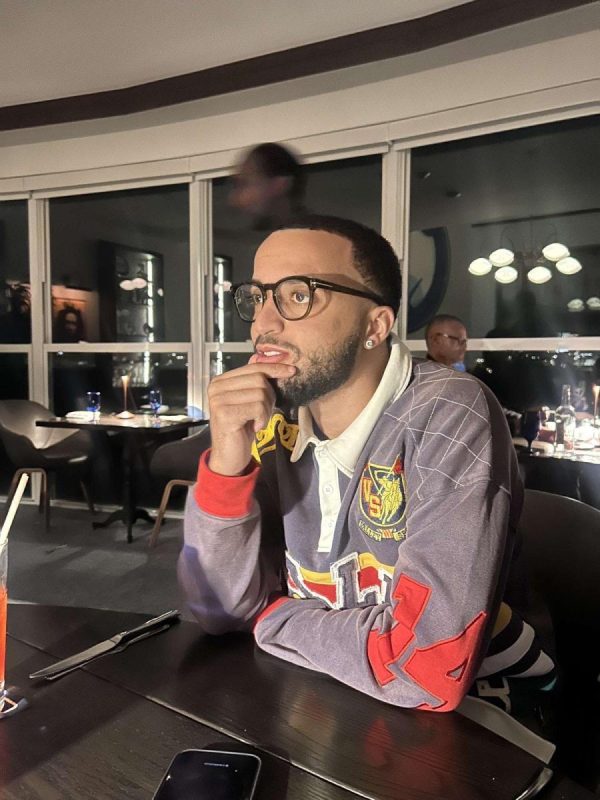
At 25 years young, Che Lindo has faced things most men would want to avoid if they lived to be a thousand.
Just two years ago, Mr Lindo was diagnosed with colorectal cancer. What followed was a battle he didn’t think he’d be fighting for at least another 30 years.
For a 23-year-old, a year of chemotherapy, radiation, surgeries, hospital stays and emotional highs and lows that push you to your physical and mental limits is the last thing on the itinerary. The thing is, cancer doesn’t care about your life plan, so you have to pivot. Mr Lindo did pivot, and he’s here to tell his story because of that very will to fight.
Today, as a cancer survivor, he is willing to talk openly about the experience – not because it was easy, but because he hopes his story will encourage other men to listen to their bodies, seek medical attention, and refuse to let fear stop them from getting help.
His journey began after returning from a boys’ trip to England.
Back at work, Mr Lindo noticed something unusual in the bathroom. Initially, he did not know what to make of it. But when it continued happening and then became worse over the following month or so, he spoke to his mother.
Her response was straightforward: it was time to see a doctor.
Tests followed, including a colonoscopy. Then came the conversation that changed everything.
Mr Lindo remembers sitting with his surgeon and being told he had cancer.
“At 23, you know, I was speechless,” he recalled. “Imagine what a 23-year-old who thinks he is fit and healthy would feel when he’s told he has cancer. It was breath-taking.”
Fight the fear
There were no words – even now, Mr Lindo stumbles over words to describe how speechless he was on getting that news from his doctor two years ago.
The treatment plan was extensive. It meant spending much of the next year in and out of hospital for chemotherapy, radiation and surgery.
The diagnosis brought fear, particularly because Mr Lindo had already watched his father go through cancer and succumb to it in 2012.
“I was scared,” he said. “Once I started losing weight, and people were consistently telling me how I was losing weight, and I wasn’t using the bathroom – you just keep losing weight. There was definitely fear in the beginning.”
But fear was not going to have the final word.
One of the people who helped change Mr Lindo’s outlook was his oncologist, Dr Michael Hawking, who quickly helped ease his sense of panic.
“Once everybody hears cancer, it’s kind of like they look at you like you’re halfway gone,” he said. “But he was like, ‘Colon cancer? That’s easy. We got that.’ That first meeting really eased my mind.”
Mr Lindo began chemotherapy, but his first treatment brought an allergic reaction, adding another layer of anxiety to an already overwhelming situation. But he stuck to the wicket.
He completed six sessions of chemotherapy and then six weeks of radiation. Staff at Bermuda Cancer and Health Centre became an important part of his support system. He remembers the nurses’ smiles and encouragement, and the way they helped make a difficult experience feel a little more manageable.
“Those ladies over there were amazing,” he said. “They were always checking on me.”
Toll on the body
Radiation was followed by surgery to remove the tumour. For a young man eager to get back to normal, the physical recovery proved humbling.
Mr Lindo recalls thinking he would be able to get up and get on with things shortly after surgery. Instead, his body told him to rest.
“I was 24, thinking I could get up and go do things,” he said. “But that surgery sat me down!”
The operation also meant temporarily living with a colostomy bag – something he had never imagined confronting at his age.
“I’m 24 with a poop bag,” he said. “It really just brought me down to earth. I thought I was supposed to have this stuff, maybe 30 years later, not now.”
There were further surgeries and another six rounds of chemotherapy. The treatment took a toll on his entire body. He recalls walking around with a chemotherapy pump and feeling as though the drugs affected everything from his energy and appetite to his sense of taste and smell.
“It was tough, you know, it would just throw your whole body off,” he says. “You just don’t want to be around anything.”
Yet throughout the year, Mr Lindo kept moving forward.
He worked when he could, sometimes working for a week and taking the following week off. He celebrated each stage of treatment as a small victory: chemotherapy completed, radiation completed, surgery completed, then back to chemotherapy. Mr Lindo took it one step at a time.
“Chemo? Done. Check. Radiation? Six weeks. Thug it out. Surgery? Get home. Second round of chemo. Thug it out.”
That phrase – “Thug it out” – became a family mantra.
For Mr Lindo, his motivation was also deeply personal. His father had experienced the same cancer. His father did not survive it.
“I had a chip on my shoulder from the beginning,” he said. “We had the same cancer in the same spot! It took one, but it didn’t take the other. So, that’s what I did it for, I wanted to beat this for both of us.”
His mother was another source of strength. When he told her about his diagnosis, she did not allow him to retreat into fear.
“She said, ‘All right. You know what you’ve got to do.’” For Mr Lindo, that meant trusting the doctors, trusting the treatment plan and confronting each stage as it came.
That support – from his mother, family, friends and healthcare workers – became one of the most important lessons of his experience.
Positive lesson
Cancer is not a reason to give up. It is a reason to pay attention. Mr Lindo urges men not to let pride or ego prevent them from seeking help. If something feels wrong, talk to a doctor.
“Don’t be hard-headed,” he said. “Don’t let your ego outweigh what’s going on. Your body sends you messages. Once your body sends those messages, don’t hesitate to go to the doctor.”
Following treatment, Mr Lindo received follow-up testing and was told everything looked good. He remains grateful – to his doctors, the nurses and staff who cared for him, his friends, his family and especially his mother.
For men who may be tempted to hide their fears, his message is direct: speak up, get checked and embrace the support around you.
“Make sure you have good soldiers around you,” he said. “Good people will definitely help you through the battle – because it is a battle.”
Mr Lindo wants other people facing cancer to understand that a diagnosis does not mean the end of the story. He knows the fear. He knows the exhaustion. He knows the uncertainty that can come with hearing the word ‘cancer’. But he also knows what it means to keep going.
“To anybody that’s going through cancer right now, I would like to just send you a hug,” he said. “We take it day by day. Step by step. We’ve just got to thug it out.”
