
Men don’t take their health as seriously as they should.
We avoid going to the doctor if we can get away with it, we miss or ignore the warning signs of disease, and we’re more likely than women to drink alcohol, smoke and eat unhealthy food.
Is it because we want to look macho? Do we honestly think we’re invincible? Are we more interested in the short-term fun factor than the long-term consequences of our behaviour?
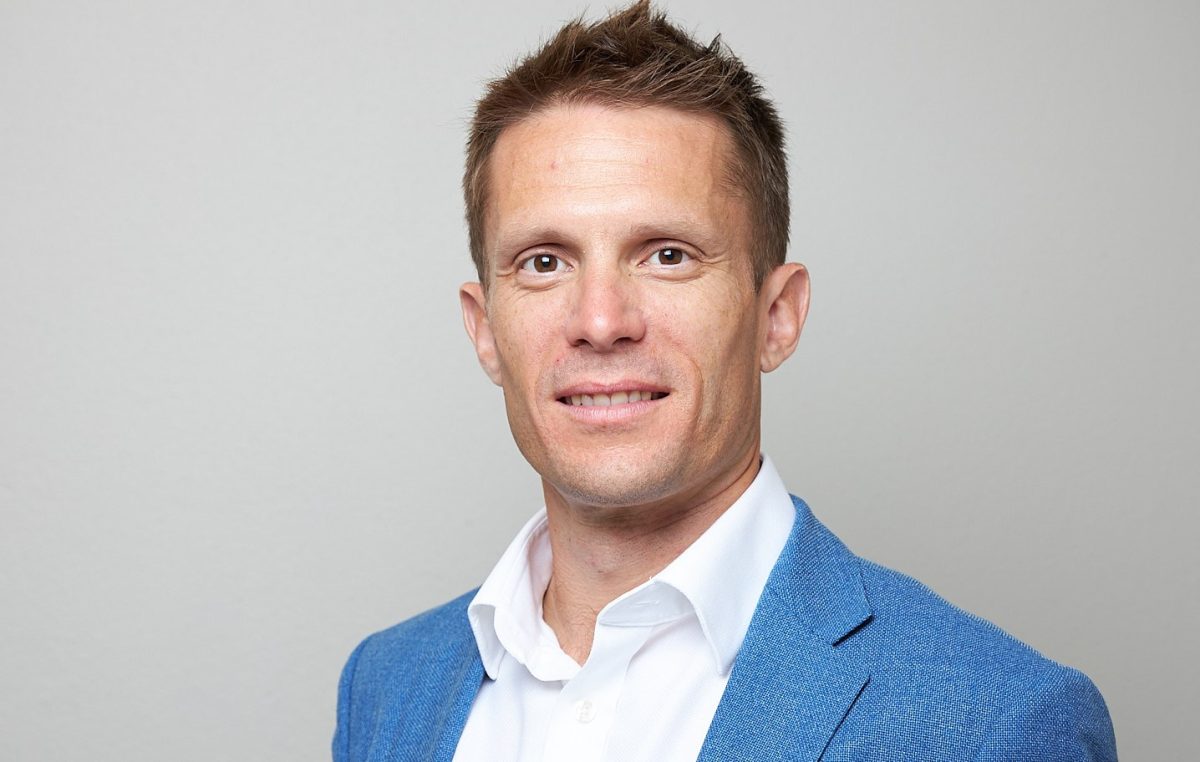
There’s some truth in all the above but, according to Dr Chris Fosker, the reality is more nuanced than a world full of alpha males trying to look like the tough guy.
“Men aren’t choosing to get this wrong. They’re just getting it wrong,” said Dr Fosker, the CEO and medical director at Bermuda Cancer and Health Centre.
The difference in attitudes to health between men and women is stark.
According to the World Health Organization, about 45 per cent of cancers in men are tied to controllable risk factors, compared to 30 per cent in women. Studies have shown women across the globe are far more likely than men to undergo screenings that could detect cancer early.
Yet men and women are not innately wired very differently.
“When it comes to health behaviour, only about 10 per cent is actually down to the biological difference of men or women,” Dr Fosker said.
“That is fascinating, because it means 90 per cent of it is driven by societal behaviour, psychosocial norms, healthcare structure and workplace structure.”
Social factor
From a young age, boys are taught to act “like a man”.
“That really drives what we see 30, 40, 50, 60 years later in terms of male attitude to healthcare,” Dr Fosker said.
“It’s down to all of us. I’m not going to blame anyone. Parents, teachers, football coaches shout things like, ‘Toughen up and be brave and be strong,’ when we’re talking to boys.
“That translates into adult life. It also translates into the workplace and workplace structure.”
Partly due to societal norms, men are more likely to have physical manual jobs.
“These jobs are also less likely to have an employment structure that allows ad-hoc time off, that promotes taking breaks to go and see a doctor,” Dr Fosker said.
“Being a man is all about being tough, being resilient, being the best you can be, being the breadwinner. Men feel a huge amount of pressure to financially support their families and they fear any kind of time off, even if it means looking after their health, could put that at risk.”
Gender views
Many women become familiar with the healthcare system through pregnancy and reproductive healthcare.
“That experience for those women normalises their understanding of a healthcare system,” Dr Fosker said. They naturally have a lot of interaction through those moments.
“Following on from that, there’s good screening programmes, globally and in Bermuda, for cervical cancer and breast cancer, that start at an earlier age than it does for men.
“They are quite invasive – there’s no way to hide it. It’s a very personal and difficult experience.
“But women get used to that and accept it, whereas men have no exposure to that, and then start to fear it.”
Men also experience higher rates of premature mortality from conditions such as cardiovascular disease, which has been linked to a fatalistic attitude toward health.
Changing the dial
Evidence in Bermuda suggests men can get it right when intentional efforts are made.
“Men have got much better at getting screened for prostate cancer in Bermuda,” Dr Fosker said.
From 2010 to 2019, the pick-up rate of stage one prostate cancer increased from 75 per cent to 90 per cent. During that time, the risk of prostate cancer death dropped by 63 per cent.
“Making access easy makes a difference,” he said. “And it’s just got even easier for men as the dreaded finger test is no longer routinely used for prostate cancer screening. It now starts with just a blood test.
“It’s been shown that if the healthcare system is structured and accessible to men, they’re just as good as women.”
Prostate cancer is a sound example. If detected in the early stages, men have a 99 per cent chance of being alive a decade later; if detected at stage 4, the survival rate drops to 20 per cent.
“If you’ve sat on those symptoms like bladder problems, and you shift yourself from stage 3 to stage 4, that has changed your life.
“That is where we can make a difference with men: encouraging them not to ignore symptoms, not to be fatalistic, not to be macho – get that relationship with your GP so that you’re not just dismissing things.
“Men are not as well-versed as women in kind of just asking for answers and expecting to get answers, and not just dismissing it.”
How bosses can help
In many male-dominated industries, people feel obliged to work through the pain barrier to avoid letting down their teammates; they find it difficult to take time off for a medical check-up.
“If you look at working teams on a construction site, they’re really tight teams, but they’ve got to work together to get the job done,” Dr Fosker said.
“If you’ve got a team of five and you’re not able to pull your weight, then you’re letting down the other four.”
Many of these attitudes are gender-set in childhood, but Dr Fosker said: “It doesn’t mean you can’t work against it.
“So much of that is achievable through HR policies. You’re not going to change men’s behaviour overnight, but you can change the structure in which men access care.
“It’s simple things like having a policy that if you need a health check, you can do it in your working hours. Any organisation can tell their workers they’ve got to go and have their annual physical with their GP, just as part of good behaviour.
“You’re not talking about massive expense, but that’s the cultural shift that can make a difference. And if it keeps your workforce well, that expense is quickly repaid.”
Let’s talk!
Telling men to change has not worked.
“We need to be more innovative, more dynamic,” Dr Fosker said: “We need to empower men to change the conversation, making it normal.”
People are more likely to listen to someone talking about their own experiences than a message from a health expert.
“Men who’ve been through health challenges and come out positively can have a huge impact on their peers by talking about it,” Dr Fosker said.
“We see with men’s cancer groups, particularly prostate cancer, there is an increasing amount of trust because they’re talking to each other, and they’re talking to other people.
“If you’ve been through a cancer experience, talk about it. It would make other people feel much more comfortable talking about their fears and working their way through. That key change will have a positive impact on men’s health, and it is attainable.”
Talking seems to come naturally to women – but, Dr Fosker points out, it is a social agenda that has trained them to talk.
“Men are trained not to talk,” he said.
“We need to retrain men to talk, particularly after they’ve had a healthcare experience, because then it encourages other men to think about their health.”
