
When I was a child, I had more aunties, uncles and cousins than I could count.
I was pretty sure, even then, that these typically ‘blood relative titles’ were not being used ‘correctly’ – and it confused me a bit.
As I grew, however, I found that these ‘family ties’ were very advantageous, and that all the new people I’d meet along the way had similar ties. This, as we will see, was resistance.
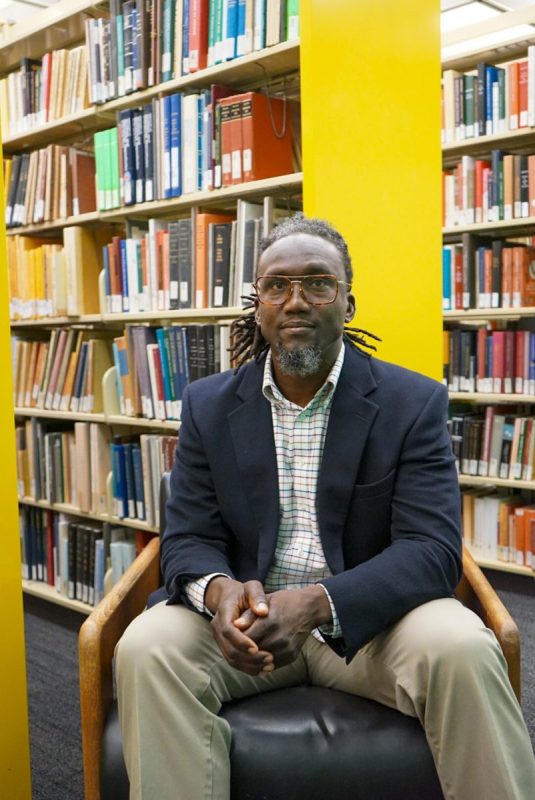
Theodore Francis II was one those I would meet in the 1990s – well before he became an Associate Professor of History and Global Studies at Abeline Christian University in Texas, and one of Bermuda’s preeminent keepers of African history and culture.
I had the privilege of sitting and reasoning with Professor Francis over the impact that African culture has on the way Bermudians approach daily life today. He offered a powerful lens through which to understand African heritage – not as something distant or abstract, but as something deeply embedded in everyday Bermudian life.
“When we overstand African culture, and when we have the conversation, sometimes we want to think about this literal artefact – this literal thing – like, we cook chicken like this; some mans over in Nigeria or over in Ghana or Congo, cook chicken the exact same way. Therefore, one equals one – African culture,” he explained.
“But the more I’ve been thinking and reflecting on it – it’s not just the material aspects of African culture that we see today, but the immaterial aspects of it.”
His perspective challenges the common tendency to define culture only through visible, material expressions such as food, clothing or music. While these are important, he argues they are only part of the story.
Instead, Professor Francis emphasises what he describes as the immaterial aspects of culture: values, social structures, and ways of relating to one another that have endured despite centuries of displacement and oppression.
Kinship networks
At the centre of this is the concept of kinship networks. In many pre-colonial African societies, identity was not defined narrowly by the nuclear family, but by expansive networks of relatives and community members. These systems were foundational to political, economic and social life in great African empires such as Mali and Songhai. Even though enslaved Africans were violently stripped of their homelands and formal structures, these underlying principles of kinship survived.
In Bermuda, these traditions evolved into something both familiar and profound. It is seen in the way community members refer to close family friends as ‘cousin,’ ‘aunt’ or ‘uncle,’ regardless of blood relation. It is reflected in the strong emphasis on gatherings – whether for celebrations, church events or moments of mourning and reflection – where entire communities come together as one. These practices are often labelled simply as ‘Bermudian culture,’ but as Professor Francis points out, they are deeply rooted in African ways of being.
“That’s kinship network – and I feel that’s firmly African. That’s firmly African in a context of the middle passage slave trade piece, and the ways in which you’re trying to rebuild what’s lost. With the overstanding that within this West, the Americas, Caribbean, Latin America – wherever you drop us locationally – what our greatest strength was, was one another. Not necessarily the material environment, because we were brought here as objects of wealth for the system; we were considered property.”
This is an insistence on community as culture; and it is a critical insight. For generations, Black Bermudians have been told – implicitly or explicitly – that they lack a distinct culture, especially when compared to European traditions that are often held up as the standard.
Kilts, bagpipes, royal European lineages – these are easily recognized as markers of culture. Meanwhile, African-derived practices, especially those that are less tangible, have been overlooked or undervalued.
This imbalance is not accidental. It is the result of historical processes that sought to decontextualise African people from their heritage. Professor Francis references the idea that when people are disconnected from their cultural roots and taught to view themselves through an external lens, they may begin to devalue their own traditions. This phenomenon has had lasting effects in Bermuda and across the African diaspora.
Legacy of resistance
Yet, despite these challenges, African cultural continuity has persisted. It survived the Middle Passage, where enslaved Africans, thrown together from different ethnic groups, began to rebuild community under unimaginable conditions. ‘Shipmates’ became family. Shared struggle created new bonds. These kinship networks were not just a means of survival – they were a form of resistance.
In Bermuda, this legacy lives on. It is present in the rhythm of Gombey drums that make our bodies move instinctively. It is in the communal spirit that permeates and defines our neighbourhoods and social life. It is in the resilience and creativity of a people who, despite centuries of marginalisation, have maintained a strong sense of identity.
However, as Professor Francis notes, the issue is not whether these African influences exist – it is whether they are recognised. Many Bermudians grow up immersed in these cultural practices without explicitly identifying them as African.
“A fish doesn’t know that the water is wet,” he quips – which is a folksy way of saying that when culture is so deeply ingrained, it can become invisible.
This lack of recognition, however, has consequences. Without a clear understanding of the origins and significance of these traditions, it becomes easier to dismiss or undervalue them. It also limits the ability to build a sense of pride rooted in historical awareness.
So, what can be done to strengthen this connection and foster greater pride in our African heritage?
Education is a crucial starting point. Integrating African and Bermudian history more fully into school curricula can help young people understand the depth and richness of their cultural inheritance. This includes not only teaching about slavery but also highlighting the achievements of African civilisations and the ways their legacies continue today.
Indeed, teaching children why their mother’s friend becomes their auntie, and that indelible connection to the ways African civilisations built community in the past, can potentially spark tremendous pride.
