
Bermuda Waterworks is in the midst of a major infrastructure expansion that aims to meet the full demand for water throughout the West End, as well as increase potable water production and bring down energy costs.
Since 2010, the company has invested heavily in developing and upgrading its piped network, which now extends all the way to Somerset village.
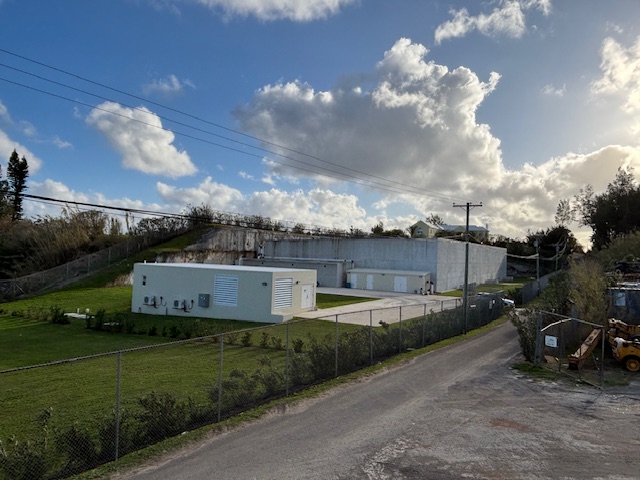
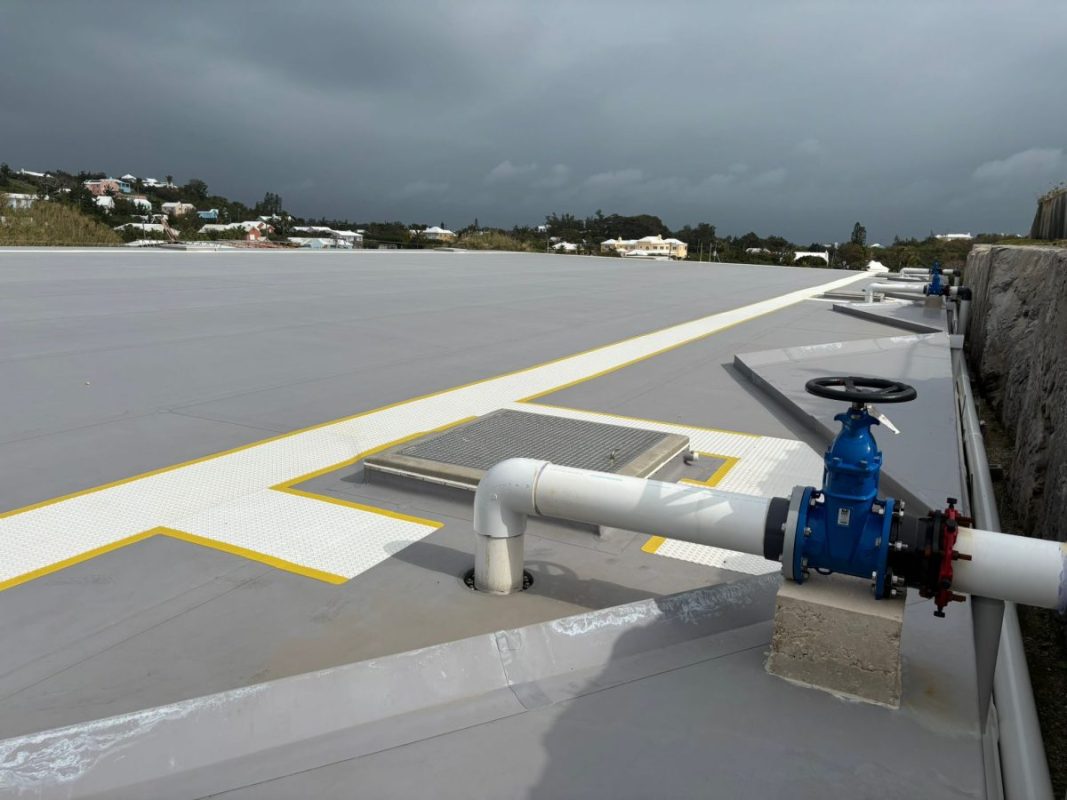
In 2025, they completed a new reservoir and pumping station in Luke’s Pond, Southampton, which added an additional three million gallons of stored water to their 1.1 million gallons in Devonshire.
“What it means for the West End is that they are seeing a more resilient and consistent level of service,” explained Roger Todd, Bermuda Waterworks’ CEO.
Their focus now is on further expanding the water mains and creating distribution branches that will service the various neighbourhoods.
The new reservoir was only the first phase of development at Luke’s Pond. By 2028, Mr Todd hopes to complete a new, 5,000 square foot water treatment plant on the site.
“We will take seawater from three deep wells that will be located on the Luke’s Pond Reservoir property, and we will process that through the new Reverse Osmosis plant, and then we will discharge the brine water out to sea,” he said.
D&J Construction is the preferred contractor for the water treatment plant, which was designed by US-based water engineers, Kimley-Horn, and local architectural firm, Geoff Parker Architect. This is the same team that was behind the new reservoir and pumping station.
 The new reservoir and water treatment plant doesn’t just mean a more reliable supply of water to existing households.
It will also allow for new building development.
“A lot of developers are now building more condominiums and more units per acre of land than they used to, so the water catchment associated with that development is not really increasing but the number of units are,” Mr Todd explained.
Using Loughlands in Paget, as an example, which has around 97 units in 15 buildings, he said that the feasibility of a development such as that was dependent on having piped water.
“At certain scales, trucking water in is not an option. What this means is that development in the West end doesn’t have to worry about sourcing their own potable water.”
The increased production of potable water will also benefit the island during times of drought, as Bermuda Waterworks can provide a top up service for water truckers.
Desalination is an energy intensive process and the environment, as well as energy costs, also matter to Mr Todd. Renewable energy is, therefore, a significant part of their plans.
The first project, which he hopes to complete this year, will be the installation of 78kWs of solar panels on the roof of the company’s North Shore plant.
“We will use every bit of the solar that’s generated and that will offset some of our energy costs,” he explained.
They are also exploring solar energy systems for their Devonshire headquarters as well as at Luke’s Pond. Ideally, Mr Todd would like to get as close to net zero as possible.
“That’s the blue sky scenario,” he smiled, adding, “ultimately, it will take the pressure off the pricing. It’s not just the customers benefiting from the price, it’s also the energy independence and the environmental benefits, the amount of CO2 we can offset.”
These projects are the latest in a long line of pioneering piped water development since Bermuda Waterworks was founded by Henry Watlington in 1932, but the mission and vision, said Mr Todd, always remain the same: “Ensuring Bermuda’s future with sustainable water solutions.”
