
In our smartphone-dominated, post-Covid world, we often hear complaints that our teenagers have become less willing to engage with their communities and families.
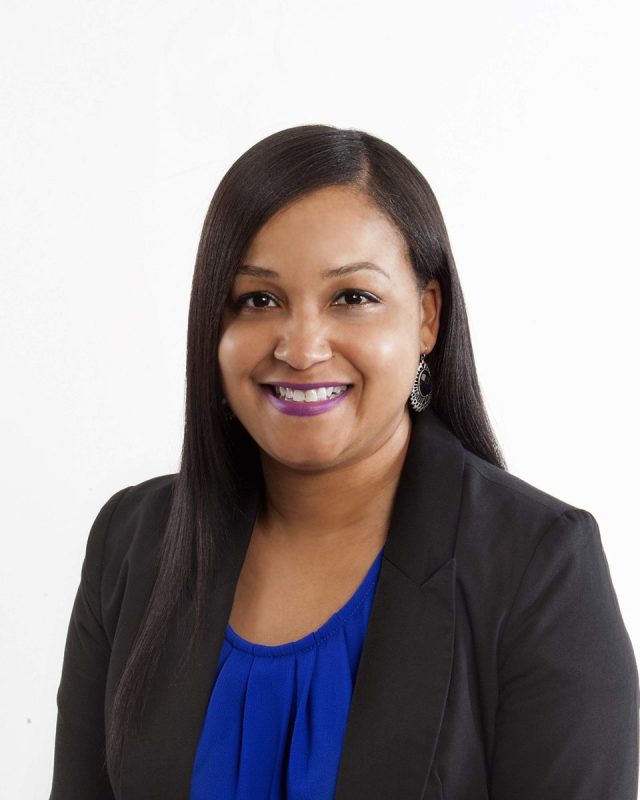
Patrina O’Connor-Paynter doesn’t buy into that.
“I wouldn’t say that they’re less willing to do so,” said the executive director of the Big Brothers Big Sisters charity.
“Covid did impact them. They had missed key social development windows, reduced in-person interaction, loss of routines, increased isolation and we see higher social anxiety.
“But you know, some of the teens did bounce back quickly. Some are still rebuilding their social skills, depending on their age range.”
All of them, according to Ms O’Connor-Paynter still need and want real-life connection — and that’s where BBBS steps in.
As well as its traditional one-on-one mentoring, where youngsters are matched with a specific adult ‘brother’ or ‘sister’, the charity offers a whole host of other ways for young people to benefit from the wisdom, guidance and life skills of their elders and connect with one another.
The broadened scope allows adults who can’t commit to being a mentor to still volunteer to help.
That might mean hosting a cooking class for young people, like community partner Carmen DeSilva, or taking part in a networking event for mothers, such as the one recently hosted by insurance company Chubb.
“We have a big community,” Ms O’Connor-Paynter explained.
“What we are trying to do at Big Brothers Big Sisters, outside of one-on-one matches, is to develop a community of people that look out for young people, a community where young people know that there are people watching out for them.
“There are people that care, that they’re being able to be exposed to [and that gives them] opportunities and experiences that they might not necessarily otherwise get. We’ve been able to see that happen.”
Evolving connections
She said it’s wrong for adults to assume teens want to disappear into their phones and avoid real-life interaction.
“People still long for connection but it just looks a little bit different from back when we grew up.”
She encourages adults to think about giving a little of their time to connect with the youngsters helped by BBBS.
“People in the community need to understand that everybody has something to offer. Everybody can make an impact on a young person.
“Just because you feel that they’re glued to a screen or you think that they’re disconnected, sometimes it’s just giving that listening ear and being there, instead of being so judgmental about them and the things that they do.
“It’s actually just showing interest and showing that you care.”
Ms O’Connor-Paynter said that even before the pandemic, BBBS noticed a “lot of our boys had challenges expressing themselves; the majority of them are being raised by a mom or a grandmother or a female”.
That led to a partnership with MASC, a male-centred counselling practice, which gets middle school and high school boys to meet once a week, express their feelings and take part in fun activities together. There is a primary school group too.
“The boys enjoy it,” she said. “It also gets them to bond with each other and develop a network amongst each other, because one of the things that we really want to bring back is the family network, where our family members at Big Brothers Big Sisters can also look out for each other.”
MASC is also the partner for a Mothers Raising Sons scheme.
Dedicated girl-power sessions, meanwhile, were launched with psychologist Dr Jana Outerbridge, with a focus on developing leadership skills.
BBBS has now partnered with the Alpha Kappa Alpha Sorority for middle and high school-aged girls to take on community service projects.
Family
Ms O’Connor-Paynter, who has been at BBBS since 2008, uses the words “family” and “community” a lot; she knows how important both are in giving young people the best start in life.
“We’re developing family,” she said. “One of the things that really resonates with me is that we have children that are as young as five, but we have young men and young ladies that are as old as 18 that are in the programme.
“Whatever events that we’re having, we still have 16- and 17-year-olds that come out as well and it shows me that they feel a part of something.
“We’ve had young people tell us they feel like they belong and they feel like they’re a part of a programme that cares about them.”
She paused, then added: “Actually not a programme, a family.”
Opportunities for “in-person” events are many at BBBS and they are popular.
Giving a lie to the idea that young people want to isolate themselves, Ms O’Connor-Paynter said: “It’s so funny because for most of our events, we have to cap the limit.”
One such example is her grandfather Eugene O’Connor’s annual kite-making workshops.
“We see some of the moms coming out,” she says. “We see some of the ‘bigs’ coming out to help.
“We see the children coming and wanting to embrace themselves in Bermuda culture.”
Ms O’Connor-Paynter shares that BBBS, which formed in 1978, has 180 children on its books, with about 130 “definitely able to say that they’re serviced regularly”.
In her line of work, she simply doesn’t see a “whole generation of disconnected” youth.
She said: “I think that they experienced a deep disruption [during the pandemic] but I think it makes them want connection more.
“They still long for connection and they still long to be connected with people.”
She adds: “The pandemic showed us that we need people.
“We need human interaction. We need human touch. And so do young people.”
- Big Brothers Big Sisters can be contacted on 232-2802 or 537-1217, or by emailing [email protected] or visiting bbbs.bm
