
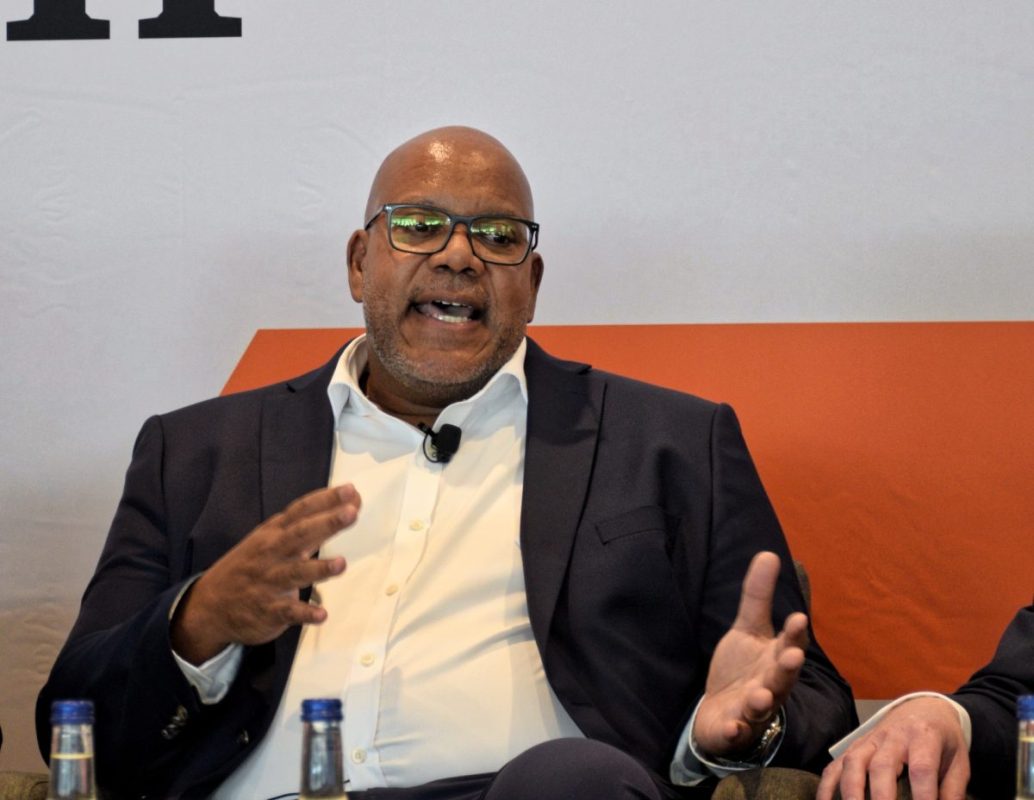
We all know Bermuda is a great place to do business – but what does it take to reach the top?
RG sat down with Paul Simons, CEO of Convex Re Limited, to find out.
Mentorship is vital
I’ve been fortunate to have several mentors who helped shape not only my understanding of the industry, but also how to navigate challenges and lead through difficult situations.
They helped me with guidance on how to develop both the expertise and the softer skills that are critical to succeeding as a leader.
Early in your career, success is all about demonstrating competence. As you move into management and leadership roles, the demands and expectations are just as pronounced, but how to drive results, particularly as it relates to people, becomes far more nuanced.
It helps to have people who believe in you, invest in your success, and advocate for your growth. Those relationships can make a real difference in helping you reach your full potential.
That’s where mentorship becomes especially valuable. Today I still have individuals that I tap into for advice because they have seen and done it.
Qualities of people you work with
Integrity is extremely important. You have to be able to trust the people you surround yourself
with professionally and feel confident they genuinely want to see you succeed.
The best professional relationships are ones where people support each other and collectively help raise the standard.
It’s important to surround yourself with talented people. Early in my career, a CEO I worked for used to say, ‘Surround yourself with people who are better than you.’ That always stuck with me.
To do that well, you have to be secure in your own abilities. Strong leaders aren’t afraid to work
with highly capable people — in fact they embrace it.
Like in sports, over time there’s always someone who will come along who’s faster and better, and I believe in embracing these individuals. As a good leader you can’t be insecure about this.
Time management
There are constant demands on your time, and one of the most important decisions I make each day is what you choose to focus on. I have a lot of requests for my time, and it’s not easy saying no to
people, but I’ve learned that saying no to something or someone means I can say yes to another, as there are only so many hours in the day.
One belief you’ve changed your mind about
The importance of simplicity. Our industry is incredibly complex and early on I approached challenges with trepidation as the complexities can often overwhelm, and you can lose site of the forest for the trees. But one of my mentors was instrumental in showing me that not overcomplicating things is within itself a strategic benefit that I now try to live by.
Over time, I’ve learned the value of slowing down, really understanding the underlying issues,
and breaking complex problems down into their core components before trying to solve them.
I’ve also learned how important listening is. Earlier in my career, I think I was more focused on
reacting quickly and driving toward action. With experience, I’ve come to realise that taking the
time to truly listen and fully understand what people are telling you is often just as important as
the action itself.
What legacy do you hope to leave?
Professionally, I want the organisation to continue to be a place where people can thrive and grow, and where that success is sustained over time.
Personally, I’d like to know that I’ve made a tangible difference in helping others progress, particularly people who may see aspects of themselves reflected in my journey. In Bermuda
especially, there are still not enough people in senior roles who reflect the diversity of the
community.
Interview by Stuart Roberts
