The post Emotional strength in pregnancy appeared first on RG Magazines.
]]>That’s a lot of mothers handling pregnancy, money worries and big life changes without a steady partner beside them. Early pregnancy can be an emotional roller coaster for anyone. Doing it alone can make that ride much harder.
Fiona Dill from It Takes a Village Foundation sees this reality up close. Her charity supports pregnant women through childbirth education, doula care and practical help like food, diapers and Belco vouchers and a soon-to-be-launched breast pump programme. While she often meets women later in pregnancy, the pressures often start much earlier.
“I think the hardest part is if the pregnancy was not planned,” Mrs Dill said. “Then they have to worry about if the dad is going to stick around and support them and the baby once it’s here.”
That uncertainty can sit heavily on a woman’s mind from the start.
Fear about money is another early stress. Bermuda’s cost of living is high, and pregnancy comes with extra expenses particularly if uninsured — quality food, maternity clothes and preparing for a baby all add up.
“The reality is that even when there are two working parents it can be hard,” Mrs Dill explained. “All they need is an additional cost in a month, like a health co-pay or going back to school expenses, and it can set them back.”
For women without a reliable partner, the constant stress can affect both mother and baby for years to come. That is one reason the foundation’s work goes beyond birth classes.
“Our approach is concerned with the short and long-term emotional and physical health of our whole community,” Mrs Dill said.
“We value and work closely with Government’s Maternal Health Clinic and health visitors as we share these goals.
“There are other similar programmes run elsewhere in the world that are very similar. From these overseas programmes, we know that this support works and goes some way to support health equity and reduce disparities in terms of experience and maternal and infant outcomes.”
A support system’s journey
Mrs Dill has run a childbirth education practice in Bermuda for 19 years. Six years ago, after attending one of her classes, a new mother, Erin Williams, came back with an idea.
“She said the classes had made such a difference to how she had regarded the birth process and such a difference to her experience of birth that she wanted every pregnant woman in Bermuda to have access to good evidence-based childbirth education regardless of their ability to pay,” Mrs Dill recalled.
When told there was no charity, the woman replied, “Well let’s create one.” Ms Williams became co-founder of It Takes a Village.
Many people know the group for its Facebook page where items are shared, but Mrs Dill said: “That is only a small part of what we do”. At its heart, the work is about helping women feel less alone at one of the most vulnerable times of their lives.
Combating fear with education
Mrs Dill said teaching women, and their partners, if they are around, about the birth process and how to advocate for themselves is “so important”. When a woman understands what her body is doing, she often feels more in control, which can lead to a more positive birth experience.
That sense of control can be especially powerful for women with past trauma. Mrs Dill pointed to a painful statistic: “Here in Bermuda, one in four girls have had some form of sexual abuse encounter and that has huge implications for the birth space.” Pregnancy and birth involve intimate exams and physical vulnerability, which can trigger old memories.
“If you have always felt your body is dirty or that people didn’t believe you or listen to you, then to experience agency and having a new narrative around your body as you see what it can do, can be transforming,” she said. Education and the right support can help a woman feel respected and heard.
Beyond birth classes
Food support is another key piece.
“We know that what we eat when pregnant can make a big difference to our health and that of the baby,” Mrs Dill said. But healthy food costs money, and not every family has enough. The foundation’s voucher programme aims to ease that strain.
One of the most personal forms of support the charity offers is community doula care. A doula is not a medical professional but a trained support person who stays with a woman through labour and into the early days after birth and beyond into early parenting to facilitate breastfeeding and post-partum recovery. This can be key to those that don’t have partner or family support.
“There is so much research that shows childbirth education and doula support decrease unnecessary interventions, increase breastfeeding rates and decrease post-partum depression,” Mrs Dill said.
The foundation also runs a diaper programme through government health clinics. Even that basic item can be a struggle. If a mom doesn’t have enough diapers, she may have to keep her baby in a dirty diaper for longer, which increases the risk of rashes.
Despite the challenges, she points to the strength she sees in mothers.
“Many single-parent families are headed by women and in my experience strong, resilient women who love their kids and do everything they can to give them what they need,” she explained.
Early support can have lasting effects. It’s also helpful for women just knowing that ‘the village’ cares. “Even if a mom doesn’t have the birth experience they were hoping for, what we know is that if someone feels safe, listened to and respected then it can still be a positive experience,” she said.
She believes more needs to happen at a community and policy level. Childcare is a major issue. “Happy Valley Daycare is government run and brilliant, but so oversubscribed,” she said. “Another facility like that would be amazing.”
The post Emotional strength in pregnancy appeared first on RG Magazines.
]]>The post Beyond the books appeared first on RG Magazines.
]]>This is what the Royal Bermuda Regiment, in collaboration with Bermuda College, offers through a unique scholarship programme.
The blend of academic learning and challenging military training aims to preparing recipients for success in every spectrum of life.
Major Dwight Robinson, the Regiment’s career management officer, said: “This scholarship is primarily targeted toward physically and mentally robust young adults — high school leavers, college students and emerging professionals — looking to develop their cognitive and intellectual capabilities.”
He said ideal candidates were those who were service-minded and able to “thrive in team environments, value discipline and accountability, and driven by meaningful challenges”.
More than just tuition
Catering to Bermuda nationals aged 18 to 25, with a minimum GPA of 2.50, the scholarship offers full tuition for up to two years at Bermuda College.
But the real catch? Recipients engage in a three-year and two-month term of paid, part-time military service, with about 45 training days annually.
“This is about shaping well-rounded leaders who are ready for anything,” said Major Robinson, highlighting the programme’s focus on holistic development.
The commitment moulds scholarship recipients into individuals who are service-minded and driven by solving challenges.
However, he warned that applicants anticipating an easy journey should adjust their expectations. “Expect to be tested, physically and mentally,” he said. Yet, there will be plenty of support available for those willing to push through.
Major Robinson said the scholarship emphasised mental wellness, resilience and critical thinking, preparing scholars for the inevitable challenges of life.
Critical thinking and leadership skills
“Beyond the base military skills and primary subject area learning, recipients will develop critical thinking capabilities being able to execute in high pressure environments, manage time and resources, and adapt and communicate effectively,” Major Robinson said.
The scholars hone skills in “peer leadership, receiving constructive feedback and team operations”, all of which are critical to any leadership role.
The Major emphasised the rigour of training.
“Applicants should expect to be supported through those tests,” he explained.
“The environment demands focus when all around is chaotic, and growth is only achieved through some measure of discomfort.”
This structured yet supportive setup ensures that each scholar learns from every challenge, turning potential stress into a stepping stone for success.
Dual pathway to success
The scholarship aims to integrate academic pursuits with practical military training, ensuring that growth in one supports the other.
“The Regiment provides opportunities for real-life practice of leadership that complements classroom learning, enhancing critical thinking, time management, and decision-making,” Major Robinson said.
The aim is to prepare young Bermudians not just for personal success but for a life of meaningful contributions to their community and nation.
“The Regiment provides structure, mentorship and a close-knit team environment that enhances a student’s sense of belonging and purpose while they pursue higher education,” he explained.
“In turn, students bring fresh perspectives, intellectual rigour and evolving professional skills back into the Regiment.
“This reciprocal relationship builds confident, capable leaders whose academic and service experiences mutually strengthen one another from the very start of their careers.”
The post Beyond the books appeared first on RG Magazines.
]]>The post Building futures appeared first on RG Magazines.
]]>From building expertise in cutting-edge fields to connecting students with life-changing opportunities, Bermuda College is helping young people unlock their potential.
Thanks to the generosity of two major players in the local reinsurance industry, the Martello Re Scholarship and the Global Atlantic Re Scholarship, the College is doing just that – providing life-changing support to help students thrive academically and professionally in high-demand fields.
But what exactly are these scholarships all about? Who are they for? And why do they focus on actuarial science and technology? We spoke with Deanae’ Miller, Bermuda College’s financial aid officer, to find out more.
Scholarships with a bigger purpose
The scholarships came to life through the partnership between Bermuda College and Bermuda College Foundation.
“The Martello Re Scholarship and the Global Atlantic Re Scholarship were made possible through donations by each of the companies to Bermuda College Foundation,” Ms Miller explained.
“The Foundation’s mission is to develop philanthropic partnerships that support our goal of a fully funded, state-of-the-art Bermuda College.”
Both scholarships target students interested in fields tied closely to Bermuda’s fast-growing insurance and reinsurance industries. Actuarial science, business administration and computer information systems are among the programmes eligible for support under these scholarships, offering opportunities to students with big dreams and the drive to succeed.
Martello Re’s scholarship is a one-year award of $6,750: enough to cover full tuition and support textbook costs for a student enrolled in the two-year actuarial science or computer information systems programmes.
Global Atlantic Re is also committed to supporting local talent.
“Global Atlantic Re has pledged $25,000 annually to Bermuda College Foundation for four years,” Ms Miller said.
“The funds provide one merit-based scholarship of $6,750 per year, with the rest going toward other education grants that eligible Bermuda College students can access.”
Who are these scholarships for?
Both scholarships aim to support students financially and connect them to industries where they can make an impact. Recipients are selected based on academic performance, financial need and their interest in the relevant fields.
“We’re looking for students who are motivated, display strong character and are committed to contributing to Bermuda’s workforce,” Ms Miller said.
“The goal is to make sure financial challenges don’t prevent bright and enthusiastic students from pursuing their education.”
Beyond the classroom
At Bermuda College, the support doesn’t stop at the classroom doors. Once financial barriers are removed, students can take advantage of many services designed to help them thrive.
“Bermuda College offers academic advising, tutoring and career support,” Ms Miller said. “But what’s even more exciting is that some of our corporate donors provide internship and summer employment opportunities specifically for Bermuda College students. These real-world experiences are essential for professional growth.”
Student testimonial
Bermuda College student Julio Rivera-Cabrera outlined the benefits of the financial support.
“Because of the support received to date, the College has been able to increase the scope of its financial aid programmes, increasing access to higher education for all,” Mr Rivera-Cabrera wrote to the College’s Foundation Founding Donors.
“The financial strain that so many students experience is lessened by the scholarships and awards that the kindness of others has made possible.
“It allows us students to confidently prepare for the future, follow our passions, and concentrate on our education.”
Mr Rivera-Cabrera said that, along with lessening the financial strain, the support acts as a reminder that there are people who value the students’ success and “think we have what it takes”.
He said: “It’s a strong incentive to put in more effort, pay it forward, and eventually assist future students.
“Support of our education, faith in our goals, and the assistance in creating a more secure and motivating future for our community and college is truly appreciated.”
The bigger picture
For Ms Miller and the entire Bermuda College team, these scholarships signify more than tuition assistance — they represent a long-term investment in Bermuda’s future.
“These scholarships are designed to remove financial barriers that might otherwise limit a student’s educational journey,” she said.
“The connections students make with corporate donors can even lead to mentorship, internships, and future career opportunities.”
It’s no secret that Bermuda’s economy is heavily supported by the insurance and reinsurance industries. By focusing on fields within these industries, these scholarships aim to build a skilled local workforce, reduce dependency on overseas talent, and support the island’s future economic sustainability.
Ms Miller said these scholarships were about more than money — they bring mentorship, connections, and a confidence boost that can help you excel.
“Beyond the financial support, these organisations believe in the students they’re helping. That belief can make all the difference,” she added.
For more information, email [email protected] or visit www.college.bm.
The post Building futures appeared first on RG Magazines.
]]>The post Woman in a man’s world appeared first on RG Magazines.
]]>Meet Kiara Burcher, a Bermudian studying for her master’s degree at Western University, Canada, one of North America’s top business schools.
As one of only a few women in her undergraduate programme and still among the minority in her master’s course, Ms Burcher is breaking barriers and paving the way for more women to enter this fast-growing, dynamic field.
Data analytics isn’t just about crunching numbers or coding algorithms. In Ms Burcher’s case, it’s about resilience, growth and inspiring women to stand confidently in a space that can feel unfamiliar.
Through multiple scholarships, including direct support from the Bermuda Foundation for Insurance Studies, Ms Burcher shared the challenges, breakthroughs and opportunities she’s experienced on her path to professional success.
Finding her passion
Ms Burcher’s love for maths began early but, like many, she initially struggled to see how it could lead to a meaningful career.
“Growing up, I always loved maths but struggled to translate that into a profession,” the 22-year-old said.
Everything changed in her final years at Bermuda High School for Girls, where she embraced the chance to take the inaugural computer science course in her International Baccalaureate programme. That sparked her fascination with coding and opened her eyes to how maths and computer science intersect.
“At university, I was able to take data science electives, combining two areas I highly enjoy,” she explained.
“What I found so fascinating was the art of storytelling and uncovering connections through data.”
For Ms Burcher, data analytics is about more than the numbers themselves — it’s about drawing meaning and value from them to solve real-world problems.
Now a master’s student at Western University, she has chosen the financial, insurance, and banking stream within her professional master’s degree programme. This path aligns with her Bermudian roots, as she’s able to directly apply data analytics in the insurance sector. She also credits the programme for its emphasis on professional development through activities like networking, interview training and industry seminars.
Breaking barriers
“Transitioning from an all-girls high school to a programme where I was sometimes the only Black woman in my courses was an adjustment,” Ms Burcher said.
Feeling isolated led her to join Western University’s Association for Women in Mathematics, which fosters support, advocacy and community among women in maths.
“I’ve seen women my age or younger feel like they weren’t ‘smart enough’ for the subject,” she said. “That’s why speaking out about these differences is so important.”
Now serving as vice-president of AWM, Ms Burcher aims to create a welcoming environment for other young women in mathematics.
She was encouraged to see a growing number of women pursuing data analytics — particularly at the graduate level — but she acknowledged the field still has a long way to go.
“Even though there are more women in my current master’s programme than in my undergrad maths degree, it’s still a male-dominated field,” she explained.
But her mindset has change
“I participate in my courses with confidence now, relying on my knowledge and focusing on the learning experience,” she said.
Scholarships that change lives
BFIS provides scholarships and workforce development opportunities for Bermudians interested in insurance and related industries.
“The financial aid from BFIS has been crucial in covering a large portion of my university expenses,” Ms Burcher said.
She added: “Receiving a scholarship instills a deep sense of self-belief. It’s not just financial aid; it’s a message from the provider that they believe in you.”
She recently caught up with BFIS representatives Victoria Cunningham and Bonnie Exell after her first semester and appreciated their genuine interest in her progress.
“That personal connection showed me how much care they put into knowing the students they help,” Ms Burcher said.
Why data analytics matters
One of the most exciting aspects of data analytics is its versatility.
According to Ms Burcher, it has opened doors to countless industries and invited creativity and curiosity. “Here at university, I’ve been exposed to opportunities in diverse sectors like sports, the food industry and criminology,” she said.
Whether the data involves player statistics, grocery trends or crime rates, the possibilities are endless.
This adaptability is especially important for Bermudians.
Ms Burcher said: “On a small island like Bermuda, the younger generation may often feel like they have limited options, but data analytics offers so many ways to fit your personal interests into a career.”
Her love of automation is a surprising yet exciting offshoot of the field — something she didn’t even know she would enjoy before studying data analytics.
Why women should jump aboard
Ms Burcher has this advice for women hesitating to pursue a career in data analytics: don’t let self-doubt hold you back.
“Never give up because you don’t think you’re good enough,” she said. “The skills required for data analytics need practice, even for those to whom it comes naturally. Hard work makes the difference.”
She also encouraged women to take advantage of the wealth of resources available, from online tutorials to professional communities tailored to women navigating male-dominated fields.
Learning not just technical skills but professional ones has transformed Ms Burcher’s development. “Pursuing a master’s in data analytics has taught me how to evolve skills like communication, attention to detail, and project management — things that help in both my career and personal life.”
Ms Burcher’s enthusiasm for her field is infectious, and she hopes more women will see its value.
“This is an amazing field, and I hope any woman with passion and ambition succeeds to the best of her ability, knowing she is always capable.”
Her goal remains clear: to take what she’s learned and bring it back home. Beyond simply using her skills, she wants to inspire others, especially young Bermudian women, to explore the many opportunities data analytics offers — a field full of possibility and growth where women can make a lasting impact.
The post Woman in a man’s world appeared first on RG Magazines.
]]>The post Women at the helm appeared first on RG Magazines.
]]>Among these remarkable leaders is Laurie Shiell, whose 18-year tenure as executive director of the Centre Against Abuse showcases a journey of compassion, strategic foresight and transformative leadership.
Still, the questions beckons: why is Bermuda’s non-profit sector comprised of a disproportionate number of women?
Mrs Shiell joined Nicola Paugh, executive director of the Nonprofit Alliance of Bermuda, to weigh in on the sector’s gender dynamics, illustrating the accomplishments and challenges faced by women in leadership roles.
Women leadership in non-profits
The NAB, under Dr Paugh’s guidance, serves as a hub for 78 charitable organisations, strengthening and unifying non-profit efforts across the island.
“What we consistently observe is that the sector is overwhelmingly run and delivered by women,” Dr Paugh reported.
“Across our membership, we estimate that approximately 80 per cent of non-profit leaders are women.”
This trend holds true in staffing patterns as well, with women making up 71 per cent of the non-profit workforce, according to data from the Centennial Bermuda Foundation.
These figures, while highlighting the dominant role of women in non-profits, also bring to light several significant challenges. Dr Paugh emphasised that the sector, though rich in female leadership, continues to struggle with systemic issues like underpayment and undervaluation — common pitfalls that disproportionately impact women and exacerbate gender pay disparities.
Bridging frontline realities
Mrs Shiell gives life to the statistics by describing her hands-on role at the Centre Against Abuse.
Each day’s work is as unpredictable as it is vital, as she manages a slew of non-profit leadership demands.
“I may begin the day with a clear plan of what I intend to work on, but that can change instantly if a client needs urgent support, such as accompaniment to the police station to make a formal report,” she said.
“My day may include attending court to support a client in applying for a Domestic Violence Protection Order or accompanying them during a criminal trial where charges have been laid.”
From drafting funding proposals and grant requests, to designing public awareness initiatives, and following up with the police and the Department of Public Prosecutions regarding clients’ cases, no two days are the same.
“This work requires constant flexibility, responsiveness and a victim-centred approach.” she added.
Far from seeing the dominance of women in leadership as a pressure, Mrs Shiell champions it as a responsibility and an advantage.
“Many women lead non-profit organisations in Bermuda because we are often deeply attuned to the gaps in our society and feel a strong responsibility to respond to them,” she said.
This role is not a burden but a privilege, one that involves “mobilising resources, building networks, and creating solutions where systems fall short”
The drive to protect, enhance and empower others, Mrs Shiell notes, is central to matriarchal nurturing.
Challenges and rewards
Mrs Shiell speaks candidly about the practicalities and emotional toll of operating in a sector where urgent needs clash with limited resources.
Yet, the challenges reinforce, rather than diminish, the value of the work.
Mrs Shiell said: “There are times when I am supporting clients through trauma and crisis while managing personal stress in my own life.
“Even in those moments, I must remain fully present, calm and compassionate, giving each client my complete attention and support.”
She maintained that carrying the weight of others’ experiences, while also maintaining professional boundaries and personal wellbeing, required constant self-awareness and resilience.
Despite these challenges, the work is “deeply meaningful” and “seeing clients and domestic abuse survivors regain safety, confidence and independence makes the emotional labour worthwhile”.
Impact beyond services
Mrs Shiell’s pride in her work is evident when she discusses the Centre’s broader impact.
By helping survivors achieve safety and stability there is a positive ripple effect — children witnessing healthy relationships, families breaking harmful cycles and broader cultural shifts towards respect and non-violence.
“Through CAA’s prevention and education programmes, professional training and advocacy, we help shape community norms toward respectful relationships, consent and non-violence,” she explained.
“We also impact the lives of children who now understand that they have a choice in having healthy relationships.”
Legacy of empowerment
Mrs Shiell began her career in human resources as a relationship manager, which helped prepare her for the multifaceted demands of non-profit leadership.
“I learnt how to truly listen to people, understand their needs and identify how I could help them thrive,” she said.
Today, she applies those principles to empower individuals facing crises, leveraging a deep understanding of human needs to guide her approach.
Her path to non-profit work is also deeply personal.
“I feel as if God was preparing me for this role all my life,” she said.
Her grandmother, Nona Simmons, endured domestic abuse in her childhood household but broke the cycle by intentionally teaching her children and grandchildren the importance of safe and respectful relationships.
“Every day, I strive to carry forward her vision,” Mrs Shiell explained. “The work I do honours my grandmother, whose hope was that domestic abuse would not continue with her offspring and descendants.
“Helping families break cycles of abuse and build lives grounded in safety, respect and choice is the mission I’ve dedicated myself to.”
Empathy and influence
The high number of women leading non-profits reflects society’s feminine values of care, problem-solving and community support, and underlines their commitment to empathy, resilience and social betterment.
Yet, passion alone can’t sustain these efforts.
Mrs Shiell and Dr Paugh said structural changes are essential, including consistent funding and equal recognition as corporate leaders.
“There needs to be a societal shift to recognise and respect non-profit leadership,” Mrs Shiell said. “Managing people, processes and resources requires the same skills as a CEO, yet often non-profits receive less acknowledgment and greater criticism.”
For the non-profit sector to thrive in the long run, acknowledging and valuing this expertise is essential.
The post Women at the helm appeared first on RG Magazines.
]]>The post Why vaccines matter appeared first on RG Magazines.
]]>Here in Bermuda, people have been talking about them with a little more concern lately. That’s because the number of vaccinated kids on the island isn’t quite where it needs to be, according to health experts.
RG Best Health spoke with Minister of Health Kim Wilson about Bermuda’s declining vaccination rate, why experts believe vaccinations are still vital to community health and how we can all come together to improve them.
Building a healthier, safer Bermuda – together
Vaccines have been touted as a simple, powerful way to protect communities from dangerous diseases like measles and whooping cough.
We’re aiming for herd immunity: an invisible shield which is created when enough people are vaccinated, making it much harder for diseases to spread.
Unfortunately, when we don’t reach the necessary coverage levels, that shield weakens, leaving the entire island more vulnerable.
According to the World Health Organization, at least 95 per cent of children need the MMR vaccine —which protects against measles, mumps, and rubella — to keep outbreaks at bay.
However, in 2022, Bermuda’s vaccination rate fell to about 85 per cent. A wake-up call came two years later, when Bermuda recorded its first case of measles in years.
Ms Wilson said: “Following Bermuda’s first measles case, uptake in vaccinations increased significantly as parents acted to protect their children, resulting in 2024 data showing 100 per cent coverage for dose one and 92 per cent for dose two.”
These numbers are a promising turnaround, but experts say there’s still more work to do to close the gaps and protect everyone, especially the most vulnerable.
Why vaccination is important
According to Ms Wilson, vaccinations aren’t just about providing individual protection—they’re the foundation of public health.
“Vaccinations are our first line of defence against preventable diseases that can be severe, even fatal, especially for young children and older adults,” she explained.
Diseases like measles and whooping cough used to cause widespread fear and take thousands of lives before vaccines were available.
One key reason vaccines matter so much is their ability to protect not just those who are vaccinated but those who can’t be, such as infants who are too young for certain vaccinations, or individuals with medical conditions that prevent them from getting vaccinated.
Ms Wilson said: “When a significant portion of the community is vaccinated, it creates a protective barrier, essentially stopping the disease from spreading.”
This is why having high vaccination rates isn’t just a goal—it’s a necessity.
What happens if vaccination rates fall?
If Bermuda’s vaccination rates continue to dip below recommended levels, the island becomes more vulnerable to outbreaks.
Ms Wilson shared one example.
“If whooping cough spreads rapidly in under-immunised communities, it can pose particular danger to infants too young to be fully vaccinated.”
This risk isn’t theoretical. When vaccination rates dropped in parts of the United States and Europe in recent years, outbreaks of measles returned, sometimes leading to serious illness and death.
Outbreaks don’t just affect individuals who get sick. They put strain on healthcare systems, lead to school absences or missed work, and bring stress to families dealing with illness.
Understanding vaccine hesitancy
Health experts say it’s often due to misconceptions, misinformation or fear. Some parents worry about potential side effects from the jab, while others question whether natural immunity might be better for their child.
“And for some families, diseases like measles or whooping cough feel like problems of the past. They’ve never seen these illnesses and don’t feel an urgent need to vaccinate.”
This is where education and understanding can make all the difference.
“The most effective response begins with empathy. Listening builds trust, while simple, relatable explanations help correct misinformation,” Ms Wilson said.
Parents often feel reassured when learning that vaccines undergo years of safety testing before being approved or hearing about real-life examples of communities where diseases have made a dangerous comeback.
What next?
Raising vaccination rates is a challenge, but it’s one that Bermuda can meet. Many countries have successfully adopted new approaches to encourage vaccinations.
Sending reminders via text message, WhatsApp or email can help families remember when it’s time for shots. Offering extended clinic hours or weekend availability could make things easier for busy parents.
Trusted figures in the community, such as teachers, church leaders, or local healthcare workers, can also help share accurate and relatable information.
“When parents hear messages from people they trust, they’re often more open to considering vaccinations,” Ms Wilson said.
Community effort
At its core, improving vaccination rates is about more than just statistics. It’s about protecting the health of the whole community. Every parent who chooses to vaccinate their child is helping to strengthen Bermuda’s collective shield against disease.
As Minister Wilson puts it: “Raising childhood vaccination rates — particularly for measles, pertussis, polio and similar diseases — could deliver significant public health benefits over the next decade. These include fewer outbreaks, stronger protection for vulnerable groups and reduced strain on healthcare services.
“By adopting positive measures, we are working to ensure that Bermuda can strengthen vaccine coverage while continuing to provide education and care that safeguards the health of our community.”
While vaccination may seem like a small, simple act, it has a massive ripple effect. When more people are vaccinated, kids stay healthier, families face less disruption and the community thrives.
Whether you’re taking your child for their first dose or catching up on missed vaccines, the Ministry reminds the public that each step will help to bring Bermuda closer to a safer, healthier tomorrow.
The post Why vaccines matter appeared first on RG Magazines.
]]>The post Globetrotting with peace of mind appeared first on RG Magazines.
]]>Whether you’re dreaming about the bustling markets of Asia, the wild safaris of Africa or the vibrant cultures of South America, there’s something important you shouldn’t leave behind – your vaccinations.
Think of them as your passport to health, quietly working to keep you safe while you soak up new moments and memories on your journey.
The trio of travel threats: food, water, bugs!
So, what’s lurking out there for the intrepid Bermudian traveler?
“Travellers are most often exposed to food, water and vector-borne illnesses when visiting international destinations,” explained Minister of Health Kim Wilson.
“Vaccinations, combined with safe food and water practices, good hand hygiene, mosquito protection and other personal safety measures, play a vital role in helping travelers remain healthy throughout their journeys.”
What does this mean? While trying local cuisines and exploring is part of the fun, it’s also important to be aware of all the potential health risks.
By protecting yourself properly, you’re setting yourself up for a trip that’s memorable for all the right reasons.
Wondering when to roll up your sleeve?
Ms Wilson advised travellers not to wait until their bags are packed to get the jab.
“It is best to schedule an appointment with the Travel Clinic at least two months before departure,” she said.
“They will tailor a vaccine plan just for you, taking note of all the important details of your trip, like where you’re off to, the activities you’ve got planned, and how long you’ll be away.
“And whether you are travelling or staying on the island, now is the perfect time to get your annual flu shot. It’s a simple step that helps keep you, your family, and Bermuda healthy during the flu season.”
Even worldly wanderers need a jab
“But I’ve been there before,” you might say, or “I used to live there; won’t my super-traveller status keep me safe?”
The truth might surprise you.
“A common misconception is that repeat visitors or returning residents to at-risk destinations are no longer vulnerable to local health threats,” Ms Wilson said.
“In reality, risks remain and can even increase due to new or emerging outbreaks. Travellers are encouraged to seek updated health advice and consult with the Travel Clinic before they return to an overseas destination to understand both the risks and the benefits of vaccination before travelling.”
More than a personal health shield
Now, before you set off to check off new items on your bucket list, remember that your vaccinations are essential in more ways than one.
They don’t just fend off bugs for you: they’re the guardians of public health back home and wherever you roam.
“Vaccinations are safe and effective for the individual, but their impact extends further,” Ms Wilson said.
“They help prevent the importation and spread of diseases in Bermuda, protecting families and the wider community. Additionally, being vaccinated reduces the likelihood of transmitting illnesses to others while abroad, safeguarding both the traveller’s destination and their home upon return.”
Pack your immune defence
Bottom line: travel is an amazing experience but, as health experts remind us, play it smart. From the flowing rivers of the Amazon to the neon streets of Tokyo, every backdrop will be brighter, and every experience richer when you’re protected and prepared.
So, as you’re busy checking off that packing list, don’t forget to check in with your preferred doctor. By getting vaccinations sorted nice and early, you’ll be sailing through vacation season with peace of mind knowing that you’re prepared for the exciting adventure coming your way.
For more information, call the Government Travel Health Clinic on 444-0720.
The post Globetrotting with peace of mind appeared first on RG Magazines.
]]>The post Help your neighbour! appeared first on RG Magazines.
]]>Those who need our support the most, of course, are vulnerable populations such as seniors and those living with conditions such as dementia.
In Bermuda, Dementia Bermuda has proven to be a beacon of hope by taking the lead in providing care and guidance for some of our most vulnerable citizens.
Marie Fay, the clinical director at Dementia Bermuda, shared her wisdom and practical advice on how we can serve as better neighbours and ensure the safety and comfort of everyone during challenging times.
Ms Fay explained the importance of local support networks.
“We’re seeing an increase in seniors living alone or elderly couples supporting each other with limited external social support,” she said.
“It’s essential to know who in your neighbourhood might need help.”
Being a good neighbour, according to Ms Fay, includes simple gestures such as sharing supplies, helping with storm preparations and performing wellness checks post-storm.
She also underscores the unique challenges faced by those with dementia during these distressing times.
“For individuals with dementia, a power outage might confuse the safety of foods stored in the fridge or freezer. They may not remember how long the power was out or the consequences it could have on their stored food.”
In these cases, neighbours can make a significant difference by checking in and helping to manage these practical details.
The role of companionship
One of the critical aspects of caring for our neighbours, as highlighted by Ms Fay, is providing seniors with companionship and maintaining a familiar environment for those with dementia during storms. “Changes in routine or environment can be incredibly disruptive and even heighten mood concerns and behaviours,” Ms Fay noted.
“Where possible, ensuring that individuals are not left alone and maintaining communication can provide reassurance and decrease anxiety.”
However, communication should be tailored effectively, considering the unique needs of those with dementia.
“We focus a lot on how to communicate — it’s about keeping things simple and avoiding overwhelming information,” Ms Fay shared.
This kind of communication helps mitigate confusion and distress during such high-stress periods.
It’s important to share simple instructions, Ms Fay said. We must also understand the importance of body language and tone of voice, and above all, stay cool, calm and collected. This level of mindful communication is crucial in aiding those with dementia to navigate through the stress with minimal confusion and heightened comfort.
Monitoring for signs of distress
Ms Fay also suggested that good neighbours learn to monitor seniors closely looking for signs of distress. She admitted that the storm’s chaos doesn’t just happen outside; it can resonate within resulting in anxiety, fear and panic for seniors. Recognising these signs early allows for timely interventions, like engaging in activities that offer solace and distract positively. Ms Fay suggests activities such as preparing a simple snack, reading together or diving into puzzles can work wonders in providing a sense of normalcy and safety.
Another effective strategy is looking through old photographs, which can act as a bridge to happier, calmer times, offering comfort and sparking joyful memories.
“These activities are not just distractions but serve as essential tools in maintaining cognitive engagement and emotional stability during times when the world outside seems in upheaval,” she explained.
Engaging the community
Ms Fay emphasised a host of community support systems are in place during hurricanes, including senior groups and church organisations, which are pivotal before and after disasters.
“Having designated individuals to check in with vulnerable members can streamline support and ensure no one is left unchecked,” she said.
“It’s about creating an environment where seeking and accepting help is normalised, thereby fostering a community that is resilient and prepared to face any challenge together.”
As we navigate through the hurricane season, Ms Fay encouraged us to remember that our strength lies in our unity. Through simple acts of kindness, mindful communication and positive distractions, we can offer seniors the support they need to feel safe, secure and connected.
Sidebar
Services and resources to count on
Dementia Bermuda offers several essential services that can help in preparing for natural disasters. Their in-home occupational therapy service evaluates the needs of individuals with dementia, ensuring that both the environment and routines are optimal for their safety and independence.
“Understanding the home environment and access to social supports allows us to give better guidance during crisis events like hurricanes,” Ms Fay explained.
The Bermuda Government’s emergency measures and organisations like the Bermuda Red Cross are also crucial resources. Yet, it’s the interpersonal, neighbourly support that often makes the most significant difference.
Practical tips for helping vulnerable neighbours during hurricane season
- Know your neighbours
Identify those who might need extra assistance.
- Share and prepare
Offer to share resources and help with storm preparations.
- Wellness checks
Check in on your neighbours after the storm to assess their needs and provide practical help.
- Maintain routine for those with dementia
Help keep a sense of normalcy and routine for those with cognitive challenges.
- Provide companionship
Whenever possible, inviting someone to stay with you or ensuring they aren’t alone can help alleviate anxiety.
- Communicate effectively
Use simple, calm, and clear language when interacting with those who have dementia.
- Engage in positive distractions
Provide activities that can help keep the mind engaged and off stressful topics.
- Utilise local resources
Connect with local services and organisations that can provide additional support.
By taking these steps, we can fortify our communities, turning them into safe havens where every member is looked after, particularly during the daunting hurricane season. This approach not only ensures the safety and wellbeing of vulnerable populations like seniors and individuals with dementia but also strengthens the community bonds that make Bermuda a truly resilient society.
The post Help your neighbour! appeared first on RG Magazines.
]]>The post Mr Parker’s legacy: what matters most in family business appeared first on RG Magazines.
]]>Together the father-daughter duo have been able to work closely to ensure Mr. Parker’s legacy, of providing quality auto repair services at an affordable price, stays alive. “I came on board as co-owner roughly nine months after stepping in to help with office work at the garage,” Ms DeRoza explained. “Once we made the decision to partner, we had to sit down and discuss what my new role would be, how we would navigate the father daughter dynamic and also gain the respect of the staff and clients. I would no longer be ‘just the secretary’, and I think for a lot people, even now, I’ve had to earn their trust seeing that I’m a young lady in a male dominated industry.”
In a bid to be taken seriously, Ms DeRoza became certified in estimation and collision repairs. Now when her dad isn’t at the office, she’s able to answer clients’ questions confidently and address their needs on her own. She’s also taken several entrepreneurial courses, offered through Bermuda College and the Bermuda Economic Development Corporation (BEDC), to add to her knowledge toolbox.
She said: “What I’ve found is a lot of times entrepreneurs work in the business, but we don’t work hard enough on the business. So while we may know the day to day operations of what’s going on, we neglect to dedicate enough time to the back end and administrative tasks. Those things are overlooked; however, those are the anchor for your business and are what will ensure you’re around for years to come.”
Over the past nine years, Ms DeRoza has learnt a lot of valuable lessons – such as how to account for every penny that comes into Parker’s Auto World and not to overlook the weaknesses of the business, facing them head on instead, so the company can become better and stronger. While there are ups and downs that come with being an entrepreneur, they both say working together has been extremely rewarding.
“Acting as a team definitely makes us stronger,” Mr Parker said. “Often times, if I miss something she’s able to pick up on it and vice versa if she overlooks something. Using the combination of our strengths and skills has been extremely important to growing and thriving the business.”
Ms DeRoza admits that much of her childhood was spent at the Bermuda Motors garage, where her father worked for over three decades. She spent time after school and on weekends watching him in his element and asking questions along the way. “I’ve been around cars nearly all my life, so I’m not surprised that I’m working alongside my dad now,” she confessed. “One of the best things about working with family is that if you have a great relationship before working together it’s a huge benefit. There are times when you may not agree or see eye to eye, but you know how to communicate and work things out.”
This article was presented by the Bermuda Economic Development Corporation.
The post Mr Parker’s legacy: what matters most in family business appeared first on RG Magazines.
]]>The post Drink to that appeared first on RG Magazines.
]]>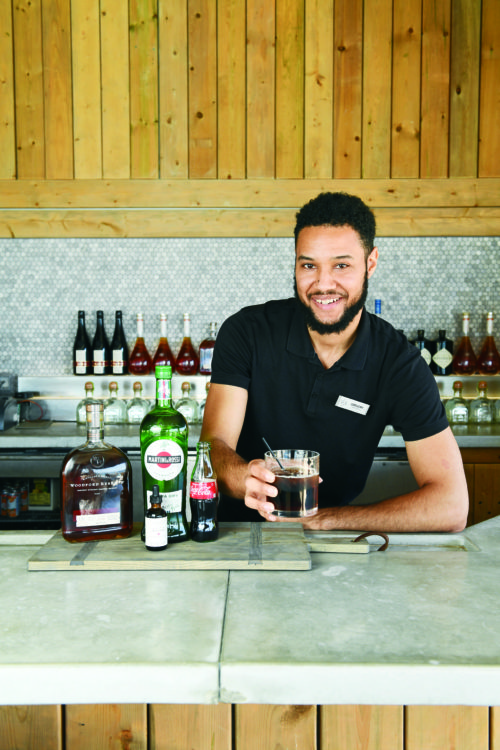
The Wreck Hill Rhum & Coke
Ingredients
-3 ounces Fever Tree Cola or Coke-Cola
-1 ounce Gosling’s Aged Family Rum
-1/2 ounce Gin
– 2 dashes bitters
-1/4 lime [preferably Key lime]
– Dash of club soda
Directions
Combine ingredients, mix and enjoy!
Local bartender Ryan Gibbons, from Barracuda Grill, created this cocktail in tribute to Bermudian music heritage, the Gombeys and our island culture. It took quite a bit of trial and error to get the flavors exactly right, he admits. As peach was coming into season, he paired that with the delicate taste of Gosling’s Gold Seal Rum. The drink’s sweetness comes from mango puree, brought to life with a pop of lime, dash of honeyed apricot and smoked hickory bitters.
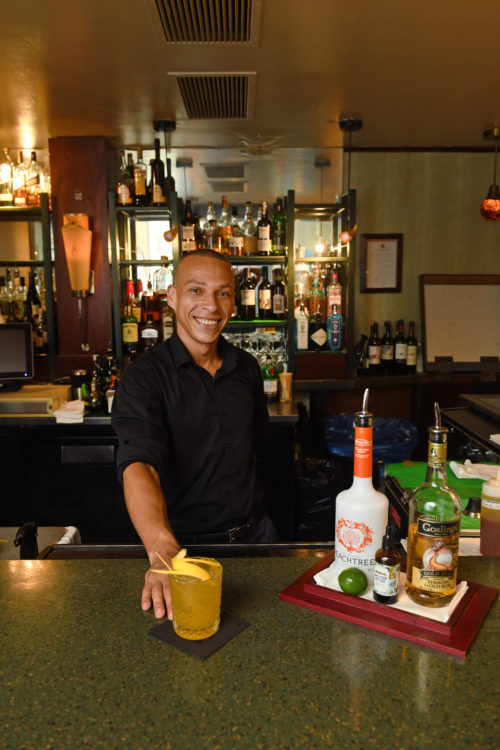
Dancing Warrior
Ingredients
-1oz lime juice
-0.5oz mango purée
-0.75oz Peachtree peach schnapps
-1.5oz Gosling’s Gold Seal Rum
-5 drops Honeyed Apricot & smoked hickory bitters.
Directions
1) Add all ingredients to a mixing glass
2) Fill the glass with ice, cap with a shaker tin and give a vigorous shake.
3) Keeping the liquid in the shaker, release the seal between the tin and glass.
4) Strain cocktail into a short tumbler glass filled with ice.
5) Garnish with a grapefruit twist and enjoy.
This article was originally featured in the Summer 2018 edition of RG Magazine.
The post Drink to that appeared first on RG Magazines.
]]>