
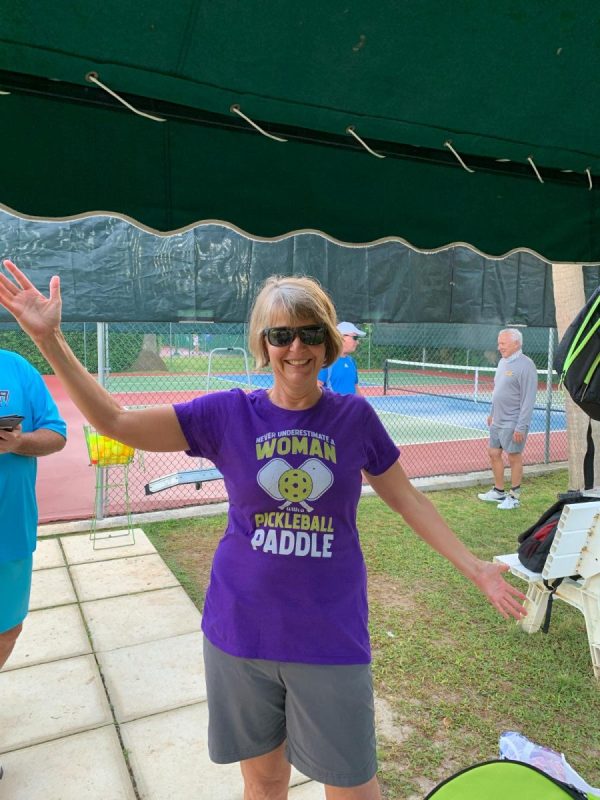
Pickleball’s popularity has boomed in recent years and, as regular readers of The Royal Gazette sport pages may have noticed, many of those proudly representing Bermuda in tournaments around the world are not only winning medals, but they are also over the age of 50.
Emma Simmons, 58, has been playing the sport for only two years, yet won a bronze medal in the women’s amateur 3.5 50+ division of the 2026 Pickleball World Cup in Vietnam earlier this year.
She is in the best shape of her life.
“I’m fitter, my stamina. In Vietnam, I played five events in six days,” she shared. “I’m just generally more toned everywhere. I love it.”
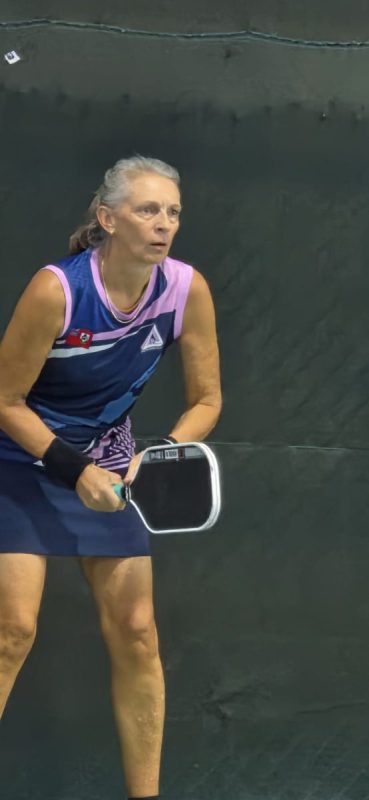 The fitness benefits go far beyond the pickleball court.
“Something that really told me I was stronger in general, my whole body, my core, everything, I went to play golf. We were in Florida and we played golf with my stepson, and I played an amazing game,” she said. “My stepson, he said, ‘I think your pickleball really has helped your golf game.’”
Tim McKittrick, 62, was persuaded by his wife, Keri, also 62, to give pickleball a go after she had instantly fallen in love with the sport.
A natural sportsman, his first reaction was to dismiss the idea.
“He looks at me and he goes, ‘Oh, do you break a sweat?”, she laughed.
She persuaded him to join Pomander Gate Tennis & Pickleball Club, where some experienced players taught them the basics and, continued Ms McKittrick, “He came off that court completely soaked, and I looked at him, I said, ‘Honey, did you break a sweat?’”
Mr McKittrick now teaches beginner and intermediate classes at the club, plays around five times a week and has doubles tournament titles to his name.
For the McKittricks, it isn’t just their physical fitness that has improved since taking up the sport. Their mental fitness has improved too.
“He’s starting to remember names better,” said Ms McKittrick of her husband.
“That is something he struggles with. I find with pickleball, I’ll say to him, ‘Who’s that?’ And he’ll go, ‘Oh, that’s so and so, they do this and they play like that.’”
The sport has also improved Ms McKittrick’s hand eye co-ordination, which is something she struggled with from childhood.
“I have an eye issue,” she shared. “I just can’t see right, so no racket sports. I never did any of that.”
In spite of this, she tried pickleball and while she admitted that she didn’t advance at the same speed as her husband, she persevered and managed to develop the hand eye coordination she had never had before.
“You could throw me a set of keys and I would miss them nine times out of 10. Now, there’s no chance I’m going to miss those,” she said.
Medical benefits
The physical and mental improvements that Ms Simmons and the McKittricks have witnessed in themselves since taking up pickleball aren’t merely anecdotal.
Dr Louise White, 65, co-founder of The Family Practice Group, a recently retired GP and a keen pickleball player, confirmed that there are medical benefits to playing this game later in life.
“With pickleball, you really are using all your body,” she said. “If you’re playing singles, it’s a very physical sport. You’re literally running and moving all the time.”
But, she added, even when playing recreational doubles pickleball, where you may not be moving at the same level, “you’re always bending, stretching, picking up balls and you’re doing movements that you wouldn’t normally do in your day-to-day activities.”
Like most exercise, pickleball, she added, “is going to help your bone density. It also helps balance, which is crucial in the older adult, flexibility, and core and leg strength.”
Encapsulating this, said Ms Simmons, is a shot called the dink. “You’re dolly dropping over the net, but it’s not just that. It actually can be an attacking shot and you are meant to be bending down, your thighs are screaming at you because you’re just bending down the entire time, and you’re shuffling left to right and that’s a work out there,” she laughed.
Dr White also added that “racket sports, in general, with the hand eye coordination, are particularly good for older people.”
She pointed to research showing racket sports can reduce the risk of dementia.
“Exercise certainly can, but racket sports are thought to be particularly good,” she said.
“You’re mentally thinking about how you’re going to play the ball, where I have to put my feet before I play the ball, and strategise it,” explained Mr McKittrick.
“After a while, you have to learn to put that ball not where the opposition is, and move the ball slower or quicker, depending on where you are.”
Social benefits
In speaking to those who play pickleball, the famous saying “Laughter is the best medicine” comes to mind.
The social side of the game is a big reason why players enjoy it so much, which brings mental health benefits, particularly for older people, who may be more prone to feelings of isolation.
“It’s fun,” Dr White said. “Most people join a club or find a group of like-minded, similar level of play, and they see each other two or three times a week to play together, and there’s lots of chatting before, during and after games.
“At both the tennis stadium and at Pomander Gate, they have mixers where you just sign up and go along, so you’re seeing people that you know well, or who have become people you know well, and then always new people as well. It’s a great place to meet people.”
How to get started
It’s never too late to start playing pickleball – the McKittricks regularly play with people in their 80s – and no racket sport experience is necessary. But while Dr White would encourage anyone to give it a try, she warned that, like any sport, injuries do happen.
To mitigate injury, she recommended that all players wear eye protection such as sunglasses, clear glasses or empty frames.
“A big danger is a ball in the face or even worse, a racket in the face, and I’ve seen it,” she warned.
It’s also important to warm up and take it easy when starting out. “Get there early, stretch and play within your level at least to begin with,” she suggested. “You have to push yourself to get better, but it doesn’t have to happen in the first week.”
She also recommended appropriate footwear, such as court or racket ball shoes and to join a beginners group or class.
“I recommend they reach out to the tennis stadium and find the beginners group before they spend a lot of money,” she said, adding that they have paddles (they don’t call them rackets in pickleball) that players can borrow.
Ms McKittrick also had a warning. “Don’t start it unless you need a new addiction,” she laughed. “It’s the best, most fun addiction you’re ever going to have.”
- For more information about how to start playing pickleball, contact the Pickleball Association of Bermuda via pabermuda.com or [email protected].
