
As much as we want our home to be a comfortable environment, what promotes a sense of calm can vary from one person to the next.
How then can you create a space that works for everyone in your household– particularly if one of your family members has specific needs?
One solution is to purposely introduce a sensory space designed to meet an individual’s sensory profile, which changes the way they experience and react to their surroundings.
While the term “sensory room” might conjure up images of a specialised therapeutic environment filled with expensive equipment, occupational therapist Julie Farnsworth said the principles can be applied in any home to create a space where family members can relax, recharge or simply escape the distractions of everyday life.
Creating the right environment
Since the purpose of a sensory space is to help a person learn to self-regulate and achieve a state of calm, the first step is to learn about their unique sensory profile and sensory needs.
Take notice of what helps them feel calm and focused, which environments they avoid, and what sensory experiences they seek out.
“A sensory space can be created for a person who is a sensory seeker or a sensory avoider,” Ms Farnsworth said.
“In the case of children, you might think of a seeker as a child who bounces off the furniture after school, while a sensory avoider might be prone to meltdowns because they are overstimulated.
“A sensory seeker needs to release energy, so a trampoline, home gym or posters that encourage movement, such as hopping or jumping, could be beneficial.
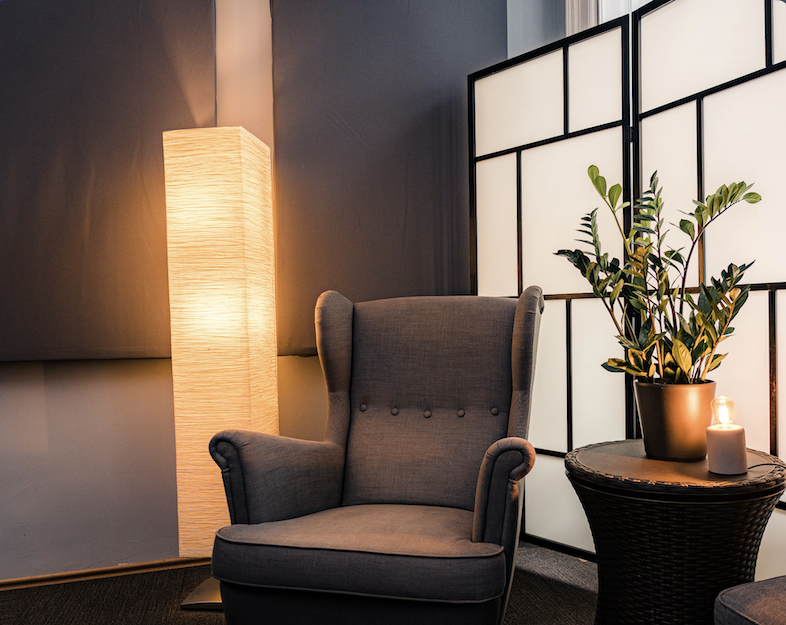
“A person who needs a chill space, however, might benefit from a tent or quiet corner set up with soft lighting, a beanbag chair and some books.”
Designing a sensory sanctuary
You don’t necessarily need a spare room, a professional designer or a large budget. By paying attention to lighting, colour, sound, scent and texture – and making imaginative use of things you may already own – even a small corner of your home can become a sensory retreat that the whole family can enjoy.
“Although the initial reason for creating a sensory space is often to meet the needs of one particular person, these environments can have a calming effect on the dynamics of the entire family,” Ms Farnsworth said.
“Each child and adult has their own sensory needs and responds differently to situations. As parents learn how to help their child regulate their emotions and reactions, they often begin to recognise and understand their own sensory responses as well.”
Power of patience
When there is turmoil in the home, the situation can escalate very quickly if both parent and child become overwhelmed, and it may take time to develop good habits. A parent may come to realise that they need to regulate themselves first before they can effectively help their child.
“It’s important to realise that our sensory needs change and fluctuate throughout the day, and this in turn affects our ability to self-regulate in different situations,” Ms Farnsworth said.
“You need to build a list of things that you can do to help yourself or a member of your family in different situations, both inside and outside the home.”
Ultimately, creating a sensory sanctuary is about more than finding a quiet corner of the house – it is about learning to recognise when someone needs a little space, a little support or simply a little patience.
