
Installing solar panels on a home, as we all know, can reap financial benefits over the long term.
This opportunity has long been seen as inaccessible to lower income properties, however, due to high-cost barriers and unfavourable energy rate structures.
For the regular person who has been shut out of the solar revolution, the good news is that help may be on the way.
New initiatives could include private financing, community and co-operative solar programmes, and “balcony solar”, a scaled-down version of traditional, roof-based solar energy generation.
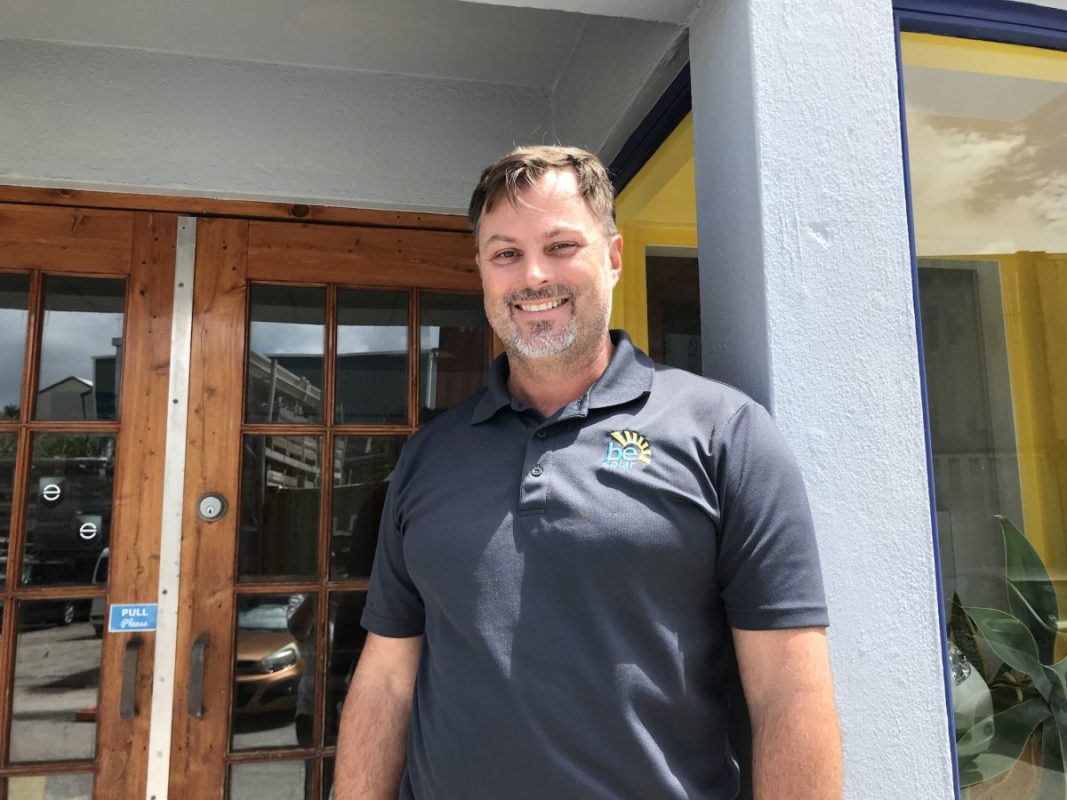
Robbie Godfrey, chief executive officer of BE Solar, said private financing initiatives, designed to make the benefits of solar power more affordable, may be in place before the end of the year, adding a layer of financing to that available from banks.
“At BE Solar, we’ve been supporting lending organisations and other industries who want to make funds for solar projects more accessible to those people that have traditionally struggled to afford it.”
Mr Godfrey, who said a non-disclosure agreement prevents him from revealing who is behind the initiatives, said: “At this point in time, it’s conceptualised, but I would say within the next six months they would be in a position to announce it.”
At present, he added, solar providers are prohibited by law from leasing solar systems but are able to offer deferred payment plans that ease the burden of cost over an extended period.
Adding to private financing developments is the introduction of “balcony solar”, a concept currently being piloted by BE Solar in addition to Government’s own pilot study, which was announced in March by Alexa Lightbourn, the Minister of Home Affairs, and will see balcony-mounted systems installed at Bermuda Housing Corporation developments.
Under such a system, solar panels could be attached to a balcony railing, for example, rather than being permanently fixed to a roof – they are much more temporary in nature and don’t need to be tied into the national electricity grid.
Mr Godfrey said this technology is being successfully deployed in several US states, which have recently passed laws exempting balcony solar from complex utility red tape.
He said: “Think of it as the simple, low cost entry-level to solar that is accessible to all but would be of particular interest to renters and apartment dwellers because it doesn’t need to be grid-tied.”
Policy review
The CEO said he is encouraged by the Government’s latest National Electricity Sector Policy Consultation Draft, released in April, that revealed measures under consideration include community and co-operative solar projects, green financing and credit support, and targeted incentives for vulnerable households.
Mr Godfrey is a firm advocate of community and co-operative solar.
Community solar, which has proved popular in a wide range of jurisdictions, could feature at a townhouse development where the owners have shared roof space – or could also be mounted on the ground where there is sufficient open space.
“Every unit within the development could get the benefit of the solar system when it’s generating power. People would buy into that system and benefit from the economies of scale of their collective investment.”
Mr Godfrey said co-operative solar projects, meanwhile, have proven popular on the Hawaiian island of Kauai, for example.
In the policy paper, Government wrote: “Community and co-operative solar programmes offer a pathway for broader participation in renewable energy by allowing customers to share in generation assets without individual ownership. These models can be particularly beneficial for renters, apartment dwellers, and small businesses.
“The Government recognises that not all households or small businesses have the financial capacity, property ownership, or suitable roof space to install individual distributed generation systems.
“To ensure that the benefits of renewable energy are shared equitably, the policy introduces a framework for community and co-operative solar initiatives.”
These would allow multiple participants to take part in a shared solar installation, typically located on public land, commercial rooftops or other centralised sites.
The Government wrote: “Participants receive credits on their electricity bills in proportion to their share of the system’s generation, thereby accessing the financial and environmental benefits of renewable energy without needing to install their own systems.
“This approach supports Bermuda’s Just Energy Transition by enabling renters, apartment dwellers, low-income households, and small enterprises to participate in and benefit from renewable energy generation. It also promotes social equity and economic inclusion while contributing to national renewable energy targets.”
Incentives
To facilitate this model, Government said it proposes the introduction of a Community and Co-operative Energy Licence, to be issued and regulated by the Regulatory Authority. This licence class will enable non-profit organisations, community groups, or co-operatives to develop shared renewable generation projects, subject to clear eligibility criteria, technical standards, and consumer protection requirements.
At present, Belco holds the island’s only transmission, distribution and retail license.
The policy paper said that green financing and credit support, as well as targeted incentives for vulnerable households, are also being considered.
It said green financing programmes would provide concessional loans, revolving funds, or credit guarantees to support residential and small business renewable energy installations.
“These programmes have the potential to reduce financial barriers to entry and encourage adoption across diverse income groups. Partnerships with local financial institutions, the Bermuda Economic Development Corporation, and international climate finance facilities will be explored to mobilise funding and de-risk investment.”
Incentives for vulnerable households, meanwhile, would assist low-income households in adopting renewable energy and energy efficiency technologies.
“These may include rebates, installation grants, or enhanced tariff support to ensure that vulnerable groups can participate in and benefit from the clean energy transition.”
Mr Godfrey said: “Ultimately, Bermuda’s national power grid could become a network of satellite solar generators and battery storage units, all helping to charge the grid. In the industry, they are referred to as ‘virtual power plants’.”
He added: “Whatever the future brings, we want to be working in partnership with the Bermuda Government, the Regulatory Authority, and Belco because it’s our utility. We may have differences of opinion at times, but we should never allow the narrative to become ‘us against them’.”
