The post Growing up in Wonderland appeared first on RG Magazines.
]]>Despite growing up in a home directly opposite the military hospital at the newly established Fort Bell (former name of the US Naval Air Station) — a bustling depot serving as a critical refuelling station and rest stop for hundreds of medical air evacuation flights carrying wounded US servicemen from the European battlefields to the United States — Mrs Chameau’s early years were marked by an extraordinary sense of peace and boundless freedom.
ROWING TO SCHOOL IN A PUNT
“The whole of St David’s took care of all the children,” she recalled fondly.
“Even when I was very small, I headed out the door each morning and the only rule was that I had to be home by 5pm for supper.
“We didn’t have many toys back then but there was no shortage of ways to have fun. I spent countless hours climbing trees and chatting with my brothers over makeshift tin-can telephone lines that we crafted by stringing taut cotton fishing line between the branches.”
A passionate fisherman from an early age, Mrs Chameau spent hours fishing for grunts in a pale blue box punt made for her by her brother.
She started attending school at Great Bay at the age of five and by the time she was seven she was rowing herself to school every day in that same punt. There were military vehicles on the base during this time, but initially no private vehicles and very few horses, so people either walked or travelled by sea.
At about this same time, Mrs Chameau was presented with a tricycle as a gift, but it was promptly commandeered by her brothers who immediately took it outside and started racing laps around the house with it. Although she can’t actually recall ever riding the trike herself, she does remember spending many hours sitting on a rock in the garden acting as a “pretend gas station” where the boys could stop to refuel.
“I remember being a bit afraid of horses,” she confided. “One Easter Sunday, when I was very young, I remember going to church in my Mary Jane shoes and a new straw hat. After the service I was standing outside the church next to Mr Richardson’s horse when it suddenly bent down and started eating my hat straight off the top of my head!
“My brothers and I were also rather afraid of the local Gombey troop and would run inside whenever we heard their approaching drums. Back then the Gombeys did not wear masks, they painted their faces with scary make-up and there was one in particular who had a habit of chasing children with his axe.”
CHRISTMAS SHOPPING WITH FIVE SHILLINGS
Despite living a relatively simple life, Christmas and Easter were celebrated by one and all in St David’s.
Each June, Mrs Chameau’s father and brother would hike to the top of Clark’s Hill above Cocoa Bay to scout out the ideal cedar to be used as the family Christmas tree that coming December. Having marked it with a piece of string, they would return just before Christmas to cut off the top section to decorate their home.
“My father secured it in a pail filled with rocks and water and my parents would decorate it after we went to sleep,” she recalled.
“On Christmas Eve my mother would always cook turkey and cassava while my father took us by ferry from Church Wharf below Chapel of Ease over to St George’s to hear carollers in the square and then we were each given five shillings to do our Christmas shopping.
“Five shillings went a lot further back then – I was able to get perfume for my mother and candy or a toy top for my brothers.”
FISHY TALES
“By the time I was about 11, I was heading out to fish each day with a frying pan, cornmeal, salt and pepper. I would meet up with my girlfriends and we would start a fire right on the edge of the rocks to cook up fish and boiled sweet potatoes which we ‘procured’ from my Uncle Joe’s vegetable garden,” she giggled.
Indeed, like most St David’s Islanders, a large portion of Mrs Chameau’s diet was composed of seafood that she and her family caught themselves. In addition to grunts, Mrs Chameau’s mother regularly cooking shark hash, mussels, curried conch, chub and suck rocks (chiton).
“You need a whole bucket of suck rocks to get a cup of flesh,” she conceded with a laugh, “and it takes a fair amount of skill to collect them – you have to knock them with a screwdriver at just the right angle to pop them off the rock or they anchor themselves down so firmly you would never get them off.”
Funnily enough, however, lobster was not popular among St David’s Islanders.
“I don’t remember anyone eating them – but we did catch them to use as bait for Rock Fish,” said Mrs Chameau.
Although they had an electric meter in the house – and Mrs Chameau can remember arguing with her brothers regarding whose turn it was to put a shilling in the box and pull the handle when the timer ran out – electricity was primarily used for lighting the house at night and they did not have a refrigerator. Instead, when they caught a lot of chub, her father would dry them in salt inside a screened box that he suspended from a tree.
Ronnie Chameau’s memories of childhood paint a vivid portrait of life in old St David’s – a community bound by simplicity, resourcefulness and a shared sense of belonging. Through her eyes, we see not just the history of a parish, but the enduring spirit of its people: a treasure as timeless and unique as the island itself.
The post Growing up in Wonderland appeared first on RG Magazines.
]]>The post BELCO Riots Opened “Pandora’s Box” appeared first on RG Magazines.
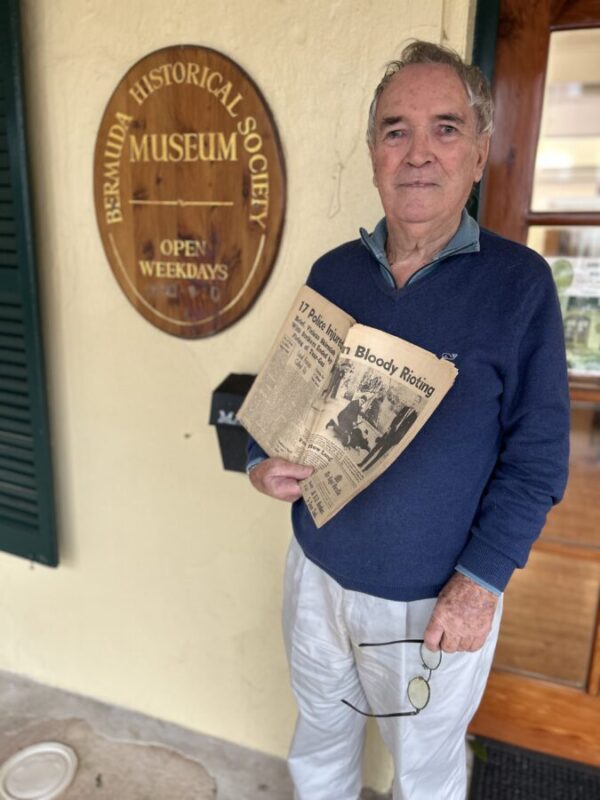
]]>“My lasting memory, even today, is standing at the junction, opposite Belco headquarters, and being surrounded by a hostile group of picketers. I recall being knocked out and then later on running towards Ian Davies. That road junction is a constant memory. I often drive by it.”
Fellow policeman, Mr Davies, suffered a massive head injury during the Belco Riots and was notoriously pictured in a Royal Gazette article of the day lying unconscious on the ground, blood pouring from his head.
While he survived his injuries, “he was never the same again,” recalled Mr Bermingham. “Ian was a man of great strength and there is no doubt about it that a lesser mortal would have died from the beating he took.”
‘TRULY FRIGHTENING’
Mr Bermingham, who is originally from Portsmouth, England, was a 23-year-old police constable on February 2, 1965, when the Belco Riots broke out, and had served in the Bermuda police force for eight months. Prior to this, he had been in the Northern Rhodesia Police for three years.
When he and his colleagues were sent to Belco that morning, the strike had been ongoing for two weeks.
“We were told things were getting out of control, and when we got there, it was obvious a lot of men were sitting on the wall encouraging the demonstrators,” Mr Bermingham said. “Within minutes, the picket line had doubled.”
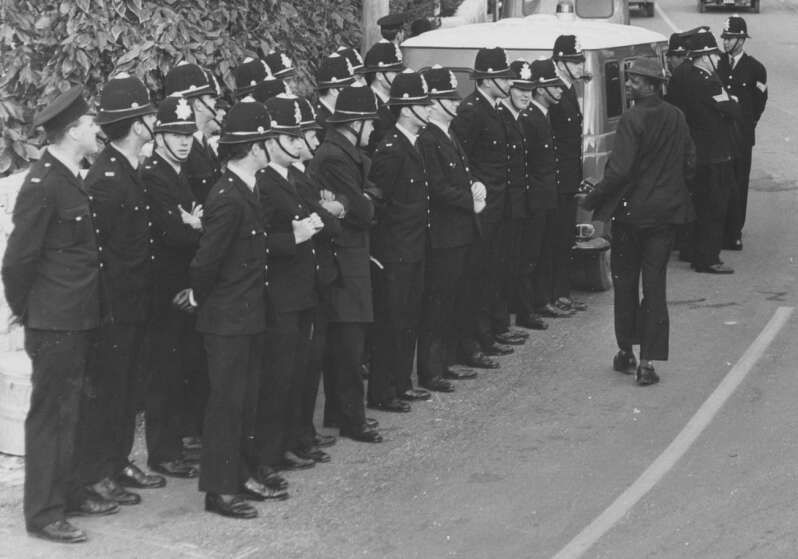
Mr Bermingham was told to stand in the road to allow any non-striking employees to get into the plant. After helping a car through the gates, which was carrying a White man, who was a Belco employee, he became surrounded by “this mass of angry people”, which was “truly frightening.” He took out his baton, but someone threatened him if he used it. Then he was struck on the back of the head, knocked unconscious and later suffered a severe concussion.
“The police were sent down there totally unprepared,” he continued.
Mr Bermingham was one of 17 policemen injured that day along with a number of rioters. In reference to the latter, the official police report stated it was “impossible to accurately estimate their number as they left the scene before arrests could be effected”.
 JUSTIFIABLE RESENTMENT
Aside from his fellow policemen, two people who stood out to Mr Bermingham while reflecting on that day were Emily Moss, a Belco employee, and the prominent civil rights activist and physician, Dr Barbara Ball.
Ms Moss, he said, “came out of the Belco offices and tended to the injured policemen and it was her actions that weighed against Dr Ball’s actions.” In the aftermath, Dr Ball was vilified for not doing more to help the injured but, said Mr Bermingham, this was not accurate.
“There’s a photograph in the files of her actually standing over Ian Davies on an ambulance stretcher.”
While Mr Bermingham, now 83, has been deeply affected by what happened to him and his police colleagues, he believes the event was inevitable given the political and social situation at the time.
“Bermuda had come through the theatre boycott and 1959 dock strike with progress in race relations, but that was not nearly enough, as justifiable resentment rang deep,” he explained.
“Belco opened Pandora’s box. Workers had enough of White privilege and political control. The government totally underestimated the mood of working class Bermudians and Belco was a game changer of unparalleled dimensions. If it had not happened then and there, it would have occurred somewhere else.”
RACIST POLICIES
The Belco strike occurred following the break-down in negotiations between the Bermuda Industrial Union, representing 87 outside-plant employees who were almost all Black, and the management of Belco, who were White. Not only was the union seeking recognition, but, wrote former BIU president, Ottiwell Simmons, in his book Our Lady of Labour: “The outside plant employees accused the company of practising unacceptable racial discrimination policies. For example, locker rooms, toilets and wash-up rooms were racially segregated.”
Mr Bermingham said: “Belco remains the constant reminder of an event which could have been avoided if people in high places had realised they had a duty and opportunity to make amends for inherent racism and financial power.”
SHAKE HANDS AND NEGOTIATE
Nothing demonstrates this outlook more than his own attitude towards the men who hurt him on that day – Samuel Pennington Samuels and former Cup Match cricketer, Kenneth Ball.
“In later years I got to know them quite well and there is a photograph of me and Samuel Pennington Samuels down at the Belco riot site in about 1980,” Mr Bermingham said. “It was a question of a hearty handshake and let bygones be bygones.”
He is also proud to enjoy a good relationship with the BIU: “The fact that I’m welcomed at the Union is really my epitaph in that respect.”
He also believes that Lord Martonmere, the Governor at the time, was right to pardon those who were imprisoned: “I think he realised that there had to be give and take on both sides.”
It wasn’t just Mr Bermingham who made efforts to build bridges in the aftermath of the Belco riots. To say thank you for the care his son had been given, and in order to help rebuild the community, Mr Davies’ father, a football fan, donated the Friendship Trophy to the island, which is still played for today.
“There was a lot of acrimony and fingerpointing after, a lot of anger expressed but, at the end of the day, what course do you take?” asked Mr Bermingham.
“You either shake hands or you ignore people. If you can’t negotiate, can’t come to terms with what we’re dealing with, can’t understand both sides of the fence, then we’re doomed. Negotiation is the only way forward.”
Andrew Bermingham served in the Bermuda Police force for 30 years, retiring as a superintendent in 1994. From 1984 to 1994 he was head of special branch.
The post BELCO Riots Opened “Pandora’s Box” appeared first on RG Magazines.
]]>The post How ACE Transformed the Bermuda Market appeared first on RG Magazines.
]]>This remarkable corporate success story helped to establish Bermuda as the go-to domicile for solutions to crises in the global re/insurance market. It is a blueprint that has been followed multiple times over the decades, including the waves of new companies and risk capital coming to the island after devastating hurricane seasons, terrorist attacks and the Covid-19 pandemic.
PROVIDING COVER
ACE was born out of the liability insurance crisis in the mid-1980s, when claims and premiums spiked amid a surge of litigation against companies, while some types of insurance became unavailable. Bob Clements, an insurance broker with Marsh & McLennan at the time, saw opportunity.
With the support of 34 founding sponsors, including some of America’s largest corporations, Mr Clements raised the capital to launch ACE, or American Casualty Excess, in August 1985. The sponsors were also the customers. ACE’s mission was to provide high-level protection and stability of cost for general liability, directors and officers liability and fiduciary liability insurance, cover that was difficult to find.
Remarkably, for a company widely regarded as having started Bermuda’s evolution as a global re/insurance hub, ACE was incorporated not in Bermuda, but in the Cayman Islands. Mr Clements made the domicile choice to avoid Bermuda’s comparatively onerous stamp duty, levied as a percentage of starting capital. Five years later, the Bermuda Government relieved exempted companies from stamp duty under the Stamp Duty Relief Act 1990.
BOOMING BUSINESS
However, Bermuda was ACE’s centre of insurance operations. According to Catherine Duffy’s book, Held Captive: A History of International Insurance in Bermuda, Mr Clements said the decision to run ACE from Bermuda was based on the ability to get the new company up and running quickly to meet the urgent need, rather than go through the lengthy approval process that would have been required in a US state.
Employee number one was John Cox, also the founding chairman, who recalled in an interview with The Bermudian magazine that the company’s first temporary office was Room 348 at the Hamilton Princess, from where he wrote the first policy. Business was soon booming, given the urgent need for the coverage ACE was supplying.
In 1986, when another Bermuda start-up, XL Capital, was formed under a similar model in Bermuda, corporations were keen to invest, having seen the success of ACE.
Some of ACE’s historical highlights in Bermuda include:
• In 1987, ACE Bermuda assumed management of Corporate Officers & Directors Assurance Ltd (CODA), a specialist D&O underwriter which it went on to acquire in 1993.
• In 1994, ACE Bermuda opened a London representative office and then a Dublin operation in 1997, writing the same high level excess capacity for international clients.
• ACE diversified into reinsurance through the acquisition of Tempest Re in 1996 and CAT Limited in 1998. The company then created ACE Tempest Re Bermuda, a leading Bermuda-based catastrophe reinsurance company.
RAPID EXPANSION
Under the leadership of Brian Duperreault, who took over as CEO on October 1, 1994, ACE’s growth continued. In the late 1990s, the Bermuda Government gave ACE and XL permission to own and build their own office buildings, side by side, on land previously occupied by the Bermudiana Hotel.
The construction site symbolised a shift in Bermuda with the fast-growing insurance industry overtaking previously dominant tourism as the main driver of the economy. ACE and XL each opened their new buildings in 2001.
In 2004, Mr Duperreault retired as CEO after a decade of success, handing over the reins to Evan Greenberg, who has now led the company for nearly 21 years. In 2008, ACE moved its corporate domicile from Cayman to Switzerland.
In 2016, Mr Greenberg oversaw ACE’s $29.5 billion acquisition of the venerable US insurer Chubb. The deal created the world’s largest publicly traded property and casualty insurer. The combined company chose to brand as Chubb.
The company continues to make its mark on Bermuda, as underwriter of a wide range of insurance and reinsurance products and as a major employer with a strong track record of developing Bermudian talent, including current Chubb Bermuda division president, Judy Gonsalves and one of her predecessors in the role, Rees Fletcher. It is also a philanthropic force — the Chubb Charitable Foundation has donated more than $35 million to local charitable causes.
LASTING LEGACY
The ACE brand may have been consigned to history, but it will for ever remain a powerful name in the annals of Bermuda business. When Robert Clements envisioned ACE as an innovative solution in Bermuda to an international insurance problem, he set a precedent.
ACE’s success inspired others to follow that precedent. Like the cluster of the catastrophe reinsurers which incorporated on the island in the wake of Hurricane Andrew. Like the cluster of diversified insurers who entered the market after 9/11 in 2001, and like the sidecar and catastrophe-bond innovators who introduced an influx of third-party capital to bolster reinsurance capacity after the devastating hurricane season of 2005.
Today, Bermuda is a vibrant and diversified global re/insurance market, covering risks of every conceivable type, from storms and earthquakes to cyber risk, from climate risk and professional liability to the mortgages of millions of American homeowners. It has an unrivalled reputation as the laboratory of the insurance world, where world-leading talent creates new ways to cover the world’s most complex emerging risks.
If you happen to pass Room 348 at the Hamilton Princess hotel, you will see a plaque on the wall commemorating the place where ACE wrote its first policy — immortalising a moment that arguably heralded the start of Bermuda’s transformation into the thriving market it is today.
The post How ACE Transformed the Bermuda Market appeared first on RG Magazines.
]]>The post True Folk Hero appeared first on RG Magazines.
]]>She beams with pride when telling these stories, recalling how she would tell all her friends about her hand in helping make the costumes, and how these tales made her feel “Sharp!”
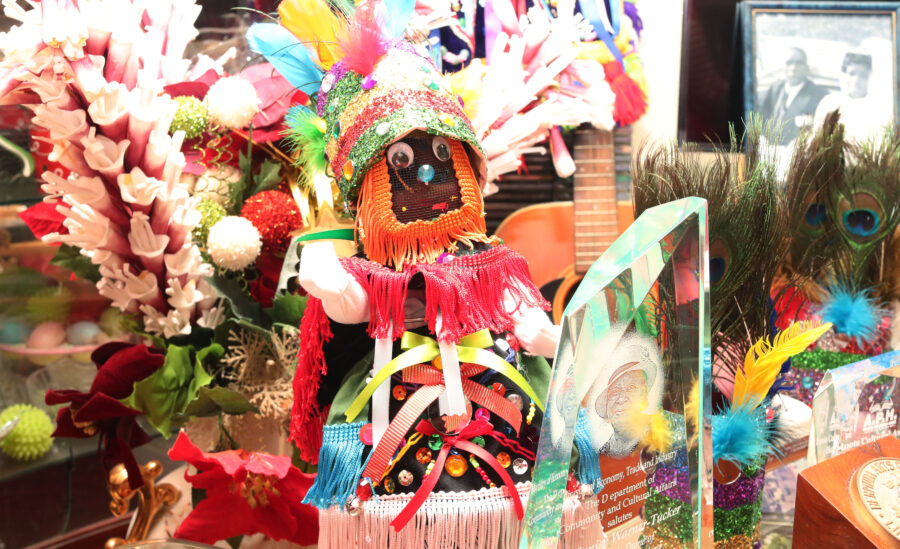
A few generations later, and this amazing woman is still – decidedly – “Sharp!” Adamant that her gift for designing and making her Gombey-related crafts was handed down to her from God directly, she is still amazed that she was successful in her attempt to miniaturise Bermuda Gombey designs by producing those famous Gombey dolls we see in all the souvenir shops today.
PRECOCIOUS TALENT
Humble to a fault, Mrs Warner-Tucker exudes a gratefulness that makes her story even more adorable. Now an elder statesman of the Gombey art tradition, Mrs Warner-Tucker expresses her narrative in a way that makes you wish you were there with her as she navigated through the history of Bermuda’s Gombey movement. Hers is a legacy well worth studying.
Recalling the story of when she finally convinced her mother that she could help make her brothers’ Gombey costumes, Mrs Warner-Tucker is ebullient.
“My mother was making costumes for one of my brothers, and I asked Momma to let me help her, and Momma said, ‘Don’t you dare interfere with my work. You won’t be messing up my work!’
“But I saw Momma doing all this work, and she was tired. Well, Momma went sleep one evening, and I knew I could finish that costume off. And I wanted to put a little touch to it, you know.
“Temptation: I took a chance. When Momma woke up the next day and saw that costume, and she saw that it was completed, she came in the front room – we were all sitting off in the front room, right. ‘Who interfered with my work?’
“Momma was not looking at none of the other girls. She was looking directly at me. Nobody answered. ‘I know you all hear me. Who interfered with my work?!’
“Then nobody wouldn’t answer, so she said, ‘Janice, I know it was you. You wouldn’t answer, but I know it’s you.’ She said, ‘But guess what – I’m so proud of you!’
“With the fright, and with the joy – I bawled my eyes out! I thought Momma was so angry at me – but guess what, she said, ‘From now on, I’m finished – you dress your brothers and your father!’ She passed the baton on to me, and that excited me more because then I was able to do my own thing, you know.”
These are the kind of heart-warming vignettes that make this tradition bearer’s story so relatable and cement her status as a vital Bermudian folk hero.
 BURGEONING SKILLS
It wouldn’t be long before Mrs Warner-Tucker became a master costume maker, and her efforts started to expand to encompass Gombey merchandising, a heretofore uncharted market. This novel endeavour saw her strike a deal with a local cake maker for dolls that she could dress in our unique Gombey style.
“I must’ve been in my 30s, and I was living on the bottom road in Middle Town. I had one of Mr Mello – from Mello’s Bakery round Curving Avenue – I had one of those little dolls that he put on the wedding cakes. So, I took that little doll, and I said, ‘Let me see how this doll would look if I dress it as a Gombey.’
“Well, I sat down and I dressed that little doll, and it looked sharp!”
ROARING TRADE
Of course, the task of creating an iconic Bermudian souvenir art piece was not easy. The process was painstaking and meticulous, but the designs have become renowned rudiments of Bermuda’s Gombey legacy.
“I took that little Gombey and I ran up to the bakery and I showed it to Mr Mello, and I said, ‘Mr Mello, if I get some money would you sell me some dolls?’ And he gave me some, because he liked what he saw. I think he gave me about six.
“I did them up, and they went! People bought them just like that! I went to him again and he sold me about a dozen. Then I was going to him so much, he said, ‘Listen, these are for my cakes.’ He told me to go to Toys ‘N’ Stuff and get my own dolls. He told me, ‘I can’t sell you no more of my dolls, these are for my cakes.’ I was taking all his dolls!”
As with most stories around the geneses of folk-art forms, there is humour here – and much nostalgic laughter. Mrs Warner-Tucker delivers a fully realised comedy set when she relates these valuable stories, which also communicates an unwavering passion and love for the art that has defined her life.
ICONIC
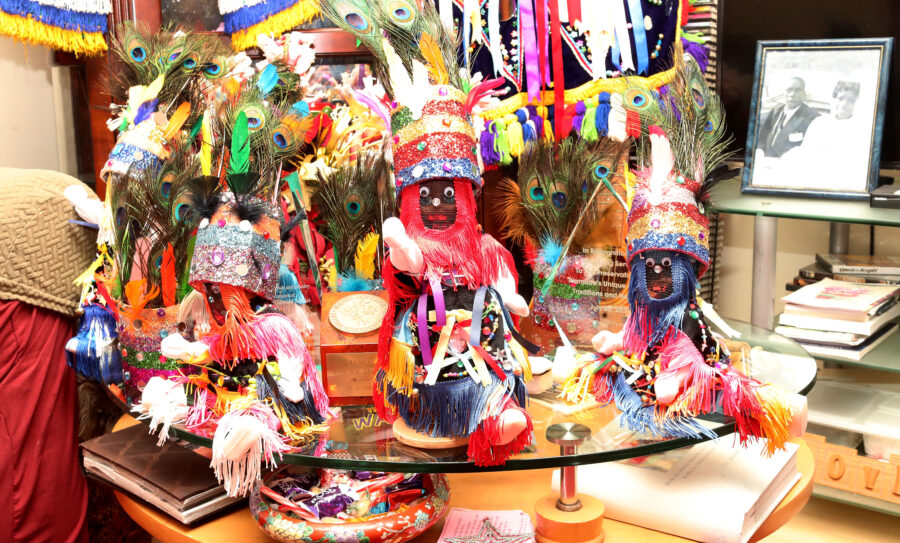
She recalls many commissioned pieces over the years, and beams with pride when she speaks on the public reception of her seminal art pieces. “Yes, my dolls – up until today, people just love them, and the more I work with them, the more authentic they become.”
Now in her 80s, Mrs Warner-Tucker never hesitates to give thanks to God for the blessings her unique talents have afforded her throughout her life. She is a formidable figure in the history of Bermuda’s Gombey art tradition: an unassuming local folk artist who has pieces of her art in homes throughout the globe.
Mrs Warner-Tucker’s Gombey costume designs are iconic, and her Gombey dolls are exquisite pieces of collectable, unique handmade folk art. Hers is a truly grassroots folk tradition, the kind of historically charged art form that effortlessly communicates the spirit of resistance that the Gombey dance itself was originally designed to shout from the mountaintops.
Let’s celebrate this art. Let’s celebrate this lady.
The post True Folk Hero appeared first on RG Magazines.
]]>The post Fighting for the Underprivileged appeared first on RG Magazines.
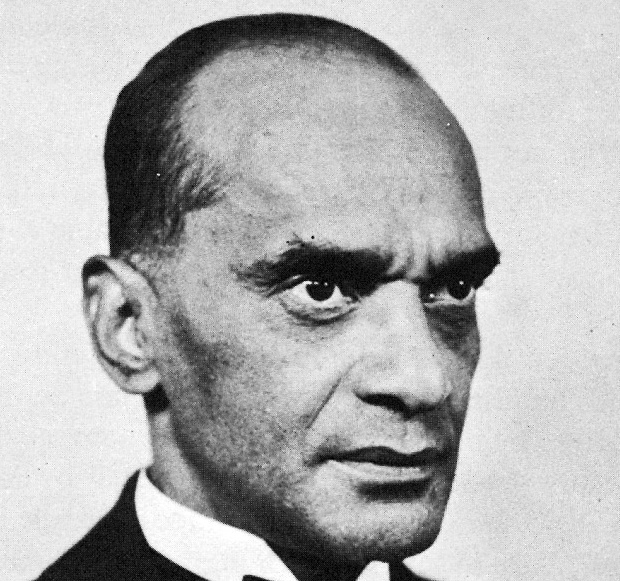
]]>He was a physician, not a tradesman, and a foreigner to boot, having arrived in Bermuda 20 years earlier from the Caribbean. But the BWA founders had recruited him to be their president because of his oratory, outspokenness and take-no-prisoners approach in dealing with the 40 Thieves, the powerful white men who controlled every aspect of Bermuda.
When he controversially won a seat to Parliament in a St George’s by-election two years later, he had two platforms on which to fight for “the voiceless, voteless and underprivileged masses of Bermuda”.
Dr Gordon had promised that, if elected, he intended to take a petition to the UK Government on behalf of the BWA, calling for the establishment of a Royal Commission to investigate social and political conditions in Bermuda.
He did just that. In Freedom Fighters—From Monk to Mazumbo veteran journalist Ira Philip wrote: “He was bypassing the Governor and his Council, as to petition them about existing conditions was tantamount to appealing to Caesar’s wife concerning Caesar.”
FIGHT FOR RIGHTS
The petition was not the first from Bermuda. In 1931, suffragette leader Gladys Misick Morrell had presented the UK Government with a petition calling for a Commission of Inquiry to investigate the lack of voting rights for women. Nothing came of that, although female property owners would eventually win the right to vote in May 1944.
Dr Gordon, who was from Trinidad, had taken his cue from the Caribbean, which had held Royal Commissions since the 1930s. The wide-ranging BWA petition tackled systemic issues, such as segregation and the feudal voting system, which dated back to the 1600s. It had the backing of the BWA membership, which had grown to 5,000 in two years.
The BWA executive drew up plans for the petition during the summer parliamentary recess, Dale Butler wrote in Dr EF Gordon—Hero of Bermuda’s Working Class. In September, the BWA launched a series of 12 public meetings to win the support of its members.
Mr Philip wrote that, at the meetings, BWA members were not required to provide signatures in order to protect them from economic intimidation from “employers, landlords and creditors”. They demonstrated their support with a show of hands.
The meetings received extensive press coverage. Mr Philip said The Royal Gazette “was fairer” than the Mid-Ocean News. He added that Letters to the Editor were anti-Gordon in the main and editorials were “sparse”.
 BATTLE FOR REFORM
The petition had 18 signatories, including well-known activists and tradesmen such as WER Joell, Robert A Wilson, Allan Russell and Dudley Seaton; Doris Cholmondeley and Althea DePina were the sole female signatories.
The petition presented a compelling case for reform: only seven percent of the population had the right to vote; the civil service was closed to Blacks; education was compulsory from ages 7 to 13 but not free; Black nurses could not work at King Edward VII Memorial Hospital; there was no worker’s compensation, unemployment insurance or health insurance; voting was restricted to property owners who had the right to vote in every parish where they owned land.
In November, Dr Gordon travelled to London to deliver the petition to the Secretary of State for the Colonies, rejecting an offer from the Governor to send it to the UK on his behalf. In London, he received assistance in his mission from two law students who would go on to make their mark in Bermuda: Earle Seaton, the future judge and son of signatory Dudley Seaton, and future premier ET Richards.
Dr Gordon was in London for five months. On his return, he waited for a response from the UK. It came on March 30, 1947. Command Paper 7093 contained the full text of the BWA petition and a decidedly unsupportive memorandum from Bermuda’s Governor. But the UK Secretary of State stated in his response that he “could not escape the conclusion that the petition called for serious and early attention”.
RALLY FOR CHANGE
Days after the Command Paper was made public, Dr Gordon held a rally at Bernard Park. He was highly critical of the Governor, who had referred to him in his memorandum as an “immigrant from Trinidad”. “We must not forget,” Dr Gordon told the rally, “that His Excellency is an admiral and that is why he was so much at sea about local conditions.”
Parliament debated the Command Paper and agreed to establish a Joint Select Committee. But with only two Blacks on the 12-man Committee, the outcome was predictable.
When the Committee released its report in March 1948, Dr Gordon described it as “trash” and an “insult to the majority of this country”. The report was debated in Parliament over several sittings in April 1948.
On the first day of the debate, placard-bearing BWA supporters, in an unprecedented display of solidarity, demonstrated on the grounds of the House of Assembly. According to The Royal Gazette, about 300 people “mostly coloured”, packed the public gallery and entrances. One MP described the debate as the most notable since 1834 when slavery was abolished.
In the end, Dr Gordon’s reaction would prove to be correct. The only tangible result was free primary school education, which became a reality in 1949.
Despite that setback, Dr Gordon would continue fighting for change until his death in 1955, 70 years ago this year. In 1959, the successful Theatre Boycott would deliver a fatal blow to segregation, achieving in two weeks what parliamentary committees had failed to achieve.
The first election held without a requirement to own property took place in 1963, although property owners had an extra “plus” vote until the 1968 election, the first under full universal suffrage.
The BWA petition, which is housed in the Bermuda Archives, is a remarkable document that gave an unsparing depiction of an inequitable economic and political system that disadvantaged Blacks and working-class Bermudians of both races.
It is reprinted in its entirety in Mr Butler’s book which, along with Mr Philip’s book and The History of the Bermuda Industrial Union, were key sources for this article.
The post Fighting for the Underprivileged appeared first on RG Magazines.
]]>The post James “Dick” Richards – Trailblazing hotelier appeared first on RG Magazines.
]]>He built the Canadian Hotel, which became a key Hamilton landmark for several decades, and owned several other establishments, while also using his self-made wealth to support the community here and in his native Jamaica.
This year marks the 60th anniversary of his death.
Mr Richards was born into poverty in Jamaica in 1872 and was orphaned at a young age. By the age of 15, according to the Bermuda Biographies website, he had developed an initiative to make his own way through life and walked more than 100 miles to Kingston, Jamaica’s capital, where he found work in a bakery.
He arrived in Bermuda in his early 30s, when he was posted here with the West Indies Regiment in 1903.
He was discharged within a few weeks but stayed in Bermuda to find jobs at the Bermuda Bakery, and as a labourer and canteen assistant with the British Royal Engineers at Prospect, Devonshire.
His skills and charisma did not go unnoticed, and within a few months he became manager of the canteen at Casemates in Dockyard.
THE PLACE TO BE SEEN
It was after marrying Jane Smith that Mr Richards’ career as an entrepreneur took off. With his wife’s encouragement, he opened the Harbour View Bar on Front Street in 1909, and another establishment followed on Reid Street.
By 1918, Mr Richards became the first Black man on the island to own a hotel licence when he built the Canadian Hotel on the corner of Reid Street and Court Street.
The four-storey Canadian Hotel – with its distinguishing stone lion on the fourth floor – became the home of a high-society nightclub which provided live music for a mainly Black Bermudian audience.
The so-called Lion’s Deck was the place to be seen in Bermuda. Dress standards were very high: men wore tuxedos and smoked cigars; women wore locally made designer dresses and wore the finest perfume and jewels.
Mr Richards acquired other properties later in life, including Ripleigh and the Metropolitan Buildings, but the Canadian Hotel remained closest to his heart, and he continued to operate it until his death in 1965, aged 92.
Friends had celebrated his 90th birthday with an all-day party at the Canadian Hotel; he was even playing a card game on the premises when he passed away two years later.
PHILANTHROPIST
Mr Richards was also a philanthropist. He helped underwrite the cost of the stained glass windows, organ and balcony of St Paul AME Church – the place where 800 people later attended his funeral.
He also donated to scholarships, the Salvation Army and started a fund for a new library at the Berkeley Institute.
Back in Jamaica, he donated funds for a new building at Beersheba Primary School, which he attended as a child, built a Salvation Army church to serve eight communities and left money in his will for scholarships.
He acquired the name “Bermuda King” because, on trips home to Jamaica, he would load up a large trunk with goods and distribute them to poor people, leading to the phrase: “Bermuda King come”.
In Bermuda, his legacy was continued by nephew Wesley Gayle, who owned Sunset Lodge, the guesthouse on North Shore which catered to Black tourists during the segregation era.
The Canadian Hotel lay derelict in its final years and was demolished in 2019. Although the site remains vacant, its owners, Stonehaven Development Company, have outlined plans to restore its glory days by building an upscale hotel.
The post James “Dick” Richards – Trailblazing hotelier appeared first on RG Magazines.
]]>The post The Science of Ever-Changing Times appeared first on RG Magazines.
]]>Unbeknownst to him, his parents have had conversations with the good folks at the Adult Education School (AES). He’s been told he’ll be going abroad to a school he’s been accepted to. He hasn’t applied to this school himself, and he doesn’t recall taking the necessary tests to secure admission.
On his scheduled day of departure, when he gets into a bike accident, he thinks it’s “Perfect.” The hospital patches him up, and he reluctantly makes his flight and gets to school. “Abandoned in prison,” are his words.
This is the very opposite of what he had in mind for his life. This all-boys school is in a remote location in the American North-East where he is the only Bermudian. This sucks.
But then, “Life accelerated.” He finds out he can skip study hall by having a minimum 3.0 GPA, so he achieves it in two weeks. A light bulb goes off. He is motivated, recognizing he is capable of being in control of his own life. He never looks back.
This true story is the testimony of Dr Ernest Peets Jr, CFT, ICADC, current Chair of the Adult Education School, whose sole purpose is to assist youth, and adults, with their educational, career, and life aspirations.
“Who I am today is largely a result of the AES being in orbit alongside caring adults guiding me as I needed it,” he confesses. As a pastor, former Minister in the Bermuda Government, and founder of MASC, his passion continues to benefit Bermuda. “AES…launched me, gave me what was necessary to propel me forward.”
The AES continues to serve Bermuda today. Throughout their history they have assisted THOUSANDS of learners in reaching their goals. Building on their history, they strive to ensure their crucial role in the community will be available for the future as well.
Founded in 1958 by Merle Brock Swan Williams, the school first developed a tutorial programme for adults, and established a college school and camp advisory service. It developed an individualized literacy and numeracy instruction model, as well as GED, and SAT preparation for adults.
With a noteworthy staff of Ms Arlene Brock as Managing Director (her credentials and achievements are too many to list here), Mr Thaao Dill as the Director of Programming (ditto), alongside tutors, coordinators, and volunteers, the organization offers a ‘reimagined’ slate of courses, workshops, and certifications designed to meet the needs of the lifelong learner.
What is the central lesson to be learned here? According to current student, Richard Bean, it’s that, “I should be myself. I don’t have to be afraid to be honest. I’m capable and I’m enough.”
Noting the (lack of) durability of the Black institutions in Bermuda; one of the main reasons that Ms Brock returned to the island was because she felt that the services that the AES provides “Must continue.” There is still a need.
Ms Brock emphasises, “By giving people an opportunity, we are developing capacity for Bermuda as a whole.”
The school recently partnered with the Bermuda College in a mutual referral system, so fewer learners slip through the cracks. They also work with Bermuda Technical Institute Alumni to offer a CISCO networking certification. Meanwhile, job-hunting and interview prep skills are offered by international business partners.
With upcoming workshops like ‘Who Cares for the Caregiver?’ and ‘Real Estate,’ the new ‘Three Pillars’ curriculum aims to assist those looking to further their academic studies, get promoted, and even find employment.
Two innovative new programs aim to guide learners outside of their traditional environments, and expose them to people and places that they might not otherwise have been aware of.
The first program, ‘Sharing Our Stories,’ is presented by alumni of the AES and the Bermuda College. Specifically geared towards 16-21 year olds; the alumni share their educational experiences alongside what led them to their current career path. The sessions provide the opportunity for insight and exploration into a variety of fields.
The second program, ‘Behind the Scenes: How Bermuda Works’ involves groups of four students going into professional environments to gain exposure to worlds outside of their everyday lives. The AES is always looking to partner with organizations to make this a regular reality, so please contact them if your organization would be interested in hosting this service.
What is their vision for the future? Dr Peets concludes; (1) Sustainable development, undergirded by financial and human resources. (2) To be a source of guidance regardless of the learner and their socio-economic background. (3) To have those who have been blessed to consider the school as a great place to give back to the community in a meaningful way.
The post The Science of Ever-Changing Times appeared first on RG Magazines.
]]>The post Righting the Ship appeared first on RG Magazines.
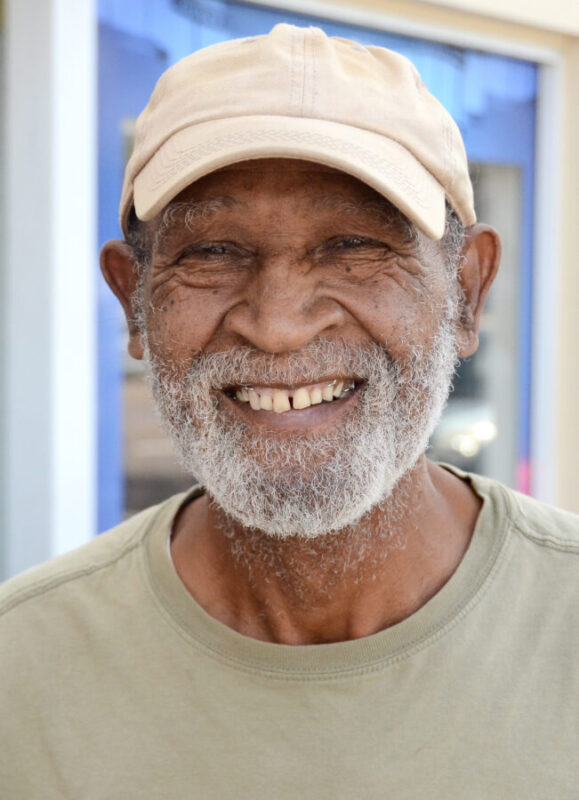
]]>Being a tradition bearer is as intrinsic to Milton Hill Sr as breathing.
Mr Hill spent his early years fishing off North Rock with his Uncle James (aka Jimmy Trott), before learning the art of shipwrighting from the likes of Rhodes Ratteray.
Today, he continues his craft, producing models of the Sea Venture, the Bermuda Gig, the Bermuda Sloop, and even a special art piece commemorating modes of transportation from the Darrell’s Island Airport to the Bermuda Sloop; which can be seen on display at the Bermuda International Airport. More than anything, he is most passionate about passing on the traditions of a bygone era.
The artist, who will be 80 in May, has witnessed the decline of many of Bermuda’s boats with the introduction of the automobile.
Until the early 90s, most of the boats he built were fishing boats – he always had a spare in his yard, and one in the water. Then he and his son, Wali Hill, began creating string art. Soon they would sell their first collection, called The Teaser, to Bluck’s on Front Street – which was followed by Smith’s, Trimingham’s, and A.S. Coopers.
Shows in Art Galleries would soon follow, as Mr Hill transferred his shipwrighting skills into miniature replica making.
 Over the years, Mr Hill has taught at almost every school, taking part in the Department of Community and Cultural Affairs’ Tradition Bearer’s programme – teaching promising art students like Ami Zanders and Tremaine Stovell, who would both become accomplished artists.
Other students included Luke Smith, Nicholas Lara, Sarah Lagan, and Esmeralda Zanders who, when apprenticing with him, created the HMS Resolution, marking the life of pilot Jamie Darrell – which is now on display at the National Museum of Bermuda.
Mr. Hill is currently teaching Whitney Institute Middle School students the art of shipwrighting.
“We are making a Bermuda Dinghy, which is about ten feet long,” he said. “It will be laminated with plywood over oak frames.”
The project, he disclosed, will even be seaworthy!
“The average Bermuda Dinghy is 12 to 18 feet long and – although shorter, at ten feet – it is a good project for kids to learn the old-fashioned way of doing things.”
Mr Hill is proud to be able to pass his skills on to Bermuda’s school students.
“I have been to all the elementary and high schools to share this knowledge,” explained Mr. Hill. “Each group does something different. I allow youngsters to use their imagination. It is a plus in this electronic world, as they need something else to do with their hands to stimulate them.”
The passing of this craft, and history, is very important.
“It is necessary because Bermuda itself is responsible for what you see out here with regards to sailing and yachting and not many youngsters know this,” explained Mr. Hill. “For instance, the Bermuda Rig was the forerunner of yachts today.
“The part Bermudians played in the development of the proper – or better yet – faster ways of sailing is nothing short of incredible.
“The Bermuda Rig has a triangle sail, and whether it is the America’s Cup or whoever, everyone uses the sail that was first designed in Bermuda.
“If we could get royalties for what our ancestors did it would be incredible!”
Mr Hill is passionate about passing on this vital tradition.
“The few shipwrights that were around are all gone now. The last one was Dockyard Apprentice Raymond DeShields, who built The Deliverance on Ordnance Island,” he concludes. “Others included Alfie Cann, Clifford Lee, the Soares brothers, Buddy DeSilva, the Baisdens, and so many St. David’s Islanders.”
The post Righting the Ship appeared first on RG Magazines.
]]>The post A Passion for Freedom! appeared first on RG Magazines.
]]>Founding member Shoa Wolfe (née Bean) cites her passion for the artistic process when speaking about what drives the company’s art.
“Creating art that not only entertains, but also empowers and inspires the local community is a powerful and meaningful endeavor. Art has the unique ability to evoke emotions, tell stories, and bring people together.
“The impact of art on a community is profound, fostering creativity, dialogue, and a shared sense of identity. Being able to witness the artistic process through to completion makes for a positive contribution to the cultural fabric of our local community.”
Starting as students in the Bermuda Public School System, the primary personalities behind TROIKA were always deeply invested in the telling of black stories, and the upliftment of an historically oppressed community.

As professional Producers, they don’t hesitate to pull new artists from the same well that they themselves emerged from so many years ago; which, in turn, imparts all of the life lessons they learned so well through the Arts.
“Involving young people in the Arts is crucial for various reasons, as it contributes to their personal, social, and cognitive development. The Arts promote creativity and expression, critical thinking and problem-solving, confidence building, cultural awareness and appreciation; fosters better communication skills, encourages teamwork and collaboration, develops emotional intelligence, and creates a life-long appreciation for the Arts.”
TROIKA also testifies that immersion into the Arts at a young age assists with community building, and opens the door for future career opportunities for our young people.
The TROIKA Team is worthy of celebration for so many reasons. The kind of legacy that this group of artists is building does not come easy – it takes commitment and passion. Ms Wolfe, along with co-founder Seldon Woolridge, cite the assiduous behind the scenes work of the TROIKA Bermuda Executive Team as the fuel that keeps the gears grinding.
“We’d like to take this moment to highlight a group of individuals whose dedication often goes unrecognized—the TROIKA Bermuda Executive Team.
“Robyn Dowling, Chesney Robinson, and G’ané Everheart, as integral members of the Executive Team, bring diverse skills, commitment, and passion to our organization.
“Their collective efforts behind the scenes, whether in strategic planning, logistical coordination, or fostering a supportive environment, are invaluable. It’s their hard work and dedication that allow us to bring quality, and impactful, productions to the stage.”
Of course, TROIKA will always acknowledge the vital role their sponsors play in bringing their art to life.
“We extend our heartfelt gratitude to every sponsor who has generously contributed, or partnered with TROIKA Bermuda over the years. Your unwavering support has played a crucial role in our ability to bring quality and impactful works of art to the Bermuda community, and beyond.”
 But how about the actual art – the tangible works of legendary storytelling that TROIKA has blessed the Bermuda public with over the years?
Ms Wolfe – like many – finds it virtually impossible to think of a standout TROIKA Production.
“I find it challenging to pinpoint a single project that I am most proud of, as each one has been a distinct pleasure, and a unique experience to produce. From our original works, such as ‘Ammunition,’ ‘H.I.S.T.O.R.Y.,’ and ‘Misunderstood;’ to our ventures into professional productions like ‘Once On This Island,’ ‘Beauty and the Beast,’ ‘The Color Purple,’ and ‘Sarafina!’ – each holds a special place in my heart.
“Every project, with its own set of challenges and triumphs, has contributed to my growth and passion for the craft. Witnessing our 10th Anniversary show was particularly rewarding, offering a moment of reflection on the artistic journey we’ve undertaken over the years. It served as a poignant reminder of the collective efforts, creativity, and dedication poured into each production.
“In essence, each project has been a chapter in a rich narrative, contributing to a tapestry of experiences that make the creative journey so fulfilling and memorable.”
Memorable is right! If you’ve had the distinct pleasure of experiencing a TROIKA Production, then you will certainly have memories attached to the experience – their works are routinely stunning, world-class pieces of performance Art.
Their latest offering – ‘Sarafina!’ – recently wrapped up a critically and popularly acclaimed run, and Ms Wolfe shared her thoughts on that masterpiece.
“Sarafina! held a special place in my childhood, and within the black community, making the opportunity to bring it to a Bermuda audience both humbling and deeply gratifying. The film was a staple in our cultural landscape, and being able to share it locally felt like a meaningful contribution.
“What made the experience truly special was witnessing the growth and evolution of the cast. Working with Bermudian actors who embraced the story, and then seeing them transform into African natives, fully immersing themselves in the narrative, was an absolute pleasure. It demonstrated not only their artistic commitment, but also the power of storytelling to transcend borders and connect with diverse audiences.”
Having established their unique status in Bermuda’s Performance Art Pantheon, TROIKA expects to keep creating well into the future – which is amazing news for local art lovers, and young performers alike.
“We are enthusiastic about the future of TROIKA Bermuda, anticipating the continued delivery of high-quality and professional works of art to both the Bermuda and international stages. Our excitement stems from a deep belief in the transformative power of the Arts and the unique contributions that TROIKA can make to the cultural landscape.
“The TROIKA program pillars, including the ‘Work in Progress’ initiative, the ‘Master Class & Workshop Series,’ the ‘FYE: Young Choreographers Showcase,’ and ‘ASCEND: Youth Talent Project’ are integral to our mission. These initiatives not only contribute to the growth and enrichment of our current team, but also provide platforms for up-and-coming Bermudian artists.
“We eagerly look forward to collaborating with emerging talents, fostering creativity, and providing opportunities for young artists to showcase their skills. TROIKA will continue to be a hub for artistic development, mentorship, and the realization of creative aspirations.”
The post A Passion for Freedom! appeared first on RG Magazines.
]]>The post Moving at the Speed of Math appeared first on RG Magazines.
]]>Education is key to advancing the Bermudian narrative. History moves at the speed of math, and that’s not just hyperbole – so organizations like Planet Math are indeed vital parts of the vast tapestry of Bermudian history.
Planet Math is a company that started out in St. George’s in 2016. Mr. Sergio Pitcher, the owner and driving force behind Planet Math, shared the philosophy behind his fledgling venture:
“Math is everywhere, and math is vital for everyone! But unfortunately, it has been – undeservedly – given a bad reputation over the years. As educators and lovers of mathematics, we saw that too many students either didn’t like math, or had some form of math anxiety.
“For this reason, we found it crucial to create an organization that helps people to change their mind-sets towards mathematics.”
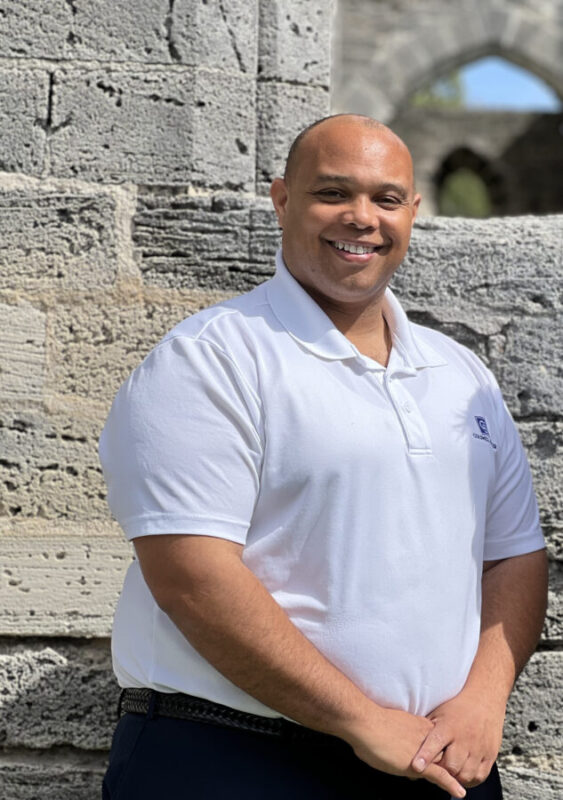
When asked how the Clinic works, Mr. Pitcher proudly asserts that they offer various programs at Planet Math to reach the community in many ways.
“For example, we engage the public directly with our weekly radio quiz on Vibe103 – every Tuesday and Friday morning at 7:45; a project done in conjunction with the Road Safety Council.
“On the show, we ask two math questions, one for adults and one for children – based on road safety. This has been going on for a few years now, and it keeps math at the forefront of people’s minds.”
Planet Math also engages children by bringing programs to various schools, such as their Financial Literacy program, which is delivered in partnership with HSBC. Their Math-a-Thon – which takes them to every primary and middle school with a fun math contest – is something that the students absolutely love.
Of course, Planet Math offers math tutorials for people of all ages, and helps adults and children prepare for various exams. They have recently added an after-school program, where students have fun while learning math.
Perhaps their most popular program is their Math Camps. During camp, they provide math instruction every day, but they also include STEM, and various art projects as well. In addition, they provide breakfast and lunch at camps, and do a wide variety of field trips all over Bermuda, so that students can learn about their island home.
The Planet Math Team has raised funds for over 440 students to attend their camps – at no direct cost to parents – over the past two years. As if that wasn’t enough, one-to-one tutoring is also available. This can be done in person or on-line. For further information on this, write to [email protected].
Asked how to offset a negative vibe, which some students may have with math, Mr. Pitcher responds,
“If a student has a negative attitude towards the work, they will generally not put in the effort that is required. We tell students to take a breath and relax a bit. Next, students that are feeling this way should get regular tutorial assistance. Tutoring breaks a topic down to its components and is paced at a rate that is individualized for the student. As with anything, practice, practice, practice, and realization of the topic will be earned.”
For some, Math can be a very scary four-letter-word. Planet Math has been a miracle for many Bermudians who find the discipline anxiety-inducing – whether they be little, or grown!
In closing, Mr. Pitcher acknowledges the donors who have provided funds for students to attend camp at no cost – a blessing he describes as, “Huge!” Donors provided online math lessons and activity books during lockdown to ensure that school-aged children could continue honing those math skills that may have otherwise been lost.
Planet Math is all about recovering what is lost, and taking that next step toward freedom – a highly valued commodity for those who keep their eyes on the prize!
The post Moving at the Speed of Math appeared first on RG Magazines.
]]>